





Boeing’s X-32: The Radical Fighter Jet Defeated by Its Own Design
Ambitious experiments, revolutionary ideas, and fierce battles between aerospace giants have always characterized the world of military aviation. Over the years numerous aircraft have shown great engineering ideas but have not gone into active service as they were unable to satisfy all of the requirements they were expected to have. One of the most interesting examples of this is the fighter developed by Boeing for the Joint Strike Fighter competition in the late 20th century, the X-32. The aircraft, however, never got beyond the prototype stage and still it is a major milestone in the development of modern stealth fighter technology.
The Joint Strike Fighter (JSF) programme was started in the early 1990s by the United States Department of Defense, which merged two previous initiatives, the Joint Advanced Strike Technology (JAST) programme and the Common Affordable Lightweight Fighter (CALF). The task was a daunting one to create a single family of advanced combat aircraft to replace a number of outdated platforms from a variety of different military services. The future fighter had to meet the special requirements of the Air Force, Navy and Marines as well as those of international partners.
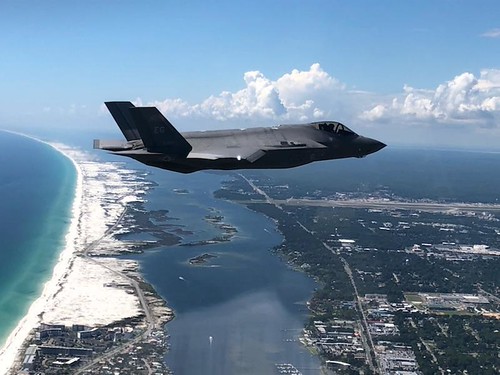
The program evolved to become a race between two leading American aerospace companies, Boeing and Lockheed Martin. In 1996 both companies won contracts to make demonstration aircraft which would establish the validity of their engineering strategies. Boeing developed the unusual X-32 and Lockheed Martin worked on the X-35 that would be transformed into the F-35 Lightning II. The X-32 was a new and radical approach to focus on cost and streamlined production, although some of its design features did pose challenges later on.
1. Boeing’s X-32 Market Vision
Boeing’s X-32 entry was built with a novel design approach during the JSF competition, one that placed as much emphasis as possible on minimizing manufacturing complexity, maintenance needs and long-term operating costs as well as effectiveness in combat. The plane was conceived with the notion that a stealth fighter with advanced capabilities might be also be efficient and cheap.
Core Design Philosophy of X-32:
- A simplified approach to the manufacture of aircraft.
- Reduce long-term maintenance expenses.
- Multi-role mission capability design.
- Concentrate on operation affordability.
- Innovative engineering solutions.
This philosophy pervaded most of the development of the aircraft. Boeing intended to develop a common airframe that would fit into Air Force missions, the Navy’s carrier missions and the short takeoff and vertical landing needs of the Marines. The X-32 was an odd-looking aircraft due to practical engineering considerations not styling concerns. The aircraft’s shape showed Boeing’s creativity and thought for efficiency, but some of these features later became a source of controversy in the competition.
2. Massive Delta Wing Design
The X-32’s most distinctive design element was its large one-piece carbon fiber composite delta wing. The layout minimized the number of parts required in the manufacturing process, which may have reduced the manufacturing costs and made the process of manufacturing easier.
The merits of Delta Wing Design are:
- A large single-piece wing design.
- Reduced manufacturing complexity.
- New, larger fuel tank.
- Composites that are light in weight.
- More than doubled mission range.
The wing had a span of about 9.15 m and leading-edge sweep of 55°. This configuration made the plane easily recognizable as a triangle. The X-32’s large size enabled the aircraft to carry up to 20,000 lb of fuel to give it greater range and longer mission capability. Although these were advantages, the delta wing also had a negative impact on the aerodynamics of the aircraft. Boeing had to find a way to meet the performance requirements of a new generation jet stealth fighter, while keeping costs down.
3. This multi-role mission has two objectives
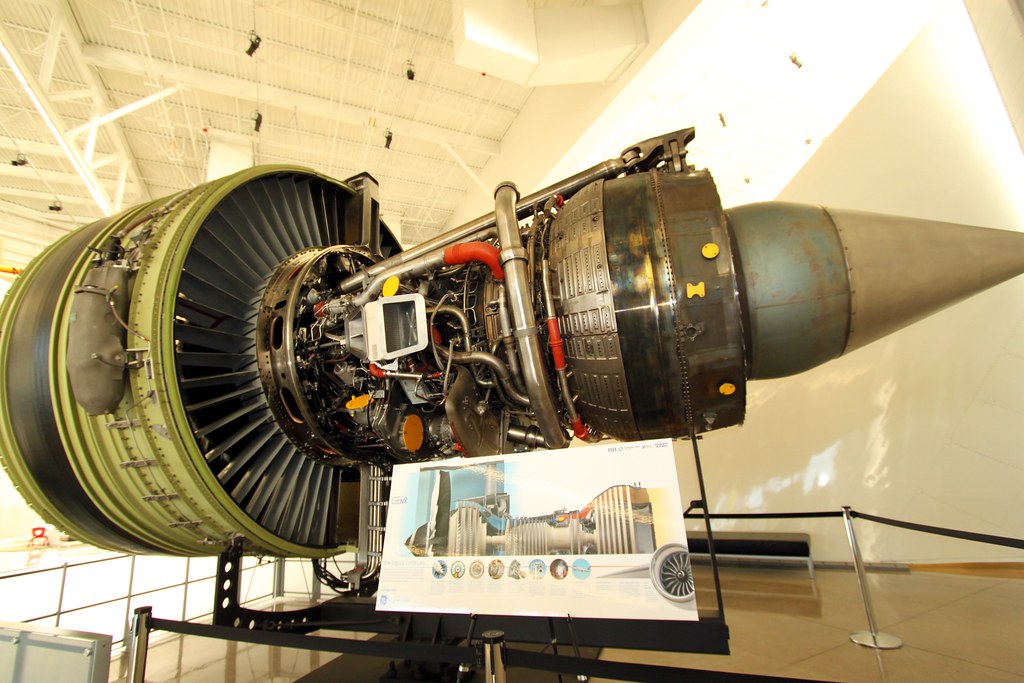
The X-32 was designed to be powered by a Pratt & Whitney JSF119-PW-614 turbofan engine, which delivers approximately 40,000 pounds of thrust. It was a powerful engine that was required to perform under strict requirements for conventional flight, aircraft carriers and STVL (short takeoff and vertical landing) missions.
Engine and Mission Capabilities:
- Power system of high thrust class turbofan.
- Can play a variety of fighting characters.
- The conventional and carrier components of the program.
- STOVL or VTOL.Short take off vertical landing.
- Advanced propulsion engineering problems.
Designing one propulsion system that would work in a variety of conditions was a big engineering challenge. The overall design was a challenge due to the Marine Corps STOVL requirement. Because of the simplicity of its mechanical arrangement, Boeing chose a direct lift system for vertical operations. Efficiency, heat management, and future development restrictions were introduced, however, with this approach.
4. The well-known “Alligator Mouth” Air Intake
The X-32’s iconic design is its large chin mounted air intake which became known as the “alligator mouth.” The look was attacked, but the intake was built to meet the aircraft’s demanding vertical flight requirement of a large amount of airflow. The large chin-mounted air intake became one of the X-32’s most recognizable features, earning it the nickname “alligator mouth.” Although the appearance received criticism, the intake was designed to provide the large amount of airflow required by the aircraft’s direct-lift vertical flight system.
Unique Air Intake Characteristics:
- A large air intake that is located on the chin.
- Allows air to flow up and down vertically.
- The design is using a simple mechanical design approach.
- Distinctive aircraft appearance.
- Created stealth-related concerns.
The intake was a very economical engineering approach, in terms of cost, to a problem that was perceived to be very complicated. Provided the engine with the air it required during strenuous vertical tasks. The intake position, however, did lead to the engine compressor blades becoming visible to radar systems, which did pose a problem for the Joint Strike Fighter program in order to meet the high levels of stealth it required.
5. Stealth Challenges and Radar Visibility
One of the most vital criteria for the Joint Strike Fighter competition was stealthy design. These were some of the X-32’s greatest liabilities as aircraft designed for the modern era demanded minimal radar signature to withstand the advanced radar of the day. Stealth performance was one of the most important requirements of the Joint Strike Fighter competition. Modern combat aircraft needed a minimal radar signature to survive against advanced detection systems, and this became one of the X-32’s biggest disadvantages.
This is a major Stealth Performance Issue:
- High radar reflectivity hazards.
- Engine compressor blades are visible.
- Larger radar signature worries.
- Limited stealth design solutions.
- Being at a disadvantage with competition.
Boeing made plans to improve the plane, such as making it have variable baffles which would have reduced the exposure to the radar during the competition, but these features were not included on the demonstration aircraft. This had a major impact on the overall assessment of the stealthiness of the aircraft. Meanwhile Lockheed Martin’s X-35 had more experience with low-observable technology and a more advanced stealth design. This was a big benefit in the evaluation.
6. The Battle Between X-32 and X-35
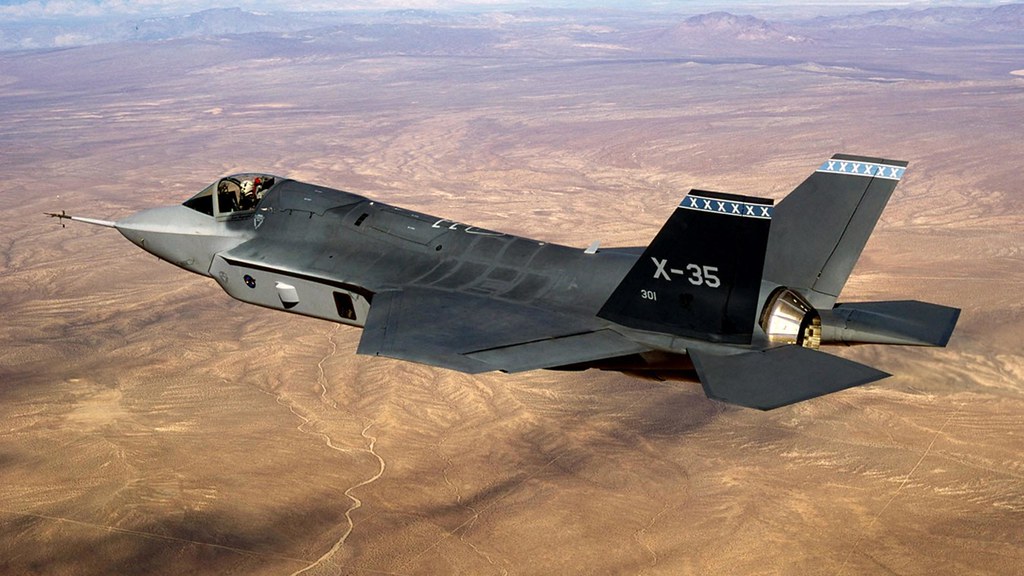
The Boeing X-32 and Lockheed Martin X-35 were two distinctly different designs for the new Joint Strike Fighter. The emphasis for Boeing was on affordability, simplicity of manufacture, and commonality of design; Lockheed Martin had a strong emphasis on stealth, performance, and increased operational flexibility.
Some of the main differences between the competitors:
- Various concepts of fighting.
- Make sure your system is as quiet as possible
- Manufacturing efficiency priorities.
- Upgrade potential taken into account in future.
- Production readiness evaluation factors.
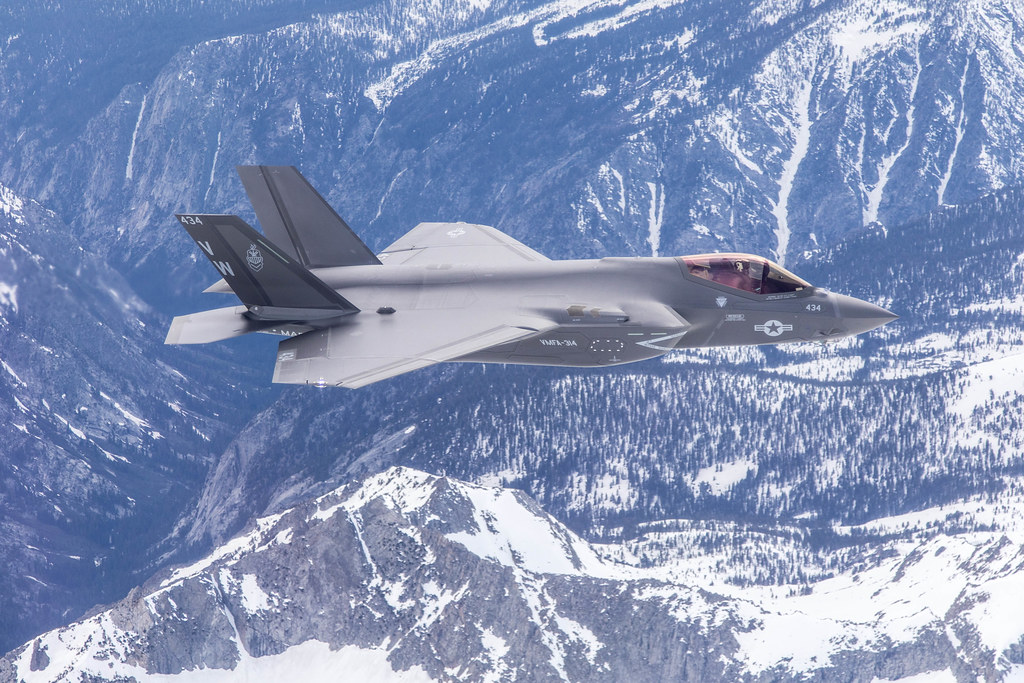
In testing, military testers looked at the aircraft’s capabilities, as well as how well they could evolve to meet future operational and technological needs. A successful fighter would have to be effective and maintainable for many decades of service. The X-35 prototype exhibited a more advanced and ready-to-manufacture design, thereby boosting trust that it would be able to become a fully-fledged military jet. This was one of the major factors in its winning in the competition.
7. Visual Effects
The X-32 faced infrared signature and heat management issues aside from radar visibility issues. It had a direct-lift system that needed an engine and exhaust configuration for vertical flight, which posed problems to heat control during hovering flight. Besides radar visibility concerns, the X-32 also struggled with infrared signature and heat management challenges. Its direct-lift system required a specific engine and exhaust arrangement for vertical flight, but this design created difficulties in controlling heat during hovering operations.
Thermal challenges of X-32:
- The risk of infrared detection is high.
- The exhaust heat management is a complex process.
- The low hovering efficiency issues are addressed.
- Attempts to obtain hot gas recirculation issues
- The inherent drawbacks of direct-lift system.
It is possible in vertical flight that the hot exhaust gasses may return to the aircraft’s intake, thereby decreasing efficiency and increasing the infrared signature of the aircraft. This could increase the likelihood of the aircraft being easily detected with the use of advanced heat-tracking systems.
In the case of the X-35, this was addressed by the use of a shaft-driven lift fan which could be used to push cooler air in vertical flight. This unique solution offered improved thermal control and another significant benefit to Lockheed Martin during the evaluation.
8. Limitations of operation in conditions of the tests
Practical limitations were found during flight testing of Boeing’s design. The X-32 proved to have good handling qualities in conventional flight, but could not perform as flexibly as needed in all mission profiles. Flight testing revealed several practical limitations in Boeing’s design. Although the X-32 showed positive handling characteristics during conventional flight, it struggled to demonstrate the same level of flexibility across every required mission profile.
Testing and Performance Limitations:
- Required configuration modifications
- The loss of operating flexibility is a worry.
- Difficult experiences in transition to mission.
- Ineffective adaptability in test performance.
- Competitor displayed exceptional ability
The aircraft suffered one major limitation in that it required ground modification for some of the test configurations, especially between the STOVL demos and supersonic flight testing. The X-35 managed to do short takeoff, supersonic flight, and vertical landing in a single test while the X-37 was unable to finish. By achieving this, Lockheed Martin’s design showed its maturity and versatility in the competition.
9. Why Boeing’s Design Lost the Competition
Innovation and engineering were not to blame for the X-32’s defeat. Boeing came up with some innovative concepts aimed at cost savings and complexity reduction, which reflected the company’s innovative thinking when it came to designing a new, contemporary combat aircraft.
Main reasons of the defeat are explained:
- Stealth performance limitations.
- Thermal management difficulties.
- Lower operational flexibility.
- More advanced preparedness to compete advantage.
- Design compromise challenges.
Some of the features of the X-32 that were designed to save on costs were compromises in some aspects that were deemed essential in a next generation fighter. Finally, the advantages of advanced stealth, heat management and mission adaptability outweighed the importance of simplifying production. In comparison, the X-35 had a better overall combination of stealth characteristics, performance, and development potential. These benefits made it the decision-makers’ choice for the winner of the Joint Strike Fighter program, Lockheed Martin’s F-35.
10. The End of the Boeing X-32
While the Boeing X-32 did not go on active duty, it is an interesting development in the history of aerospace engineering. The project proved to be an astonishing challenge to design a single aircraft to satisfy the requirements of a number of different military services, yet be economical in production.
The Impact of X-32 Program Long Term:
- Useful lessons in aerospace engineering.
- Demonstrated design trade-offs.
- Influenced future development of fighters.
- Highlighted stealth importance.
- Showcased unconventional innovation.
The plane gave good feedback on the concepts of cost, performance and survivability in the field. It proved that cutting-edge manufacturing solutions need to be backed by the advanced capabilities of stealth, flexibility and effective combat performance. The X-32 is now remembered as a daring experimental aircraft that tested the concept of a fighter design. Though unsuccessful, it’s development provided valuable knowledge that would eventually help determine the direction of modern military aviation.