Evaluating Range, Energy Consumption, and Practicality Across Today’s Electric Crossovers
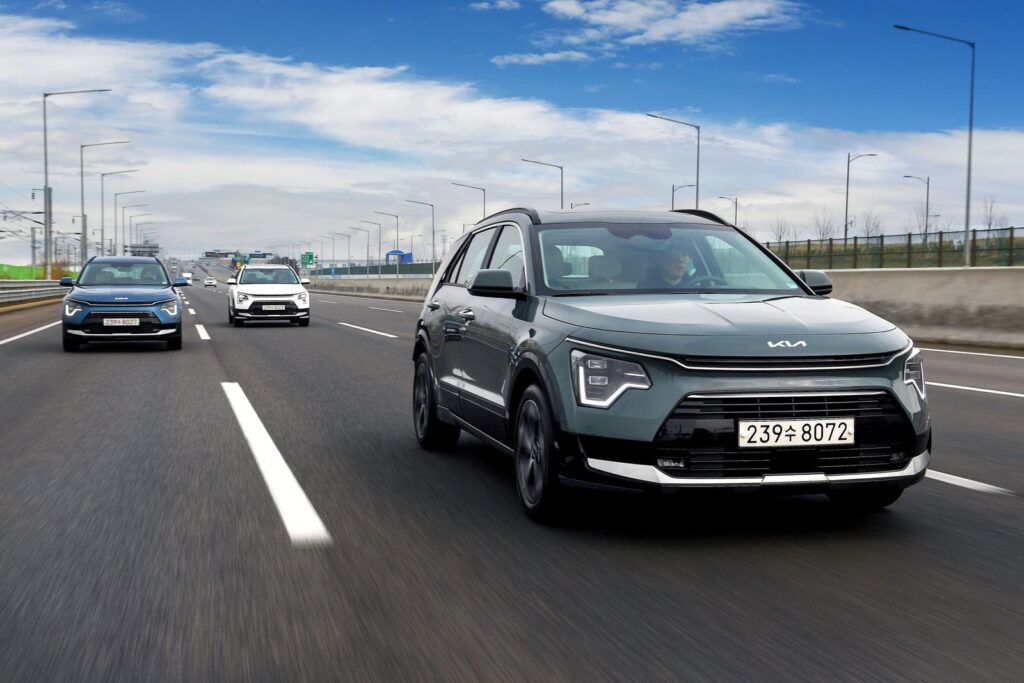
Electric cars have revolutionised the automotive world and sales of electric vehicles continue to increase as drivers seek more cost-effective alternatives to petrol and diesel-powered models. Electric vehicles represented eight per cent or more of new-vehicle sales in the US from 2023 onwards, prompting manufacturers to deliver even more choice in their electric line-ups. Compact and midsize crossovers have dominated the market since they appeal to buyers thanks to their high driving position, generous interior space and practicality with cargo space and there are more than 40 electric models to choose from. However, with some electric models priced at a premium, it pays to look beyond the styling of the car when choosing an electric car.
If range is your primary concern, remember that efficiency translates into how far you’ll get on your fuel. The larger utility vehicles like the GMC Hummer EV may get 63 kilowatt-hours of energy per 100 miles, while others may need less than half that amount. The size of the batteries, where you’re able to charge them, the amount of space you have to hold things, and the yearly cost of operating these vehicles all factor into your experience. By looking at all of this together, it helps you pinpoint which electric crossovers provide the all-around value you need.
1. Tesla Model Y
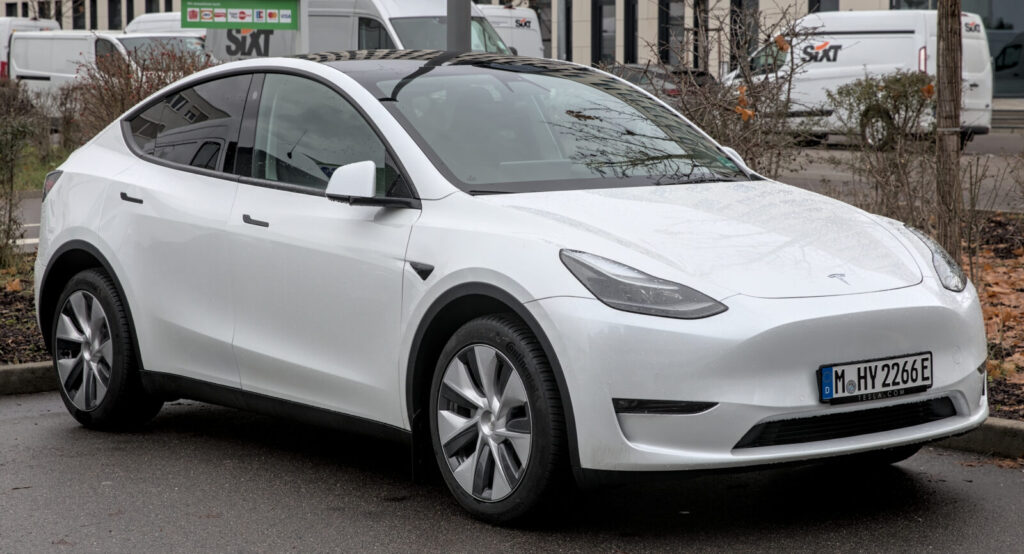
The Tesla Model Y continues to be one of the most well-known electric SUVs, and it’s something the other brands look to rival. With its maximum range and versatile powertrains, the Tesla Model Y is an ideal choice for those looking to get around on an electric SUV that can handle everything from their daily commute to longer trips. The Model Y uses a 75-kWh usable battery and offers a range of approximately 260 to 310 miles per charge (depending on the model you buy). The Model Y has an energy efficiency of roughly 28 kWh per 100 miles, offers a good mix of range and efficiency, with an expected annual cost of around $600.
Model Y’s Everyday Advantages:
- Uses a 75-kWh usable battery pack.
- Offers approximately 260 to 310 miles of range.
- Consumes around 28 kWh per 100 miles.
- Provides rear-wheel-drive and dual-motor Long Range options.
- Offers optional three-row seating and potential tax incentives.
Different powertrain options let you opt for an entry-level rear-wheel-drive variant or opt for the speedier, dual-motor Long Range model. The Model Y is uncommon in the segment for the fact that it has optional third-row seating, which provides added flexibility for certain buyers carrying passengers. Locally assembled models and buyers may also qualify for federal and state tax incentives, depending on the rules. All of this makes the Model Y a handy benchmark for those seeking an electric crossover, as it offers an idea of what range, efficiency, charging availability and interior flexibility all mean in this segment.
2. Kia Niro EV
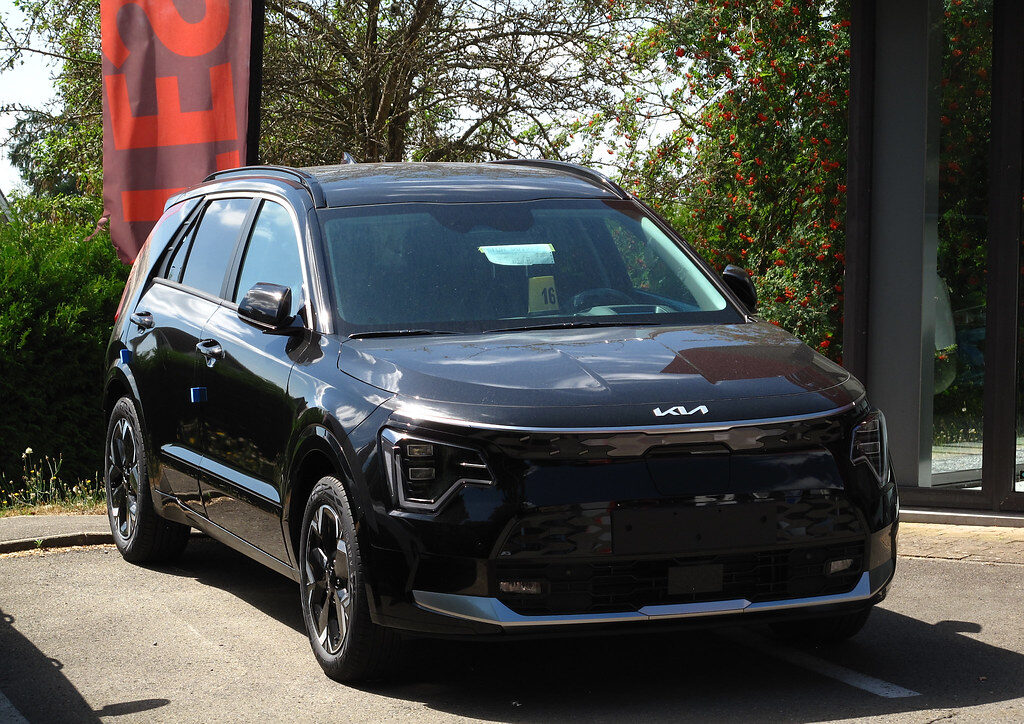
This car is a worthwhile option for those who want a more practical daily driver than a high-performance car or a vehicle with an enormous battery. The face has been refreshed for a bolder look, and its subcompact crossover body has a good balance of seating for up to five and a compact footprint. Kia packs a 64.8-kilowatt-hour usable battery with a 201-horsepower single electric motor powering the front wheels. This setup offers an estimated 253 miles of range and burns about 29 kilowatt-hours per 100 miles for an annual energy cost of $650.
Niro EV’s Practical Strengths:
- Features a 64.8-kWh usable battery.
- Produces 201 horsepower through a front-wheel-drive motor.
- Offers approximately 253 miles of driving range.
- Consumes around 29 kWh per 100 miles.
- Supports DC fast charging at up to 85 kW.
While 85 kW is not as high as some more expensive electric crossovers, the size of the Niro EV’s battery means charging times are fairly achievable. Filling the battery from 10 to 80 per cent is estimated at around 45-minutes in good conditions, which is about right to plan for stops on longer drives. A heat pump is an available feature to reduce the impact of temperature fluctuations when heating or cooling demands are higher, which can improve range. For those wanting an electric crossover that is both sensible to own and with predictable operating costs, the Niro EV fits the bill without an excessive battery to carry.
3. Hyundai Ioniq 5
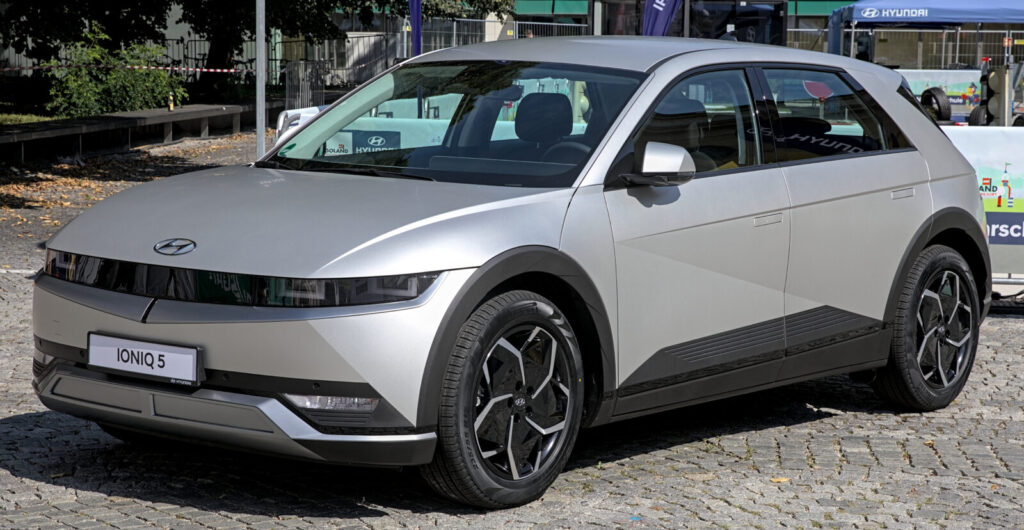
The Hyundai Ioniq 5 offers bold, retro-futuristic style along with charging technology that minimizes long-distance wait times. Leveraging Hyundai Motor Group’s dedicated 800-volt E-GMP platform, this electric vehicle supports ultra-fast charging rates when used with a compatible DC fast charger. As a base configuration, the SE Standard Range features a 58-kilowatt-hour (kWh) pack and single 168-hp (125-kW) electric motor for an estimated driving range of 220 miles; drivers opting for a Long Range single-motor model can expect an average energy consumption of approximately 29 kWh per 100 miles, which should make the overall range more usable.
Ioniq 5’s Charging and Space:
- Built on the 800-volt E-GMP platform.
- Offers a 58-kWh battery in the Standard Range model.
- Delivers up to 240 kW peak DC charging capability.
- Can recharge from 10 to 80 per cent in under 20 minutes in suitable conditions.
- Provides up to 59.3 cubic feet of cargo space with the rear seats folded.
One of the Ioniq 5’s biggest selling points is its charging time with a compatible Level 3 (DC) fast charger it can go from 10 to 80 percent battery capacity in less than 20 minutes on a warm day when using the very best charging networks and conditions. Its practical interior is another selling point, offering 27.2 cubic feet of space behind the rear seats and 59.3 cubic feet when they’re folded down, which is good for shopping, big and small pieces of luggage and other larger items without sacrificing EV advantages like fast charging and long range. With a standard powertrain warranty of 10 years, it’s got another pull as an ownership proposition.
4. Kia EV6
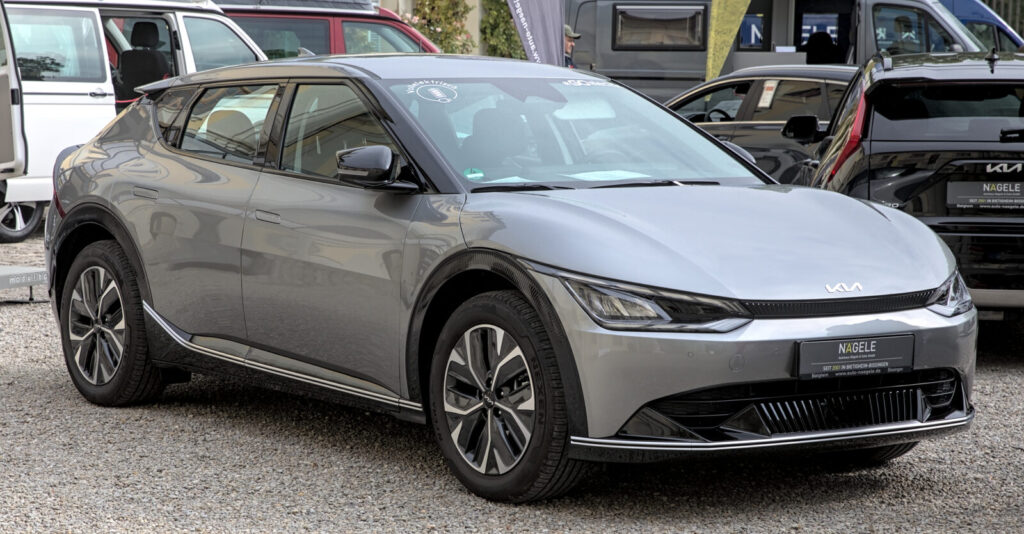
Kia’s interpretation of the electric crossover is the Kia EV6, which combines the convenience of a five-door hatchback with a more subdued, lower profile crossover. Like the Hyundai Ioniq 5, the EV6 utilises Hyundai Motor Group’s E-GMP architecture, so it offers up-to-date battery technology along with fast-charging capability. The Light trim offers a 63.0-kWh battery with 167 horsepower and 258 lb-ft of torque, which can manage around 240 miles between charges. For those who want to travel further, the updates to the 2025 model year included the option of an 84.0-kWh battery pack that increased range up to 319 miles.
EV6’s Performance and Range:
- Base Light model uses a 63.0-kWh battery.
- Produces 167 horsepower and 258 lb-ft of torque in the base version.
- Offers up to 319 miles of range with the available larger battery.
- Consumes approximately 26 kWh per 100 miles in single-motor trims.
- Includes 800-volt fast charging and North American Charging Standard compatibility for 2025.
The EV6 pairs efficiency with a broad spectrum of performance. The average EV6 consumes about 26 kWh per 100 miles, and high performance GT version generates 641 horsepower. Buyers can also decide what size battery to purchase if they don’t want to spend extra for the more capable high-range model, as well as that more modest entry model. Additional benefits include the North American Charging Standard capability as of 2025 that will couple with 800-volt charging that will make use of Tesla charging stations, when supported by the electrical supply and compatible chargers. As a result, buyers can purchase a solid electric that combines unique styling with performance and long-distance usability.
5. Hyundai Kona Electric
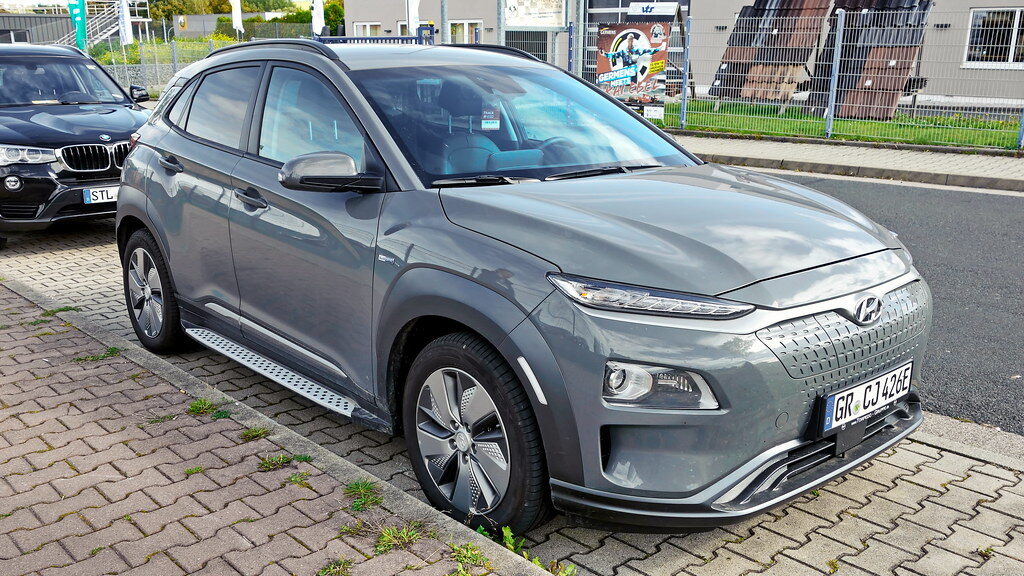
Kia’s electric subcompact vehicle (EV) nest is a very good choice if you’re looking for a sealed crossover that will be good to go in busy city streets. Going with the completely reimagined Kona suggests more passenger room and cargo space, compared to previous editions, and is designed to make the most of a 64.8-kWh battery capable of delivering 201 horsepower and an anticipated driving range of 261 miles. The refreshed Kona Electric consumes around 29 kWh of energy every 100 miles and could cost you an estimated $650 annually in its energy budget, like the Niro EV.
Kona Electric’s Everyday Benefits:
- Uses a 64.8-kWh battery in the longer-range version.
- Produces 201 horsepower.
- Offers approximately 261 miles of driving range.
- Provides 36.4 inches of rear-seat legroom.
- Delivers up to 63.7 cubic feet of cargo capacity with the rear seats folded.
With larger foot space up front, rear passengers now have 36.4 inches of legroom and the maximum cargo space is 63.7 cubic feet with the rear seats folded. Some of the advantages of the Kona Electric for passengers and shoppers will be more evident in a couple of a years’ time when run-out and late model vehicles enter the used market, there’s the ‘fast’ charging feature which can get a 10-to-80 per cent charge in less than 45 minutes, and there are the capability advantages of a small but much more practical enough size crossover for people who need a pure EV, but don’t want a bigger, and more expensive, vehicle.
6. Tesla Model X
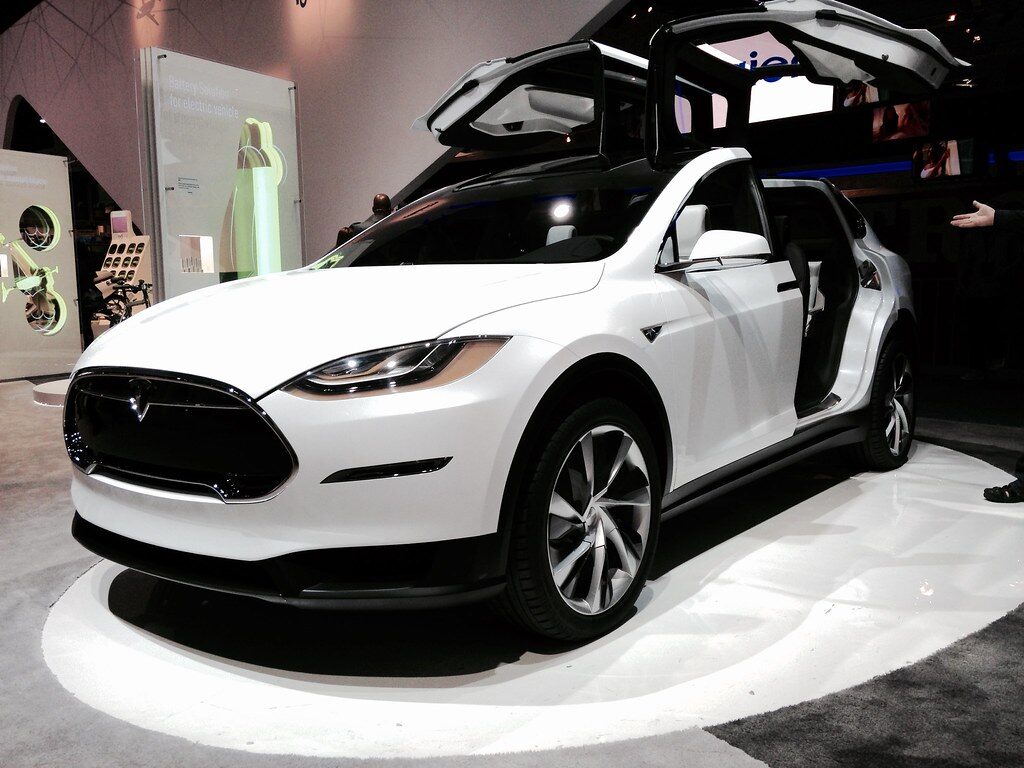
Tesla Model X The Model X is the high-powered, large-body, high-styled electric crossover in Tesla’s lineup. With a 100-kWh pack and dual-motor all-wheel drive that develops a combined 670 horsepower, it can accelerate from zero to 60 mph in just under 4 seconds. Despite its size, Tesla claims the Model X can get 335 miles of range and gets about 28 kWh per 100 miles (per the figures provided). Your estimated annual cost to run one of these units is close to $750, but it also serves as an example of just how far an electric car can go.
Model X’s Premium Features:
- Equipped with a 100-kWh battery pack.
- Produces 670 horsepower through dual motors.
- Accelerates from zero to 60 mph in approximately 3.8 seconds.
- Offers up to 335 miles of driving range.
- Supports Supercharger charging rates of up to 250 kW.
The Model X grants you access to Tesla’s highspeed charging network and has an ability to charge up to 250 kW at available Superchargers, depending on conditions. Its SUV style with rear gullwing door design can be eye-catching but also has downsides in sealing and noise. Owners should be mindful of the high-end price tag and the bigger-than-typical proportions when considering whether the Model X is what they need in daily driving. The family-oriented high performance heavy hitter, all-wheel drive, and a long-range Electric SUV can be a perfect choice for consumers.
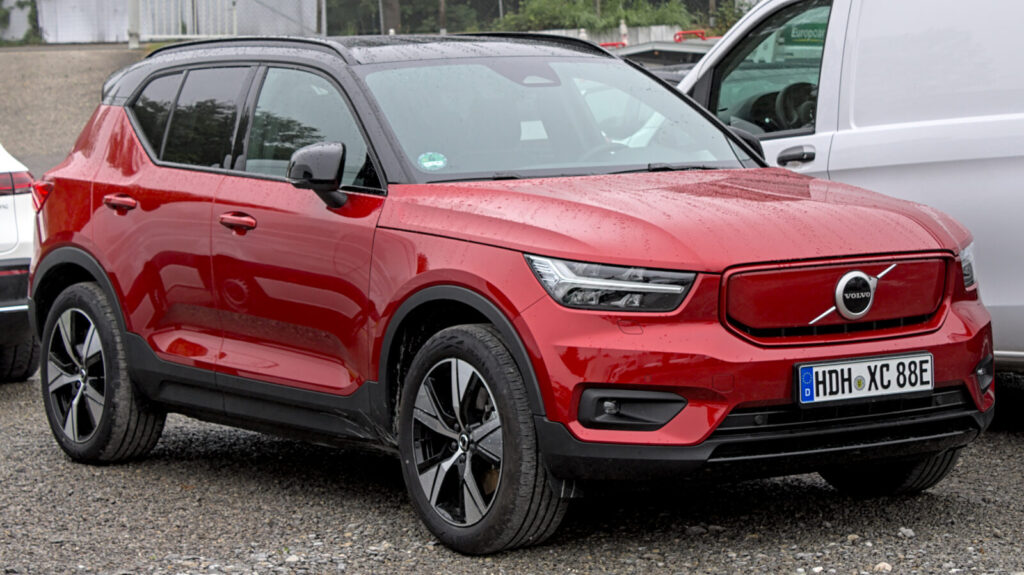
7. Volvo XC40 Recharge and C40 Recharge
Volvo XC40 Recharge and the slinky, fastback C40 Recharge are two examples of how European luxury brands have played in the electric crossover segment. Both are built on an improved 78-kWh usable battery pack with single-motor rear-wheel-drive trims that make 248 horsepower. The XC40 Recharge offers about 293 miles of range the C40 Recharge gets around 297 miles. Thanks to their good looks, plush interior and useful range, they make a compelling choice for buyers who want a relatively luxurious EV, even if they don’t need a gigantic or sporty vehicle.
Volvo’s Electric Crossover Figures:
- Both models use an updated 78-kWh usable battery.
- Single-motor versions produce 248 horsepower.
- XC40 Recharge offers approximately 293 miles of range.
- C40 Recharge offers approximately 297 miles of range.
- Energy consumption ranges from around 31 to 34 kWh per 100 miles.
Both vehicles are based on the same platform but have distinct design languages. The C40 provides a sportier look with its sloped roofline while the XC40 has a conventional crossover shape. Both vehicles offer good energy consumption of 31-34 kWh per 100 miles that translates into a cost of roughly 700 800 per year for electricity higher than that of the most frugal competitors, but these vehicles are not only intended to deliver everyday utility but also a luxurious experience. For those wanting a premium Scandinavian interior and a range well-suited to daily commuting and weekend excursions, both these vehicles provide enticing choices.
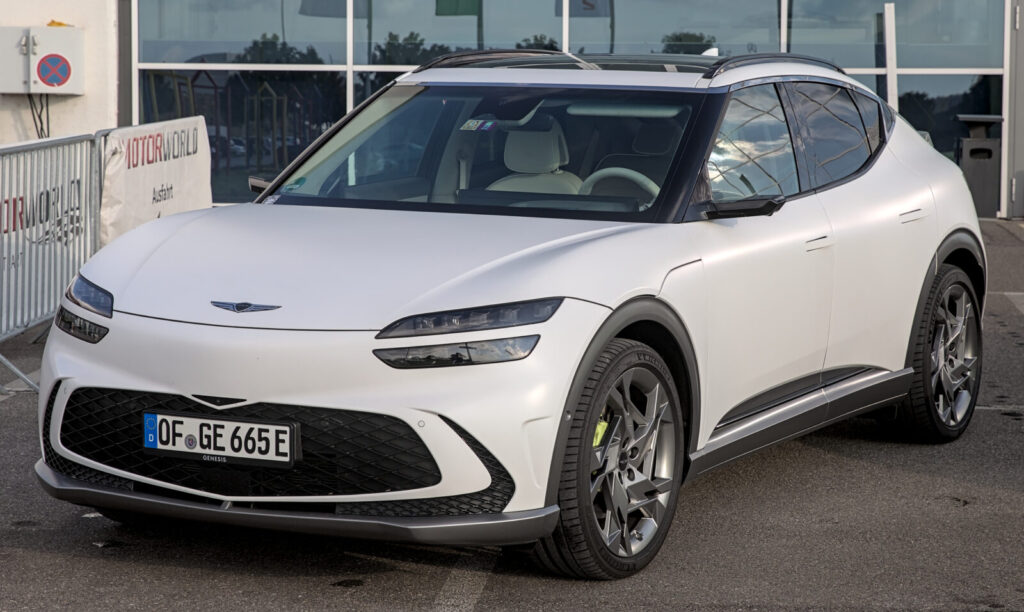
8. Genesis GV60
The Genesis GV60 takes Hyundai Motor Group’s 800-volt E-GMP platform and packages it into a more luxe and tech-forward body. It looks unique, and its features a biometric security system, lie-flat seats and the odd Crystal Sphere shifter help it stand apart from vanilla electric crossovers. The entry version of the single-motor rear-wheel-drive model is equipped with a 77.4-kWh battery pack and makes 225 horsepower, with a driving range of about 294 miles. Its power consumption in its lower-powered setups is about 30 to 33 kWh per 100 miles.
GV60’s Luxury Advantages:
- Built on the 800-volt E-GMP platform.
- Uses a 77.4-kWh battery pack.
- Entry-level rear-wheel-drive model produces 225 horsepower.
- Offers approximately 294 miles of driving range.
- Supports a 10-to-80 per cent recharge in under 20 minutes under suitable conditions.
Its fast-charging ability is another useful aspect for drivers who do a lot of longer-range driving, with the battery returning from 10 to 80 per cent of its capacity in under 20 minutes at the right high-power DC public charging station. So, that EV enthusiast who is in no rush at public chargers will find the GV60 is able to make significant reductions in the time they spend there and that might be enough to sway a buyer towards a style of EV that does things differently. Its luxury interior and technology packed spec also offers it a different appeal from the largely mainstream crossovers in this part of the market.
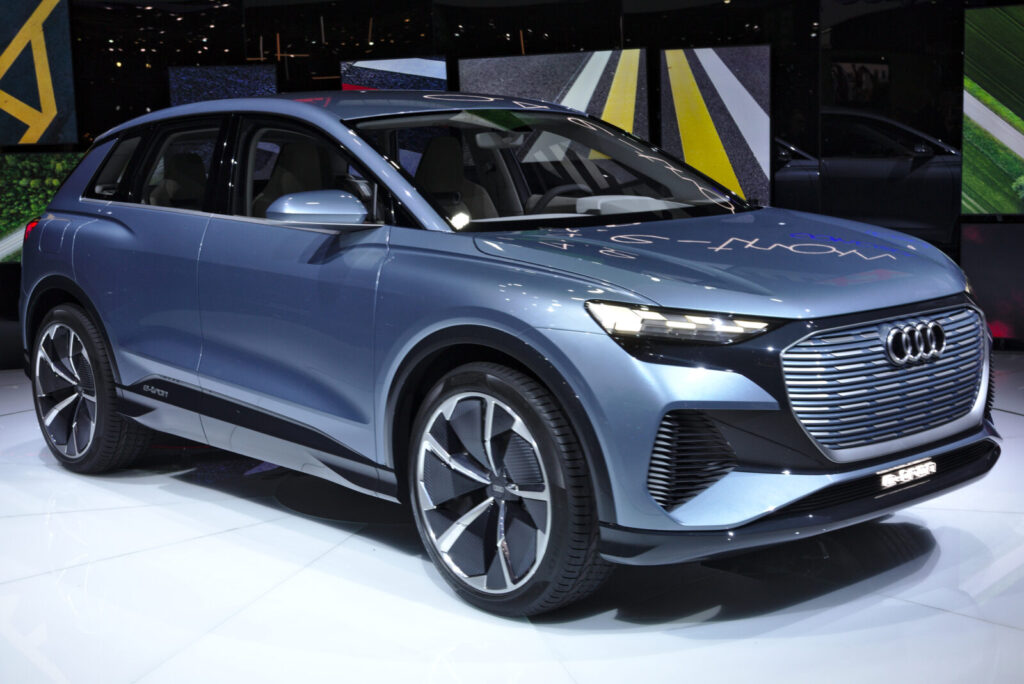
9. Audi Q4 e-tron and Volkswagen ID.4
The Q4 e-tron and ID.4 are two closely related approaches to buying an electric crossover, utilizing the same basic architecture and powertrain but with some wide-ranging differences in the styling and interiors department. The former comes as more of a premium option for drivers seeking a more comfort-focused interior, while the latter has its eye firmly set on the needs of a family on the go. The Audi Q4 e-tron’s powertrain uses an 82-kWh battery for the version listed here, with the rear-wheel-drive 45 one of the most efficient configurations delivering 282 hp and a range of approximately 288 miles.
Audi and Volkswagen Compared:
- Audi Q4 e-tron offers an 82-kWh battery.
- Q4 e-tron 45 produces 282 horsepower.
- Audi offers approximately 288 miles of range in the specified trim.
- Volkswagen ID.4 offers up to 291 miles of range with the available 82-kWh battery.
- Both models consume approximately 28 to 31 kWh per 100 miles, depending on configuration.
The Volkswagen ID.4 is a similar practical offering, with family-sized space inside and energy use of around 28-30 kWh per 100 miles. Its optional 82 kWh battery offers a range of up to 291 miles, slightly ahead of the Audi in terms of maximum quoted range in practice, actual range and efficiency will vary according to trim level, wheel size, ambient temperature and driving style, so an on-paper comparison should only ever be between equivalent models. Overall, both stand as evidence that, with the ability to deliver useful interior space, these electric crossovers can also do so with energy use confined to a relatively narrow band.
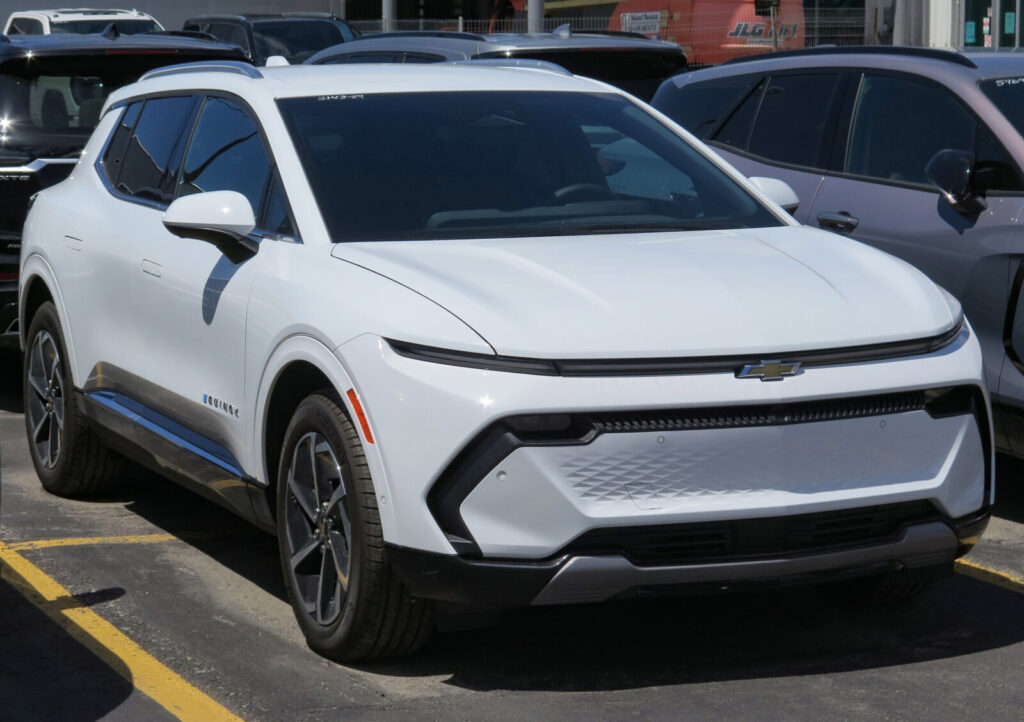
10. Affordable and Specialised Electric Crossovers
There are now electric crossover vehicles at opposite ends of the financial spectrum and trading off of very different priorities: the Chevrolet Equinox EV, a spacious compact crossover that delivers up to 319 miles of range (EPA-estimated) and a beginning MSRP of $41,995 (not including destination fees) and the Ford Mustang Mach-E, a sporty electric vehicle with styling cues borrowed from a legendary nameplate that provides up to 320 miles of range (EPA-estimated) and a beginning MSRP of $39,995 (not including destination fees). Ford’s Power Promise programme also included a free home charger and installation for qualified buyers, reducing their initial sticker shock.
More Options for Different Needs:
- Chevrolet Equinox EV offers up to 319 miles of range.
- Ford Mustang Mach-E offers up to 320 miles of range.
- Kia EV9 provides seating for up to seven and up to 304 miles of range.
- Rivian R1S offers up to 390 miles with its Max Pack configuration.
- Porsche Macan EV focuses on premium performance and driving dynamics.
For larger families, the Kia EV9 is a three-row crossover with a starting price of $54,900, three rows of seats and an estimated maximum of 304 miles of range. It’s a new demonstration of how EVs can be family-haulers and people-movers without departing from the crossover shape. On the outdoors side of things, the Rivian R1S features the standard all-wheel drive, off-road gear, adjustable air suspension, and a maximum range of up to 390 miles in the most-expensive Max Pack. And at the high-performance end, the Porsche Macan EV offers second-generation EV powertrain expertise, more driving experience and more focus on the driving experience in a similar-sized package. Efficiency is just one factor in EV buying considerations passenger capacity, charging network access, off-road credibility, purchase price and driving fun matter just as much.