






US Auto Industry Grapples with New Tariffs and Supply Chain Chaos

American carmakers find themselves in one of the most unpredictable times the industry has ever experienced. A sector that is centered on vast manufacturing networks and extremely interconnected global supply lines is now in the middle of a quickly shifting trade climate. New tariffs on imported cars, parts, steel and aluminum, and various other raw materials affect almost every single step of the manufacturing process. Automakers are not the only part of the chain affected suppliers, dealers, workers, and the buyers of vehicles are all susceptible to the monetary and logistical ramification of trade policy, and could stand to lose roughly $30 billion.
A great deal of the trouble lies in the unpredictability of the policy itself. While reciprocal tariffs are a policy backed by the Trump administration, a series of delays, changes in rates, or lulls or pauses or court cases create difficulty for long-term financial planning for producers. Court cases have been an issue for planning, as well as provisional trade deals with countries have made some hesitant about future policy changes to those deals, so it creates continued uncertainty as to whether or not any pact could potentially fall apart. Since automakers work in complicated and intricate webs of production across countries, the volatility can be worse than some tariff costs, as investment into a manufacturing or production strategy often takes many years.
This trade pressure doesn’t stop at tariffs applied to completed cars being imported, however. Automobiles in the United States rely on an intricate network of foreign manufacturers, from those producing a vehicle’s electronic sensors to its catalytic converters, which often comprise a large portion of a finished automobile, and still appear on vehicles labeled as produced in America. Steel and aluminum duties and their effect on automobile components and raw materials thus increase the costs of production for vehicles made on this soil, and force automakers to decide where to find materials, how to assemble their products, manage their stock, and insulate consumers against constantly increasing expenses.

1. The Tariff Uncertainty Reshaping Automotive Planning
The current disruption began with a series of reciprocal tariffs promoted by the Trump administration, creating an environment in which automakers have struggled to establish dependable long-term plans. The measures were announced in April and subsequently went through repeated pauses, delays, and changes in rates. A federal court initially ruled that the president lacked the authority to impose the tariffs on individual countries, but an administration appeal soon allowed them to continue. That rapid reversal demonstrated just how quickly the operating environment could change for companies already making complex production, sourcing, investment, and pricing decisions across extensive international automotive networks.
Key Factors Driving Tariff Uncertainty:
- Reciprocal tariffs continue changing rapidly
- Legal challenges create additional uncertainty
- Trade agreements remain potentially unstable
- Manufacturers face difficult planning decisions
- Supply strategies require contingency planning
The legal uncertainty became even more significant when the US Court of Appeals ruled on August 29 that the reciprocal tariffs were unlawful. The administration was given until October 14 to appeal to the Supreme Court, and the source material states that the administration took that step on September 4, allowing the tariffs to remain in place while the dispute continued. Such uncertainty creates difficult questions for trading partners that have already negotiated agreements with Washington. Countries that accepted provisional terms could potentially find themselves at a disadvantage if the broader tariff framework is later changed, restricted, or eliminated.
For automotive companies, this unpredictability affects much more than the final cost of an imported vehicle. Manufacturers need to determine where components should be sourced, where vehicles should be assembled, and how much inventory should be maintained well before a model reaches dealerships. When tariff rates can change quickly or remain subject to legal challenges, those decisions become harder to make with confidence. Companies must therefore prepare for several possible outcomes while continuing to operate factories, negotiate with suppliers, control expenses, and meet customer demand in an environment where trade policy can change faster than normal automotive production cycles.

2. North American Trade Faces New Complications
North America illustrates how difficult the new tariff environment has become because the United States, Mexico, and Canada operate deeply integrated automotive manufacturing systems. The United States-Mexico-Canada Agreement was created to encourage regional trade and strengthen the movement of goods across the continent, but the latest tariff measures have introduced significant friction into that system. At the beginning of August, the United States raised tariffs on Canada to 35% while maintaining a 25% rate on Mexico. These changes create additional pressure for automakers whose manufacturing processes regularly cross national borders and depend heavily on coordinated regional suppliers and production facilities.
Major North American Trade Pressures:
- Deeply integrated regional production networks
- Canada faces higher tariff exposure
- Mexico remains under significant duties
- USMCA rules affect component treatment
- Cross-border manufacturing faces rising costs
Automotive parts that qualify under USMCA rules currently receive a temporary exemption, but compliant vehicles remain subject to a 25% tariff under the framework described in the source material. That distinction matters because vehicles and their components move through highly coordinated supply chains before reaching American customers. A vehicle assembled in one country may contain engines, electronics, structural components, and other parts manufactured elsewhere. Even when companies carefully follow regional trade rules, tariff exposure can still influence the economics of the finished product and complicate decisions concerning future production locations, supplier contracts, and vehicle pricing.
The broader issue is that North American automotive manufacturing developed around the assumption that companies could efficiently distribute production across the three countries. Factories, transportation systems, supplier networks, and assembly operations were built over decades around that model. Sudden changes in tariff treatment can weaken some of the financial advantages that encouraged companies to organize production in this way. Automakers must now determine whether existing arrangements remain financially attractive or whether they should increase domestic content, adjust supplier relationships, move selected production operations, or redesign future vehicles around a different sourcing strategy.

3. Japan and South Korea Negotiate Lower Rates
Japan has secured a particularly important position within the changing American trade environment. A US-Japan agreement implemented in early September reduced the threatened automotive tariff from 25% to 15% on vehicles and parts. The reduction gives Japanese manufacturers a lower tariff burden when sending products directly to the United States, potentially making those shipments more attractive compared with vehicles produced in locations facing higher duties. However, the agreement is connected to a major investment commitment from Japan, with approximately $550 billion in planned investment in the United States forming a significant part of the broader economic arrangement.
Key Changes In Asian Trade Agreements:
- Japan receives reduced automotive tariffs
- Japanese investment supports American operations
- Industry groups question competitive effects
- South Korea secures provisional reductions
- Major investment commitments support agreements
The agreement has not been universally welcomed within the American automotive sector. The American Automotive Policy Council, which represents General Motors, Ford, and Stellantis, criticized the arrangement and argued that it could disadvantage American manufacturers and workers. The concern reflects a larger debate surrounding trade policy because reducing tariffs can lower costs and strengthen relationships with international partners while also changing competitive conditions for companies already manufacturing vehicles and parts domestically. Automakers with different production footprints can therefore view the same trade agreement very differently depending on how much they rely on imports, exports, and domestic production.
South Korea has also negotiated a provisional agreement involving a 15% tariff on vehicle and parts imports, replacing a threatened 25% rate. The arrangement took effect on August 1 and includes a commitment for South Korea to invest approximately $350 billion in the United States. Significant portions of that investment are expected to support sectors such as semiconductors, nuclear energy, and shipbuilding. If the agreement is finalized, South Korean automakers would operate under tariff conditions broadly comparable with those negotiated by Japan and the European Union, creating another important shift in the competitive environment for vehicles entering the American market.

4. China and ASEAN Supply Chains Remain Under Pressure
China continues to represent one of the most difficult parts of the American trade relationship. Tariffs had previously reached triple-digit levels before a truce reached in mid-May established a 30% tariff on Chinese imports and a 10% tariff on US imports. That temporary arrangement was later extended until November 10, offering some short-term stability while negotiations continue. However, significant duties remain on important materials sourced from China. Graphite and rare earth minerals, both essential to many modern electric-vehicle systems, face a 30% tariff according to the source material, maintaining considerable cost pressure on manufacturers dependent on these internationally sourced materials.
Key Sources Of Asian Supply Pressure:
- Chinese imports remain heavily tariffed
- Graphite faces significant import duties
- Rare earth materials remain affected
- Vietnam receives reduced tariff rates
- Transshipment rules target Chinese rerouting
These material tariffs are particularly important because the automotive industry’s transition toward electric vehicles has increased dependence on specialized raw materials and components. Batteries, electric motors, electronics, and other EV systems require materials that may not be available in sufficient quantities from domestic sources. Tariffs on these inputs can therefore raise production costs at the same time automakers are investing billions of dollars in electrification. Companies must balance the need to develop competitive electric vehicles with the financial consequences of sourcing critical materials from countries affected by trade restrictions, while also searching for alternative suppliers where possible.
Trade negotiations with ASEAN countries have produced somewhat different outcomes. Vietnam reached an agreement involving a 20% tariff, a major reduction from the initially announced 46% rate. However, the arrangement also includes a 40% duty on transshipments from third countries, designed to discourage companies from routing Chinese goods through Vietnam to secure a lower tariff. Similar agreements with Indonesia and the Philippines established 19% tariff rates for automotive goods. These arrangements show that American trade policy is focused not only on setting tariff levels but also on influencing the way international supply chains are organized around those rates.
5. The European Union Agreement Adds Another Layer
The transatlantic automotive relationship has also become an important part of the changing trade environment. The European Union and the United States reached a framework at the end of July that would reduce the cost of shipping vehicles and parts from 27.5% to 15%. For European manufacturers with substantial American sales, such a reduction could provide meaningful financial relief. The agreement also includes a significant European concession, with the EU committing to remove its own 10% tariff on automotive imports from the United States if the framework is finalized, potentially lowering costs for manufacturers operating in both directions across the Atlantic.
Important Elements Of The EU Framework:
- Vehicle tariffs could decline significantly
- Parts shipments may become cheaper
- European exporters gain improved access
- American exporters could benefit overseas
- Final agreement remains under negotiation
The potential reduction could benefit American manufacturers that export vehicles to Europe while also helping European companies lower the cost of sending products into the United States. Major exporters such as BMW and Mercedes-Benz could particularly benefit from improved access to the American market under lower tariff conditions. However, the framework remains subject to finalization, meaning manufacturers cannot necessarily treat the proposed rates as a permanent operating assumption. The continuing uncertainty once again demonstrates how difficult long-term production planning becomes when major trade agreements are still being negotiated or may be modified after companies have already made investment decisions.
The European situation also highlights the increasingly interconnected nature of the global automotive market. American companies sell vehicles abroad, European manufacturers operate factories inside the United States, and parts can cross several borders before becoming part of a finished automobile. A tariff imposed in one direction can therefore create consequences elsewhere in the production system. The EU’s decision to pause retaliatory tariffs for six months while negotiations continue provides temporary breathing room, but it does not remove the underlying uncertainty. Automakers must continue preparing for several possible trade scenarios while attempting to maintain stable pricing and production.

6. Steel, Aluminum, and Automotive Materials Become More Expensive
The tariff strategy reaches far beyond finished automobiles and directly affects the materials required to manufacture them. The United States doubled tariffs on most steel and aluminum imports from 25% to 50%, while the United Kingdom remained an exception at 25%. In August, the administration expanded the 50% tariffs to more than 400 additional items. The affected products include important automotive components such as chassis parts, axles, steel wiring, and stamped body panels. These changes increase costs much earlier in the manufacturing process rather than only when a completed vehicle enters the country, placing pressure on automakers and suppliers alike.
Materials Facing Increased Tariff Pressure:
- Steel tariffs reached fifty percent
- Aluminum imports face similar duties
- Automotive components are increasingly affected
- Manufacturing materials become more expensive
- Domestic production costs can increase
The inclusion of these components matters because modern vehicle production relies on enormous quantities of steel, aluminum, and related products. Body structures, suspension systems, wiring, chassis components, and numerous other parts depend on metals that must meet specific requirements for strength, durability, safety, and manufacturing quality. When tariffs increase the price of these inputs, manufacturers and suppliers must determine whether they can absorb the additional cost or whether it must eventually move through the supply chain. Even relatively small increases can become financially important when multiplied across hundreds of thousands or millions of vehicles.
The tariffs also cover related products such as industrial paints and sprays used during vehicle manufacturing, while truck trailers have also been included in broader measures. This creates additional pressure on production and logistics systems that depend heavily on predictable deliveries and consistent costs. Automakers often operate using just-in-time manufacturing principles, meaning unexpected price increases or supply delays can quickly disrupt production schedules. Companies therefore need to review sourcing codes carefully, identify exposed materials, evaluate alternative suppliers, and determine whether certain imported components can realistically be replaced with domestic alternatives without creating additional problems elsewhere.

7. Automakers Are Already Feeling the Financial Impact
The financial consequences of the tariff environment are already becoming visible in the results of major automotive companies. JLR saw its profit before tax fall from £693 million in the comparable period of 2024 to £351 million in the second quarter discussed in the source material. Stellantis reported a net loss of €2.3 billion for the first half of 2025, while its chief financial officer, Doug Ostermann, estimated that tariffs had already created a net impact of roughly €330 million during that period. General Motors also reported significant financial pressure connected directly to increased tariff exposure.
Major Financial Effects Across Automakers:
- JLR reported significantly lower profits
- Stellantis recorded a major loss
- General Motors faces billions in costs
- Volkswagen divisions experienced profit reductions
- Toyota and Mazda lowered forecasts
General Motors said its second-quarter operating profit for 2025 was reduced by approximately $1.1 billion because of tariff exposure and warned that the total impact could reach $4 billion to $5 billion for the full year. Despite these challenges, GM is continuing plans to temporarily source lower-cost LFP electric-vehicle battery packs from Chinese producer CATL for its most affordable EV model. The company has emphasized that it already sells several electric vehicles using domestically produced battery cells and plans to introduce LFP production in the United States in 2027, showing how companies are trying to balance near-term costs with longer-term localization strategies.
Other global manufacturers are facing comparable problems. Volkswagen Group reported a €1.3 billion reduction in operating profit during the first half of 2025, with Audi and Porsche among the divisions particularly affected. Toyota issued a profit warning in August and reduced its full-year forecast, estimating a ¥1.4 trillion, or approximately $9.5 billion, impact from US tariffs. Mazda also lowered its financial outlook and warned of an impact approaching $1 billion, alongside an expected $320 million reduction in operating profit. These figures demonstrate that tariffs can create substantial financial pressure even for large manufacturers with sophisticated international production networks.

8. The Industry Must Prepare for Several Possible Futures
Industry analysts have developed different scenarios based on how trade policy could evolve. The “momentum scenario,” described as the most likely in the source material, anticipates a broad range of tariffs, with duties on Chinese goods potentially approaching 70%. Under this scenario, US passenger and light-vehicle sales are projected to reach approximately 15.1 million units in 2025 before declining by around 7% to approximately 14 million in 2026, followed by a recovery. Such a path would create a challenging near-term environment while still leaving room for the market to stabilize after manufacturers and consumers adjust.
Potential Automotive Market Scenarios:
- Moderate tariffs could slow sales
- Chinese duties could rise sharply
- Severe tariffs would disrupt sourcing
- Production strategies may require restructuring
- Market recovery could remain possible
A more severe high-tariff scenario would create substantially greater pressure. Under that possibility, some trading partners could face tariffs of at least 20%, while Chinese goods could face duties approaching an extraordinary 200%. Such levels would significantly change the economics of importing vehicles, components, and materials. Automakers would likely need to reconsider existing sourcing arrangements, increase domestic production where financially practical, and develop alternative suppliers. The severity of the outcome would depend heavily on how individual countries negotiate with the United States and how quickly manufacturers can restructure complex production and supply networks.
These scenarios make flexibility increasingly valuable. Automakers cannot safely assume that today’s tariff rates will remain unchanged throughout the life cycle of a vehicle program. Production facilities, supplier contracts, transportation networks, and model plans are often organized years ahead, yet trade policy can change within months. Companies therefore need contingency plans that allow them to shift sourcing, adjust inventory levels, revise pricing, and modify production when circumstances change. The ability to react quickly may become just as important as minimizing costs under the original production strategy, especially if uncertainty becomes a permanent feature of global automotive trade.

9. Automakers Need Short-Term and Long-Term Responses
In the immediate term, industry leaders are being encouraged to determine exactly how exposed their businesses are to tariffs. That means identifying vulnerable components, calculating additional expenses, and understanding which suppliers or production facilities could be affected by future trade changes. Companies may also build tactical inventories of high-risk parts to reduce the possibility of manufacturing interruptions. Pricing decisions become equally important because manufacturers must determine how much of the increased cost can be absorbed internally and how much must eventually reach consumers without causing vehicle demand to decline sharply.
Strategic Responses For Automotive Companies:
- Identify vulnerable components and suppliers
- Calculate tariff-related cost exposure
- Build inventories of critical parts
- Expand domestic production capabilities
- Redesign global sourcing networks
Capital investment may also become necessary when existing production arrangements are no longer financially attractive. If tariffs permanently alter the cost difference between domestic and international manufacturing, companies may need to relocate selected production operations or establish new American supply sources. Such moves are expensive and cannot happen immediately, but the current environment could encourage manufacturers to accelerate investments that strengthen domestic production. The challenge is finding the right balance between spending heavily on new capacity and preserving financial flexibility while the long-term direction of trade policy remains uncertain and agreements continue to evolve.
Longer-term strategy requires a deeper review of global production and sourcing networks. Automakers may need to redesign their manufacturing footprints around a world where trade friction is more persistent rather than assuming international supply chains will continue operating under relatively stable conditions. Trade compliance is also becoming increasingly important, including the ability to demonstrate USMCA compliance accurately. Partnerships and platform-sharing could become more valuable because they allow companies to distribute development costs and production capacity. The Ford-Volkswagen relationship provides an example of how collaboration can help manufacturers manage resources in a more complicated and expensive market.

10. American Manufacturing Is Still Part of a Global Network
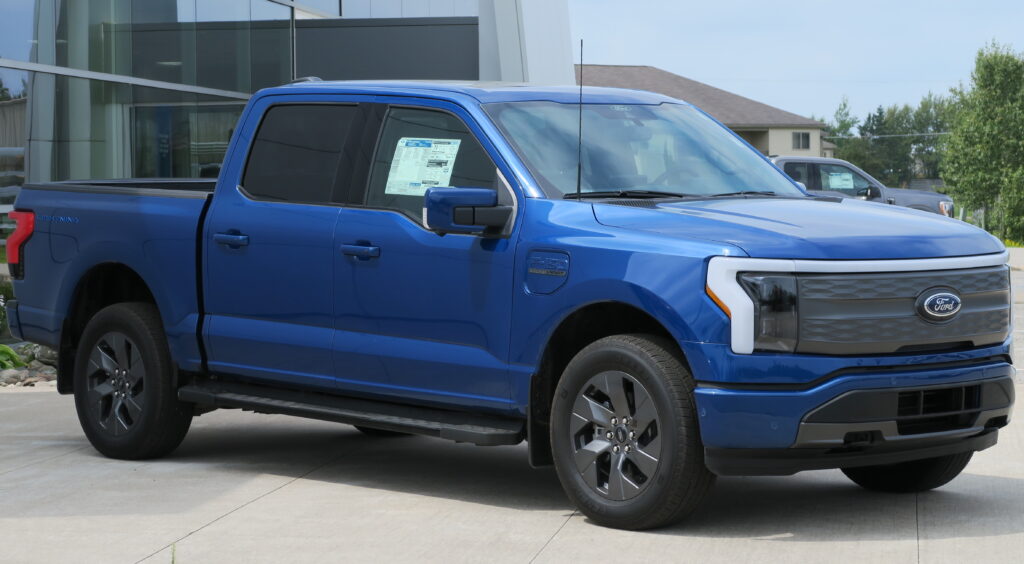
One of the most important realities facing the American automotive industry is that domestic manufacturing does not mean complete independence from international supply chains. A vehicle can be assembled in the United States while still depending on thousands of components manufactured in other countries. The Ford F-Series pickup, America’s best-selling vehicle, is cited in the source material as containing thousands of components imported from more than two dozen nations. This demonstrates why tariffs on imported goods can increase the cost of vehicles produced domestically rather than affecting only fully imported automobiles entering the United States from foreign factories.
Reality Of American Automotive Supply Chains:
- Domestic factories rely on imports
- Thousands of parts cross borders
- Foreign materials support American production
- Tariffs raise domestic manufacturing costs
- Supply resilience requires major investment
That interconnected structure creates a difficult contradiction for policymakers and manufacturers. Tariffs may be intended to encourage more domestic production, but if American factories depend on foreign components and raw materials, those same tariffs can increase the cost of manufacturing vehicles inside the United States. Companies may respond by searching for American suppliers, but building new capacity requires time, investment, skilled labor, and reliable demand. In some situations, domestic alternatives may also be more expensive than imported components. Automakers therefore have to weigh the strategic benefits of supply-chain resilience against the immediate financial cost of changing established sourcing arrangements.
The American automotive industry is consequently entering a period defined by strategic choices rather than simple solutions. Tariffs, geopolitical tensions, changing production patterns, and the transition toward electric vehicles are reshaping a manufacturing network that took decades to develop. Companies will need to adapt their sourcing strategies, strengthen supply-chain resilience, manage rising costs, and decide where future investments should be made. The outcome will affect automakers, suppliers, workers, vehicle prices, production locations, and consumer choices. The road ahead remains uncertain, but the industry’s ability to adapt will strongly influence the future structure of American automotive manufacturing.