


Kia Unveils the 2026 Tasman Pickup for Off-Road and Overlanding Enthusiasts
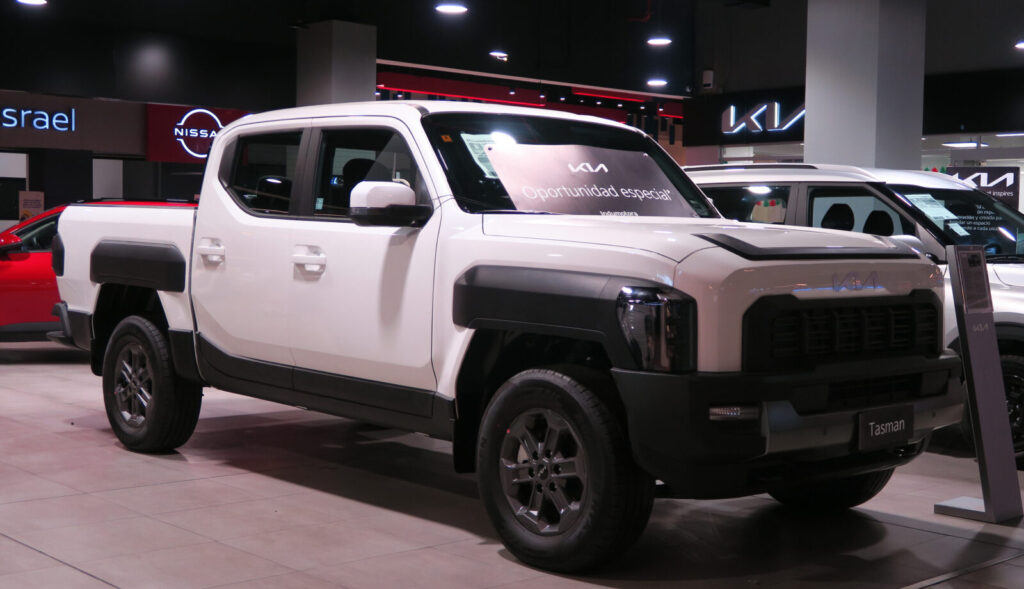
This is not your typical car company’s leap into the pickup game. Kia first dipped its toe into the water with the striking Tasman Weekender concept, built around a robust ladder frame and sporting the kind of adventure-ready features enthusiasts have been clamoring for, but the real star comes with the production version of the 2026 Kia Tasman. Unlike most unibody crossovers that occasionally dabble in hauling goods, Kia’s first-ever pickup truck is built from the ground up for serious work or serious adventure, or-the dream of the suburban weekend warrior-both.
From Concept to reality The concept vehicle shown at the 2025 Seoul Mobility Show revealed the brand’s intent: to design a highly capable pickup truck for both work and recreation. Featuring a body-on-frame construction, a more aggressive stance, ample ground clearance, all-terrain tires, and features to complement a more active lifestyle, the Tasman set the tone for what would become the production Tasman. A specialized module built in partnership with LG Electronics was designed to double as a mobile workspace, showcasing a multifaceted approach. With a powerful engine lineup, available all-wheel drive, and impressive towing and payload capacities, the Tasman looks poised to carve out its niche in this segment.
Plenty for Every Customer Inside and out, the Tasman was engineered to bridge the gap between utilitarian function and weekend fun. With options for gasoline and diesel engines based on the market, Kia is ensuring there’s a Tasman for nearly everyone. Available X-Line and X-Pro trims boast increased ground clearance and the hardware to take on more challenging terrains, while a diverse selection of interior options provides a blend of comfort, technology, and storage solutions.
1. Kia Enters the Midsize Pickup Market
Kia’s 2026 Tasman entry into the pickup truck space introduces a vehicle entirely different from a company known for passenger vehicles and SUVs. A body-on-frame chassis immediately makes it apparent that the Tasman was engineered with durability and capability in mind, as opposed to just being a crossover vehicle with an open truck bed. Kia appears intent on attracting both commercial applications and recreational lifestyle buyers, as the new ute has to perform on a variety of fronts. It will need to be just as comfortable for a commute on paved roads as it needs be a vehicle that haul materials and tug at a trailer in uneven, challenging environments.
Why the Tasman Stands Out:
- Body-on-frame pickup construction
- Designed for work and recreation
- Available off-road-focused variants
- Practical cargo and towing capability
- Modern technology inside the cabin
The midsize pickup segment is not exactly under-represented and the Tasman arrives into a segment with a significant amount of rivals. Instead of directly competing by simply using the traits of a traditional work truck, the Tasman is about the blend of capability with usability that the typical customer expects from a midsize pickup. It can just as easily handle a trip around town, as it can the gravel and the dirt along with you to an out-of-the-way camping or work-site location. This change in perspective reflects the changing perception of pickup truckownership, in that customers are often not business people who must use a truck for work all day every day.
The way Kia have pitched it means the Tasman is something of a broad and unfocused concept; it’s not a ute exclusively aimed at the worksite, nor just a lifestyle object to evoke ruggedness. The solid chassis, optional diesel, significant towing ability, off-road hardware, practicalities of the tray and technology within the cabin lend it some working credentials while comfortable seating, connectivity, climate control and driver aids make it very palatable as a daily family runner. Getting that balance right seems fundamental to the Tasman asKia takes on an new market.
2. The Tasman Weekender Concept Set the Direction
Before production of the Tasman got underway, the platform had a concept unveiled by Kia that teased the model’s capabilities, known as Tasman Weekender. Shown at the 2025 Seoul Mobility Show, this truck concept was envisioned to be aimed at outdoor enthusiasts and overlanders. Kia did not stop with just a styling update, but packed the Weekender with features for extreme terrain, over-landing trips, winter fun and primitive exploring. It was an initial sign that Kia desired to attach adventure to the Tasman nameplate along with typical pickup truck prowess.
Weekender Concept Highlights:
- 35-inch off-road tires
- Roof-mounted storage equipment
- Integrated exterior toolboxes
- Multi-rail cargo system
- Mobile office developed with LG
This idea kept the rigidity of the underlying truck chassis while also incorporating gear for real-world outdoors activities. The enormous 35-inch tires gave the Weekender a menacing stance and some additional offroad capability, protected by wide, color-matched fender flares to allow for them to fit. A pair of roof storage baskets offered an additional space for bulky gear, and a set of toolboxes provided a more secure and convenient place to organize your items. A multi-rail cargo system gave even more options to secure gear and this sort of attention to detail shows how Kia was thinking about the requirements for those who travel off the beaten path.
Maybe The Most Surprising Aspect One of the most interesting parts of the concept was what it was called, the Weekender, which Kia designed along with LG Electronics. One aspect of the Kia Weekender would have been a mobile office The working aspect was a good reflection of the modern day driver and their needs when driving a vehicle nowadays. These days an overland trip is not an opportunity to totally disengage from work, especially for those who work remotely, hence the idea to put a workstation in the vehicle. The highly positive public reaction to the Weekender would prove there was a demand for a vehicle that could get them around, carry all their gear, act as an adventure and recreation vehicle and double up as a mobile office workstation, if needed.
3. Muscular Exterior Design Meets Practical Engineering
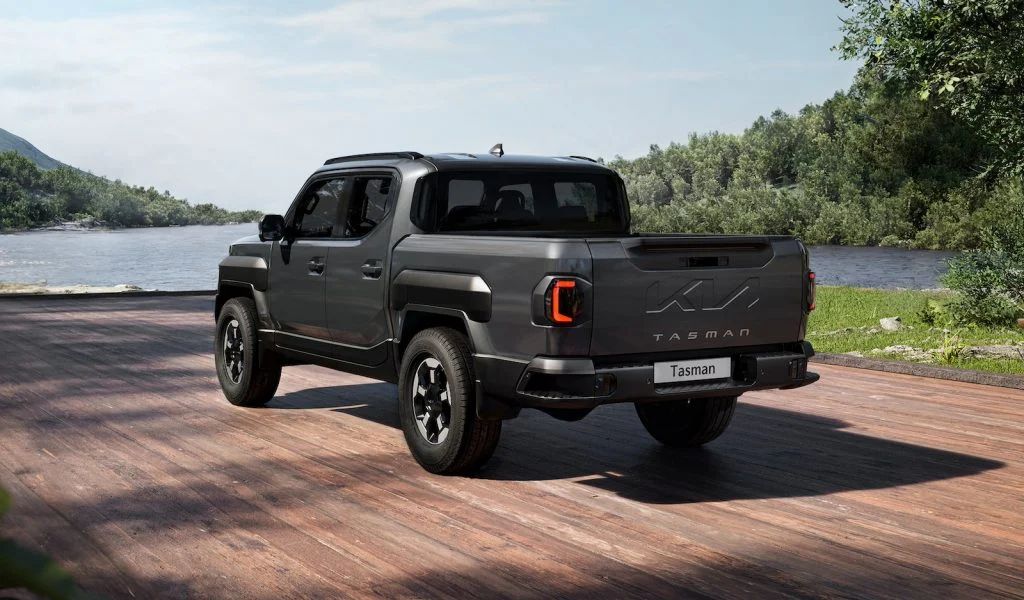
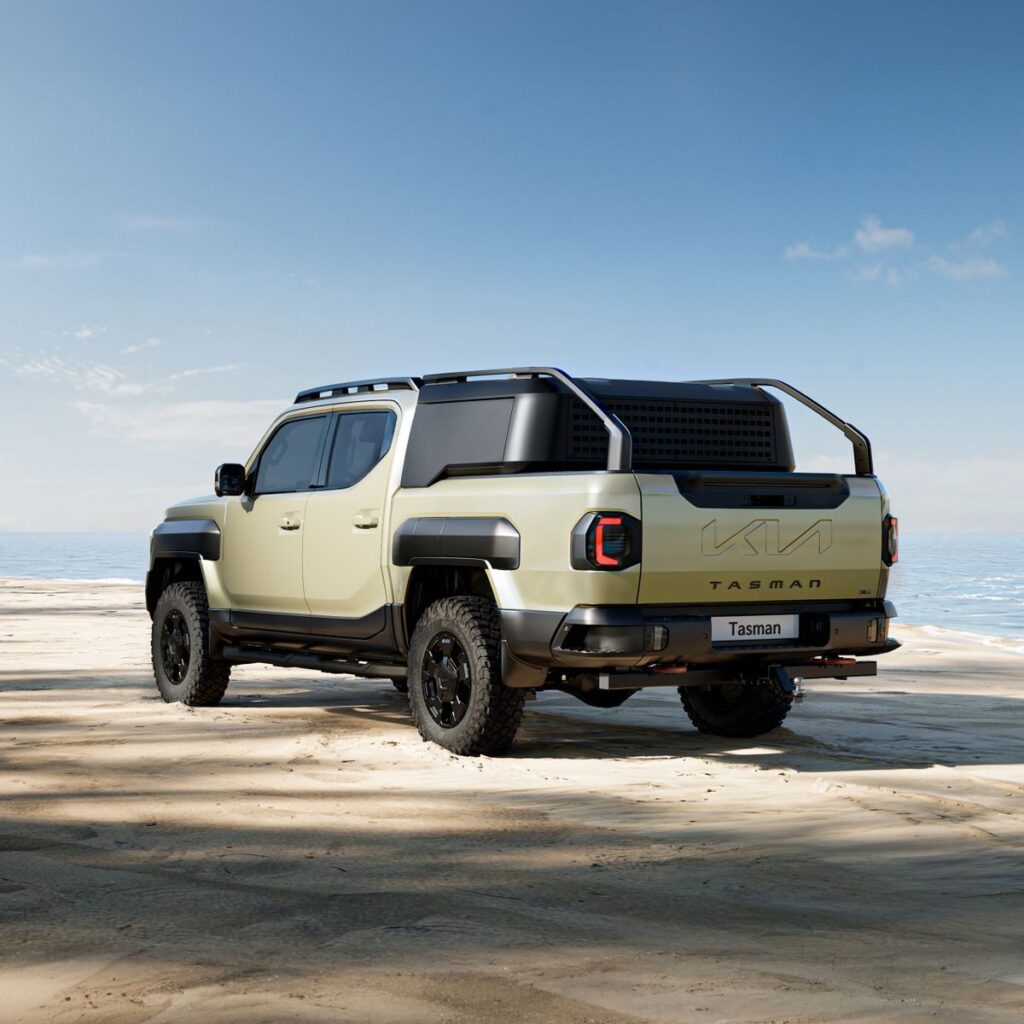
Kia has given the Tasman production vehicle a rugged and muscular exterior design to give it its own identity in a competitive segment. Its face receives the familiar Kia tiger nose grille (comprising horizontal slats and chrome detailing) that has been used to create a wide visual stance for the vehicle. Behind the grille is a massive radiator to offer adequate cooling under stress. The design includes sleek vertical LED headlamps to deliver a standout front fascia and to create a signature element distinguishing the Tasman from conventional pickup trucks.
Exterior Design Features:
- Distinctive tiger-nose grille
- Slim vertical LED headlights
- Active aerodynamic shutters
- Integrated bumper side steps
- Up to 6.3 liters of storage
The double-cab Tasman is 213.0 inches long, and rides on a 128.7-inch wheelbase, making it about five inches shorter than the Jeep Gladiator but about ten inches longer between the wheels than the Hyundai Santa Cruz, according to the supplied text. The truck has sculpted body panels, side-horizontal taillights at the rear, and active aero shutters that can reduce drag about 5% when at cruising speeds. The latter can also cut down on the flow of air around the truck without marring its purposeful look too badly.
Kia has also thought about things, that are actually built in from the exterior instead of tacked on afterward. Side steps that are built in the rear bumper would mean you can actually access the cargo area from both sides, something that could be handy when the tailgate is down or you are already loading the cargo area. The body is actually protected by a series of wide-section fender flairs which also houses up to 6.3 liters of storage, all the way around and in the body. The Tasman’s colors come in different grades for you, with either a restrained Gravity Gray or a more exciting Aurora Black Pearl for you to choose from, demonstrating that it has come off the drawing board designed to work as hard as it looks.
4. Gasoline and Diesel Engines Provide Different Strengths
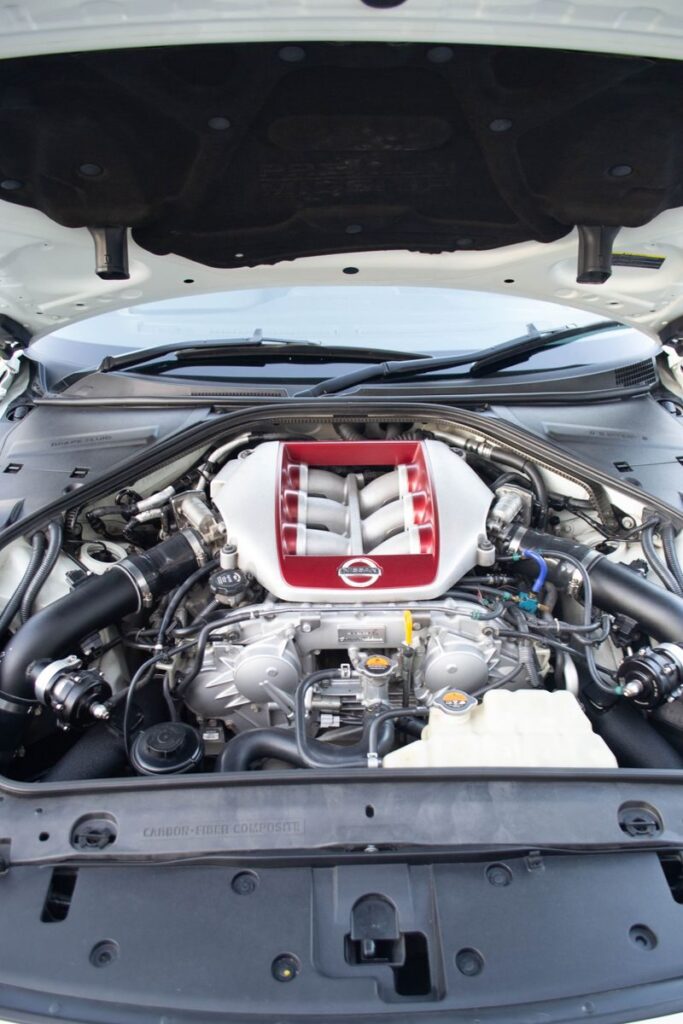
The availability of powertrain differs depending on market, yet the Tasman is capable of getting a 2.5-liter Turbocharged Theta 3 gasoline four-cylinder engine, and it creates 281 hp along with 317 lb-feet associated with torque (about 421 Nm). To complement this particular fuel engine is a Kia supplied eight-speed automated transmission, giving this truck the regular transmission package to be able to shift by means of efficiently in several driving circumstances. Everything must be strong adequate for daily driving although strong sufficient for hauling and also moving tasks.
Available Powertrain Choices:
- 2.5-liter turbo gasoline engine
- 281 horsepower gasoline output
- 2.2-liter CRDi diesel option
- Eight-speed automatic transmission
- Six-speed manual diesel option
Kia still does diesel in key markets, and will offer a 2.2-liter CRDi turbocharged diesel engine. Depending on the tuning, it will churn out roughly 207 hp (154 kW) to 210 hp (156 kW) and about 325 lb-ft of torque (441 Nm). Like the gas engine, this motor can be mated to an eight-speed automatic, or for the purists, a six-speed manual. A true three-pedal setup should lend the Tasman a more classic feel for those seeking more direct control and potentially sway those in markets where manuals are still preferred.
Both engine types should receive cooling systems designed for extreme operating conditions, as when carrying or towing loads, including when driving uphill over long, sustained gradients, thermal loads can become much greater for a pickup truck than for a car. For this reason, powertrain design in a pickup truck is much more about the real-world usage profile in other words, the available torque in different operating ranges, the operation of the transmission, its capability in hot climates and the ability to operate the entire powertrain for extended periods at high loads rather than simply specifying outputs that are good on paper. Giving potential customers a choice between powertrains makes it easier for the Tasman to conform to different regional preferences and priorities.
5. Efficiency and Acceleration Give the Tasman Everyday Appeal
An essential attribute in the case of any medium-sized pickup is fuel economy, since these cars generally work not only as weekend “haulers” but also for the weekly trip to work, to pick up the kids at school, etc. The catalog that has arrived to our hands gives the 2.5-liter turbo gasoline, a fuel economy of approximately 8.6 km/L or equivalent to a real 20.2 mpg. The cylinder deactivation system is the solution adopted to try to achieve some savings without giving up the boost when we need acceleration; In this way, when we do not need 100% of the engine’s potential, it can be more thrifty and save fuel, while reserving a reserve of power for when it matters most.
Everyday Performance Advantages:
- Approximately 20.2 mpg combined
- Cylinder-deactivation technology
- Around 7.2-second 0-60 mph time
- Strong mid-range engine response
- Multiple powertrain configurations
Even the Tasman has sufficient capability for the pace that many trucks of its nature and use demand from a dead stop at up to 60 mph in 7.2 seconds, certain configurations are claimed. It is not aiming to be a sports truck by any means but is responsive for moving around city traffic. A truck engine really needs to make power across the rev range so it’s easier for the Tasman to merge on a highway or pass another vehicle or climb a grade with cargo if it can help it.
Balancing capability and efficiency is key given that Kia wants the Tasman to appeal to different users. For a commercial user, torque, payload capacity, towing capacity and robustness may be more important, while for a lifestyle user, ease of use, fuel economy, acceleration and off-road capability might be priority. Kia’s powertrain strategy tries to compromise this for both ends of the customer base rather than giving everyone one mandatory mechanical setup. Offerings for the Tasman are expected to featureurbocharged petrol as well as diesel power, available with auto or manual gearboxes in select markets, catering to a broad scope of driving styles and workplace needs.
6. X-Line and X-Pro Take the Tasman Off the Pavement
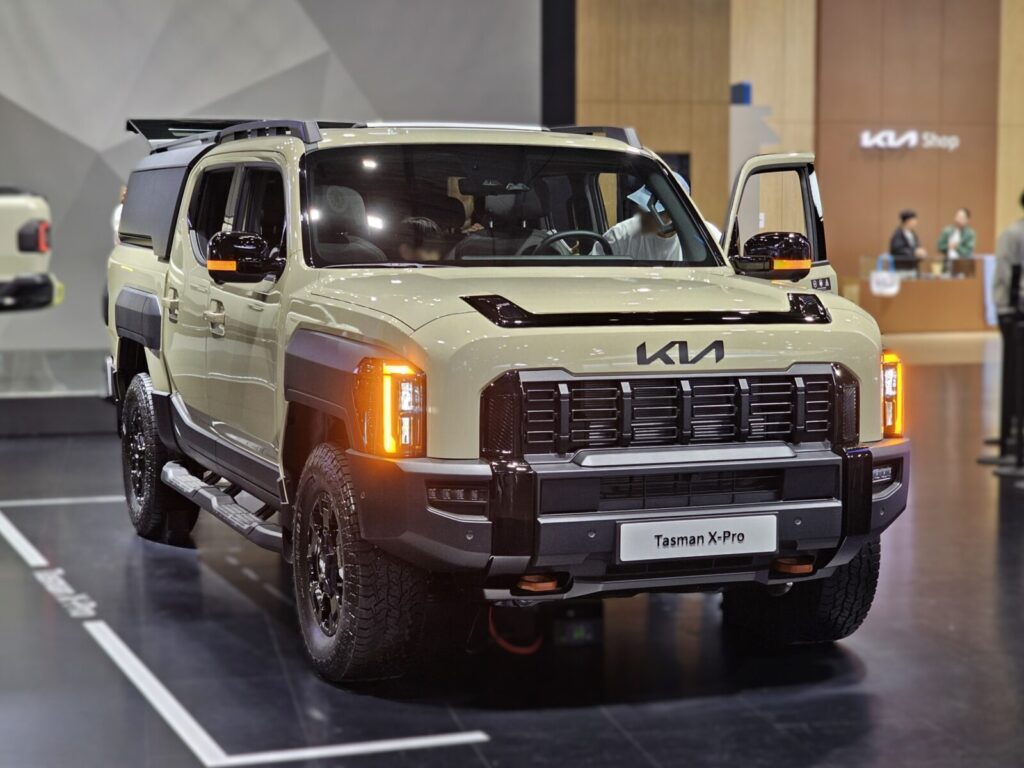
Kia developed dedicated X-Line and X-Pro versions for customers who expect their trucks to spend serious time away from paved roads. Standard Tasman models provide approximately 9.1 to 9.5 inches of ground clearance, but the X-Pro takes that capability further with a factory suspension lift of about 1.1 inches. Its total ground clearance reaches approximately 252 mm, or 9.92 inches. The increased clearance gives the truck more room beneath the chassis when crossing ruts, rocks, and uneven terrain where a lower vehicle could make contact with the ground.
X-Pro Off-Road Equipment:
- Approximately 9.92-inch ground clearance
- 17-inch wheels
- Rugged all-terrain tires
- Electronic locking rear differential
- Low-speed crawl control
The X-Pro also receives 17-inch wheels fitted with rugged all-terrain tires intended to provide additional grip on loose and uneven surfaces. An electronically locking rear differential helps distribute available torque when traction becomes limited, while low-speed crawl control assists the driver during difficult sections. Specialized drive modes are available for different terrain conditions, including rock and sand settings. These systems reduce the amount of manual adjustment required from the driver while allowing the truck to adapt its behavior to changing surfaces and obstacles.
Visibility becomes particularly important when negotiating technical trails, which is why Kia incorporates a ground-view monitor into the off-road equipment. Camera feeds can be displayed on the cabin screens to help drivers identify obstacles around the front and underside of the vehicle. Both X-Line and X-Pro versions also receive bright orange front recovery hooks, providing clearly accessible attachment points when the truck needs assistance. These features demonstrate that Kia is treating the Tasman’s off-road capability as a genuine functional requirement rather than simply adding rugged styling elements.
7. Water Fording and Chassis Strength Support Serious Utility
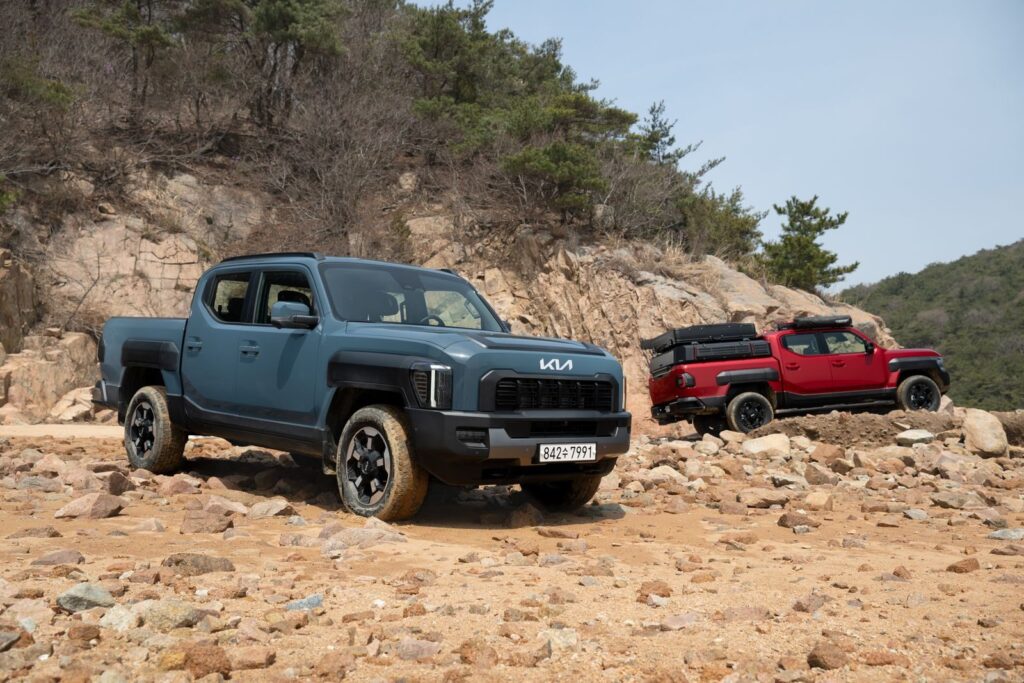
The Tasman’s off-road equipment is designed to deal with more than loose gravel and shallow trails. Kia states that the truck can ford water up to approximately 32 inches deep, supported by elevated air intakes and chassis sealing intended to protect important systems. Water crossings can be among the most demanding situations an off-road vehicle encounters because they expose the drivetrain, electrical systems, and underbody components to conditions they rarely experience on ordinary roads. The Tasman’s design therefore emphasizes protection as much as traction when operating in remote environments.
Chassis and Off-Road Strengths:
- Approximately 32-inch water-fording depth
- Elevated air intakes
- Protective underbody skid plates
- Advanced all-wheel-drive system
- Strong body-on-frame architecture
Underbody skid plates provide another layer of protection when the truck encounters rocks, deep ruts, and other obstacles. These components help shield vulnerable drivetrain areas from impacts that could otherwise cause expensive damage far from a paved road. Combined with an advanced all-wheel-drive system capable of distributing power across the wheels, the X-Pro is designed to maintain forward progress when surfaces become unpredictable. This combination makes the Tasman particularly relevant to overlanding users who may travel through environments where access to recovery services or mechanical assistance is limited.
The truck’s body-on-frame architecture also contributes to its working credentials. A rigid frame provides the foundation needed for carrying substantial loads and supporting towing duties, while the suspension system combines independent front suspension with a leaf-sprung solid rear axle. In specified single-cab rear-wheel-drive configurations, the Tasman can carry a maximum payload of approximately 2,635 pounds, or 1,195 kg. That figure gives owners considerable flexibility for transporting tools, equipment, camping supplies, or specialized accessories without turning the pickup into a purely recreational vehicle.
8. Towing and Cargo Features Make the Tasman a Genuine Work Truck
Towing capability is one of the most important measurements for a pickup intended to compete with established midsize trucks. The 2026 Tasman is rated to tow up to approximately 7,716 pounds, equivalent to 3,500 kg. That places it alongside leading competitors in the segment and gives owners enough capacity for substantial trailers, recreational equipment, work machinery, or other heavy loads. Trailer sway control automatically adjusts braking forces when necessary to help keep a trailer stable, particularly at highway speeds where uncontrolled movement can quickly become difficult for the driver to manage.
Work-Focused Features:
- Up to 7,716-pound towing capacity
- Trailer sway control
- Hill descent control
- Dedicated 4LO low-range mode
- Integrated cargo-bed power outlets
Additional towing-focused features help make heavy-trailer operation less stressful. Hill descent control assists when traveling down steep slopes, while a dedicated 4LO low-range mode provides controlled low-speed movement when maximum torque multiplication is required. The Tasman is described as capable of handling inclines of around 30 degrees, reinforcing its suitability for difficult terrain. These systems are especially useful for drivers who regularly transition between towing on paved roads and navigating rough access routes, where maintaining control at low speed can be more important than outright engine power.
The cargo bed is designed with similar attention to practical use. Integrated lighting makes it easier to load or unload equipment after dark, while built-in power outlets can support power tools, camping equipment, or other electrical devices. Mounting points around the bed perimeter provide convenient locations for ropes and tie-down straps, helping keep cargo secure. Corner steps integrated into the bumper provide easier access when the tailgate is lowered. These details may appear small individually, but together they can make a significant difference for owners who use the truck frequently for work or outdoor activities.
9. The Cabin Combines Utility With Modern Technology
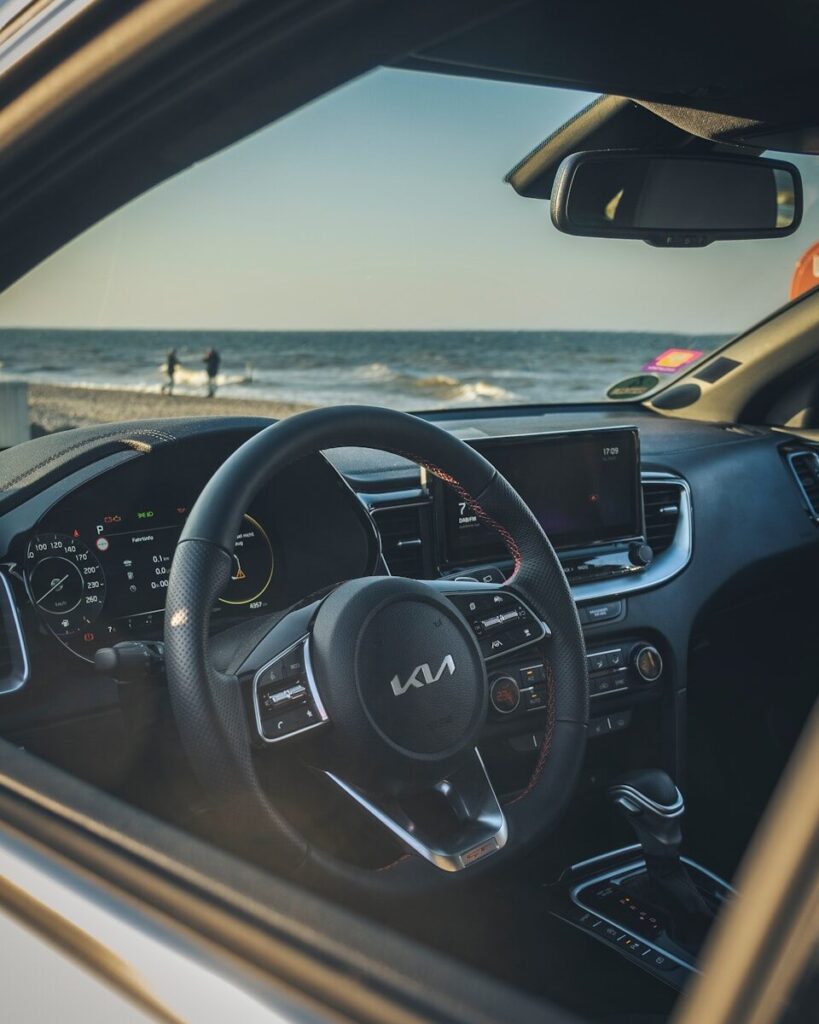
Inside, the Tasman attempts to move beyond the basic work-truck cabin by combining rugged practicality with modern technology and passenger comfort. The dashboard uses a wide glass panel incorporating two 12.3-inch displays. One functions as the digital instrument cluster while the other handles infotainment duties. Kia has also retained physical switches and rotary controls for important climate and off-road functions. This combination gives drivers digital information where it is useful while keeping frequently used controls accessible without forcing every function onto a touchscreen.
Interior Convenience Features:
- Dual 12.3-inch display setup
- Physical climate controls
- Available premium seating materials
- Dual-zone automatic climate control
- Approximately 33 liters of hidden storage
Seating and interior materials vary according to trim level. Base LX models can be equipped with durable cloth seating, while higher SX versions offer softer premium materials and leather. Dual-zone automatic climate control helps maintain separate temperature preferences for occupants, while rubberized floor coverings make it easier to clean mud, dirt, and water after outdoor trips. Acoustic insulation is also used to keep highway cabin noise to approximately 68 decibels. A column-mounted gear selector creates additional room on the center console, giving the cabin a more open and functional layout.
Storage is another major focus because a pickup’s usefulness does not end with its exterior cargo bed. The center console incorporates a folding cover that can create a flat working surface suitable for a laptop or meal. Rear seats can slide and recline, while the available legroom is designed to accommodate adult passengers comfortably. Lifting the split-fold rear-seat cushions reveals approximately 33 liters of additional storage space. This hidden compartment provides a convenient location for tools, valuables, or smaller equipment that owners may prefer to keep inside the cabin rather than exposed in the bed.
10. Connectivity, Configurations, and Accessories Expand the Tasman’s Role
Modern pickup buyers increasingly expect strong connectivity, and the Tasman incorporates wireless Apple CarPlay and Android Auto as standard features in the supplied specifications. Dual wireless charging pads and multiple USB ports help passengers keep devices powered during long journeys. Buyers can also choose premium audio systems from Harman/Kardon or Bose depending on configuration. Over-the-air software updates allow selected navigation and infotainment functions to be updated remotely, reducing the need for owners to visit a service center simply to keep electronic systems current.
Technology and Configuration Highlights:
- Wireless Apple CarPlay and Android Auto
- Dual wireless charging pads
- Multiple USB ports
- Available Harman/Kardon or Bose audio
- Kia Drive Wise assistance systems
Kia Drive Wise provides the Tasman’s driver-assistance technology, including adaptive cruise control with stop-and-go capability, blind-spot monitoring, and lane-keeping assistance. Automatic braking systems can identify pedestrians and cyclists, while a 360-degree camera helps with parking, maneuvering, and trailer hitching. The model is also offered in different cab and bed configurations, including single-cab versions for work-focused users, double-cab models with a six-foot bed, and chassis-cab configurations suitable for specialized commercial bodies. The range includes Baseline, LX, S, EX, X-Line, SX, and X-Pro variants.
The Tasman’s accessory range further expands its potential for overlanding and customized use. Available equipment includes beadlock-style wheels, side steps, ladder racks, sports bars, and the Double Deck rear storage box. A full deck topper can transform the bed into a weather-resistant enclosed cargo area, while single- and double-deck arrangements can be combined with tonneau covers and roof rails. Production is based in South Korea, with the global rollout beginning there before expanding into Australia, the Middle East, Africa, Asia-Pacific, and Latin America. North American availability remains unconfirmed in the supplied material, but the Tasman’s combination of work capability, off-road hardware, technology, and customization gives Kia a strong foundation for its new pickup venture.