Unsold C8 Corvette Inventory Rises on Dealer Lots as Prices and Markups Fall
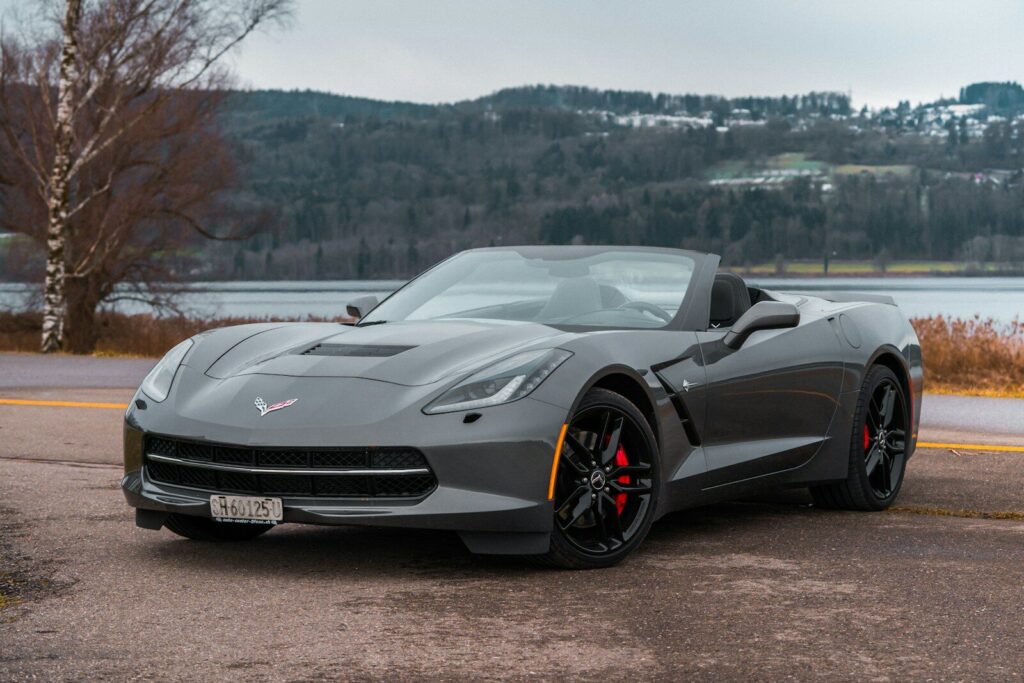
The Chevrolet C8 Corvette has gone through a remarkable change since its debut in 2019. What started as one of the most difficult performance cars to buy quickly became surrounded by waiting lists, dealer markups, supply shortages, and prices that often climbed far beyond its original sticker price. The rear mid-engine layout made the C8 a major step forward for the Corvette, while its performance attracted enormous attention from enthusiasts. For a long time, simply finding one at a reasonable price was a challenge.
Today, however, the Corvette market looks very different. Thousands of new C8s are sitting on Chevrolet dealership lots, while discounts, incentives, and falling markups have created a much more accessible buying environment. Older model-year vehicles are also adding pressure for dealers to clear inventory before more cars arrive. For shoppers who once walked away from the C8 because of inflated prices, the current market offers a completely different situation worth examining.

1. The C8 Corvette Has Entered a Completely Different Market
A game-changing new-generation C8 Corvette arrived at the end of 2019 with huge change at America’s legendary sports car. No more traditional front-engine layout, replaced by a rear mid-engine design that added exotic proportions and appeal to a car that started at $58,900 when it arrived. The hype was ridiculous, with demand so high the new-model buyers’ waitlists got taller and a lack of new-car allotments to average buyers felt non-existent as dealerships across the nation jacked up the bottom line to buy C8 Corvettes and thus acquired many a buyer’s car (a huge factor that kept transaction prices often north of six figures). An even smaller amount of high-octane Z06 models escalated the madness to a new level, causing Chevy to warn dealerships about gouging.
Key Signs of the Market Shift :
- C8 launched with $58,900 pricing
- Demand quickly overwhelmed available inventory
- Dealer markups exceeded $100,000 frequently
- Supply problems tightened Corvette availability
- Chevrolet warned dealers about pricing
Now, however, the tides have turned. The special pre-launch excitement has waned and production is now absent of many of the supply restrictions that originally hampered it, as Chevrolet dealerships have large amounts of new Corvettes in the warehouse. Now, rather than being on waitlists and paying thousands of dollars above sticker to get the car they wanted, buyers are now able to buy thousands of mid-engine sports cars sitting unsold on the lot. This has resulted in a major reversal of where the power in the relationship has been, as it’s now the consumers that have more options available to choose from when they decide what to buy, rather than the dealers themselves. Instead of buying rare cars, people are now able to compare price, inventory, incentives, and colors without having to lose the car they want due to a short supply.

2. More Than 5,000 C8 Corvettes Are Sitting on Dealer Lots
Recent Corvette inventory tracking really shows how big the backlog has grown. Corvetteblogger.com has been running its Corvette Tracker series and as of when this was written, there are more than 5,700 C8 Corvettes on dealer lots in the United States. While Chevrolet’s public-facing inventory system showed a slight decline as cars were purchased and shipped, there were still well above 5,000 to 5,500 Corvettes available on dealer lots. That’s quite a difference from the early years of the C8, when acquiring an available Corvette could be very difficult. The bulk of the inventory is made up of 2025 models, with a handful of 2023 and 2024s mixed in, meaning you’re no longer left to wait for a build if you want to buy a mid-engine Chevy. In many instances, you can walk into a Chevrolet dealer, take a test drive, haggle over the price, and leave with the keys of a new C8.
What Current Inventory Reveals :
- More than 5,700 C8s tracked
- Thousands remain available nationwide
- 2025 models dominate surplus inventory
- Older 2023 models remain available
- Dealers face growing inventory pressure
That surplus is especially significant because the longer cars are on the lot, the more dealerships have to pay the finance companies for garage space. Floorplan costs continue to accumulate as long as a dealer has unsold cars. This makes it more difficult for dealerships to hold onto old inventory as more vehicles arrive. That gives us a stark contrast to the beginning of the C8 market when it was more scarce and stronger pricing power was on the seller’s side. Now, buyers have more options and opportunities than they previously had. Buyers don’t have to take whatever the closest dealership has in stock, as they now have the ability to view multiple vehicles at varying dealerships and review different specs, trims, model years, etc. at the same time. Some buyers may come across 2025s along with remaining 2024s or older. Multiple models from multiple dealerships allows buyers more opportunity to find the best deal.

3. Rising Interest Rates Helped Cool Corvette Demand
These factors made the market for C8s suddenly much different. While vehicle financing becomes more difficult with higher interest rates, a performance car like the C8 becomes nearly impossible to finance for consumers who might only have one or two cars on their mind. Furthermore, after several years of record setting used car prices, the used market is slowing down, which naturally hurt the desirability of cars in general, including the C8. The previous high used car prices pumped up the entire market’s pricing, making the C8 more tempting than it otherwise might have been, until those prices normalized. Both those factors combined to make the current environment one in which C8s aren’t quite the investment they once seemed to be.
Forces Changing Corvette Demand :
- Financing costs have increased significantly
- Used values have started cooling
- Buyers resist inflated vehicle pricing
- New inventory has expanded considerably
- Dealers must adjust pricing strategies
These economic factors directly impacted supply and demand dynamics. Back in the early C8’s C8, when the production was limited and the demand was high, it was a seller’s market: If you want a Corvette, you will pay a premium for one. Dealers could name their prices easily, especially with delays and manufacturing complications from the pandemic. Now, that situation is almost the opposite. Cars are available, financing is tight, and people are less willing to pay a premium for a Corvette. It is still a Corvette that costs a lot of money, but with the cost of a new car and the value of your trade in both changing in your favor, the transaction becomes less about the headline price of the car and more about the total package. This has caused dealers to use pricing methods that are more appropriate for this market not the extreme scarcity of the C8’s C8 launch.

4. The Base C8 Stingray Still Offers Serious Performance
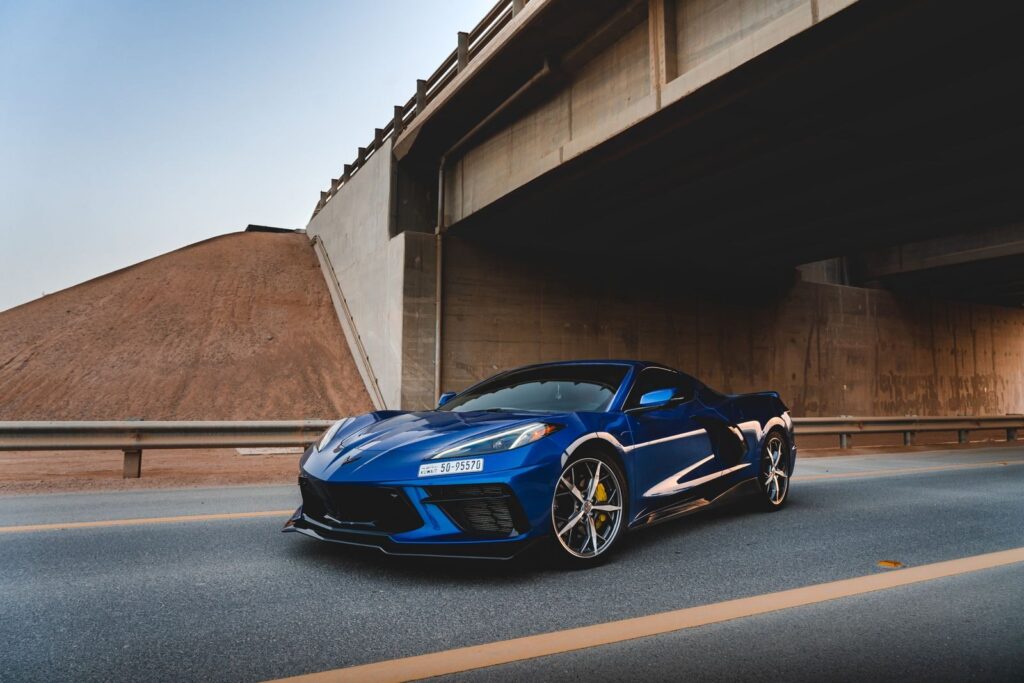
Despite evolving pricing in the marketplace, the current C8 Stingray remains a surprisingly powerful sports car. The base C8 Stingray starts at $68,300 and features a mid-mounted V8 that produces 495 horsepower and is paired with a standard eight-speed dual-clutch transmission, enabling it to accelerate from 0-60 in 2.9 seconds and reach a top listed speed of 194 mph. It’s a force to be reckoned with on the open road, and it’s these sorts of staggering stats that help detail just why C8s have been widely considered a budget supercar in recent years. The rear mid-engine arrangement also bestows on the Corvette exotic proportions and performance potential traditionally found on far more costly vehicles. It combines a reasonable starting price with European supercar-like acceleration, handling, and esthetics.
Stingray Performance At A Glance :
- 495-horsepower mid-mounted V8 engine
- Eight-speed dual-clutch transmission included
- Zero to 60 takes 2.9 seconds
- Top track speed reaches 194 mph
- Starting sticker price is $68,300
In today’s pricing environment, those specifications are important. The Corvette’s performance remains intact despite increased dealer inventory, giving buyers a chance to purchase the same basic mid-engine sports-car package at a lower cost than during the C8’s early model years. Reported inventory levels have pushed some asking prices below the $68,300 starting price, helped by manufacturer incentives, dealer discounts, and promotional offers. The Drive reported one 2025 Corvette priced at $58,280 before taxes and fees, compared with a $58,900 MSRP when the C8 launched in 2019. Some offers may require Costco membership, while regional factory incentives can further reduce the final price.
5. Z51 Models and Special Colors Are Also Becoming More Accessible
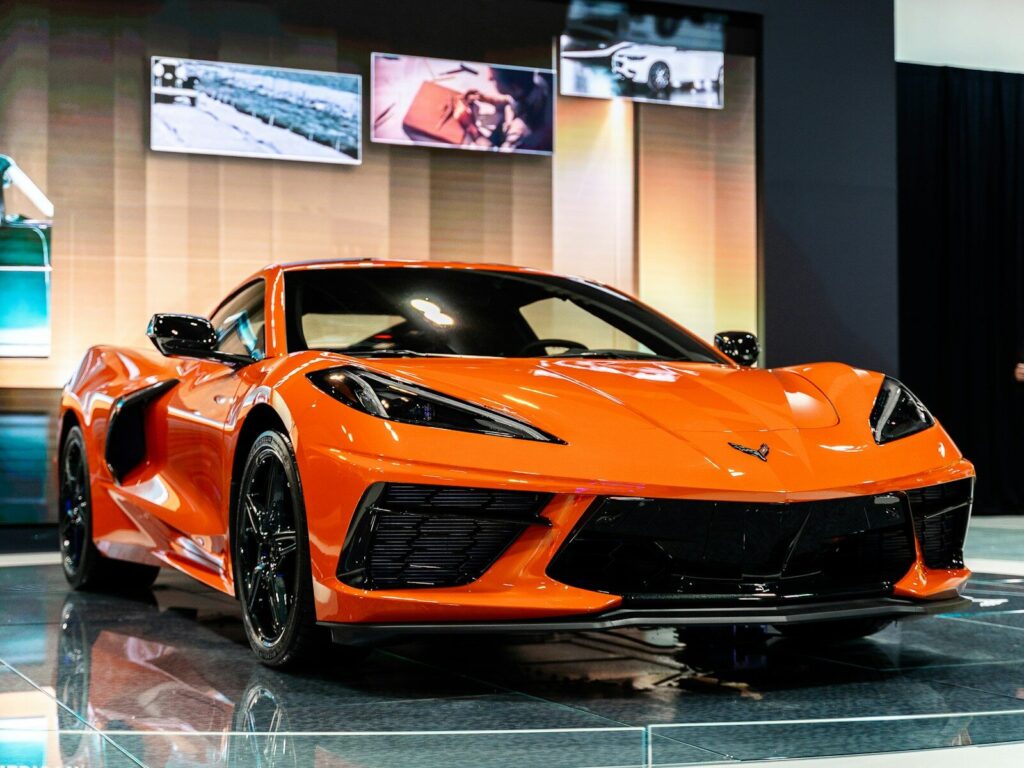
The year to date inventory increase doesn’t just apply to the base models, either. Buyers seeking more equipment also can find value within the current market. A Z51 equipped performance pack could be found in the existing inventory for less than $70,000 before taxes and licensing, provided the shopper was willing to expand their color choices beyond the more common five shades of gray currently in inventory. Increasing the budget up to $75,000 adds any of the colors available in the order guide plus more. You could even pick a Sebring Orange car with a performance pack if you don’t want to order a car and take delivery. The fact that you can find new inventory at lower transaction prices gives you more options of equipment and color combinations.
More Choices Beyond Basic Stingrays :
- Z51 models can stay below $70,000
- Larger budgets unlock more colors
- Sebring Orange remains a standout
- Performance equipment adds extra capability
- Available cars reduce ordering delays
The wider C8 range from Chevrolet has also changed how buyers might see the regular Stingray. The manufacturer has been giving a huge amount of time to the high-performance Corvette ZR1 recently, a 1,064-horsepower beast that was introduced last July and quickly made headlines with record-breaking track time. The ZR1 is priced from $174,995, placing it in another segment of the Corvette spectrum entirely. The hybrid E-Ray is another high-performance potential for the platform. While all of the other C8 supermodels are much more expensive, the Standard Stingray still offers most of the high-performance options in the more affordable range without the ZR1 price tag. It’s a contrast as stark as this: a Corvette, with a price close to $60,000, may coexist in the same model cycle as a $174,900 ZR1.
6. The Corvette’s Rear-Mid-Engine Transformation Changed Everything
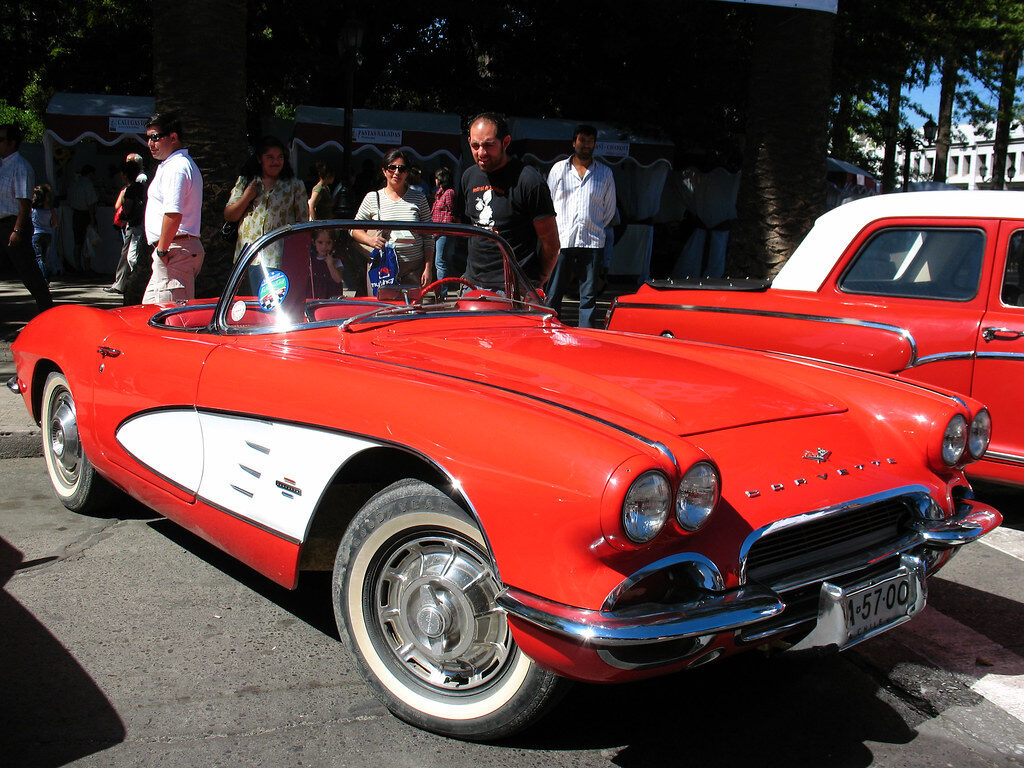
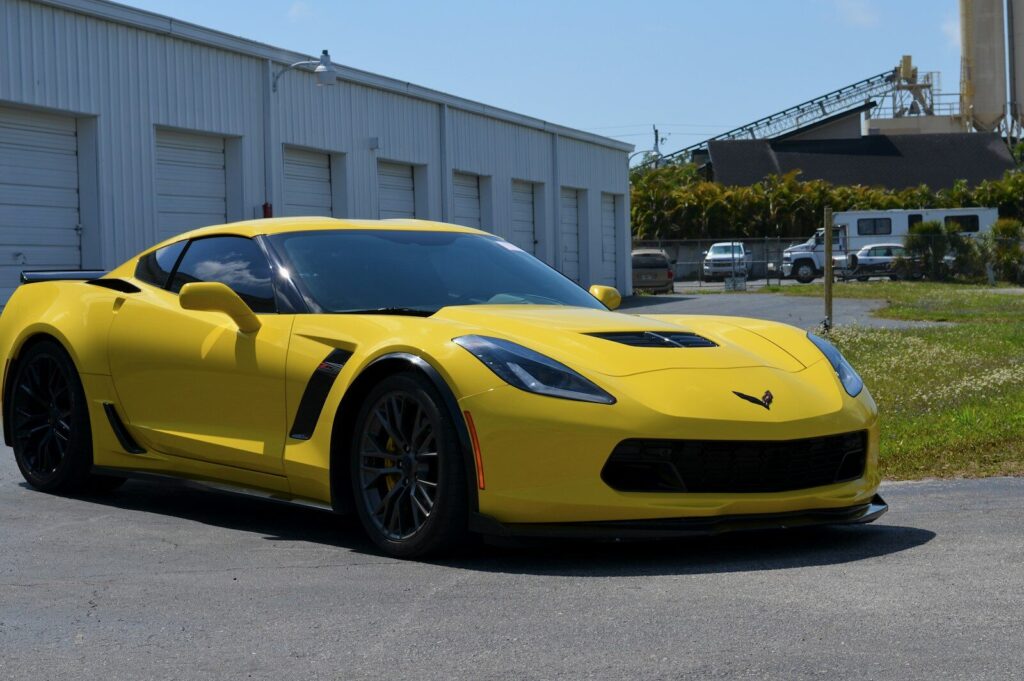
The Chevrolet Corvette dates back to 1953 and spans eight generations, from C1 to C8. Chevrolet’s flagship sports car has long been known for unique styling, lightweight fiberglass or composite bodywork, strong performance, and a relatively affordable price. For seven generations, the Corvette used a front-mid-engine layout, but the C8 marked a major mechanical change with its transversely mounted rear-mid engine, giving it exotic proportions and performance. Over the years, the Corvette also gained V8 power, advanced chassis features, and other technical improvements. The first three generations used traditional body on frame construction, while the C4 moved to GM’s unibody Y-body platform.
Eight Generations Of Corvette Evolution :
- Corvette production began in 1953
- Eight generations span C1 through C8
- C8 introduced rear-mid-engine architecture
- Earlier generations used front-mid-engine layouts
- Corvette remains Chevrolet’s halo car
The Corvette’s history also includes major changes in styling and body configurations. The second generation arrived in 1963 with coupe and convertible versions, while production later moved from Flint and St. Louis to Bowling Green, Kentucky, in 1981, which is also home to the National Corvette Museum. Known as “America’s Sports Car,” the Corvette’s cultural identity grew after appearing in the early 1960s TV series Route 66. Its name came from the corvette, a small, maneuverable warship, following a suggestion from Myron Scott that was accepted by GM executives. From a modest six-cylinder convertible to a rear-mid-engine V8 sports car, the Corvette has continually evolved toward greater performance and a stronger identity.
7. The Possible C9 Corvette Could Change the Equation Again
Attention is shifting toward what could come after the current C8 generation. Automotive enthusiasts are discussing the possibility of a ninth-generation C9 Corvette debuting around 2028. Since the C9 is still years away, its final technical direction remains uncertain. It could become fully electric, use an evolved hybrid setup like the E-Ray, or continue with internal-combustion performance while adopting technology influenced by Formula 1. These possibilities show how much the Corvette could change as Chevrolet plans the future of performance cars. For now, the C8 remains the current rear-mid-engine internal-combustion Corvette available to buyers.
Possible Directions For C9 :
- C9 could arrive around 2028
- Fully electric power remains possible
- Hybrid technology could continue evolving
- Internal combustion remains another possibility
- Formula 1 technology could influence development
The possibility of a future C9 gives the current C8 market a distinct position. Today’s unusually high dealer inventory will not last forever, as unsold vehicles are gradually sold and the C8 moves further through its lifecycle. The C8 is already a significant part of Corvette history, introducing a rear-mid-engine layout after seven generations of front-mid-engine architecture. Its place between traditional internal-combustion Corvette history and a potentially different future generation makes it especially notable. Buyers considering a C8 today are looking at both a continuation of America’s sports-car tradition and a major technological shift in Corvette history.

8. Large Dealer Inventories Can Create More Negotiating Room
For shoppers considering a new C8, dealership inventory levels are especially important. A dealer with five, ten, or more unsold Corvettes faces different financial pressures than one with only a single vehicle, as unsold cars can continue generating financing costs while taking up space. This can create pressure to move vehicles that have stayed on the lot. Buyers can use online inventory tools, Corvette tracking resources, and Chevrolet’s official locator to find dealerships with multiple C8s. Comparing several dealers can reveal price differences and available discounts, meaning shoppers may not have to accept the first price offered when similar cars are available elsewhere.
Smart Inventory Shopping Tactics :
- Compare several dealership inventories
- Target stores holding multiple Corvettes
- Check online inventory before visiting
- Track older models still available
- Compare prices across regional dealers
The ability to walk away also becomes more meaningful when supply is high. During the early C8 period, buyers had limited alternatives because inventory was scarce and waiting lists were common. A shopper who rejected one dealership’s pricing could face a long wait before finding another car. With thousands of Corvettes currently distributed across dealer lots, that pressure has weakened. If one dealer refuses to remove unwanted fees or negotiate on the vehicle price, another store may have a similar Corvette available. This does not guarantee that every dealership will offer the same terms, but it gives buyers more opportunities to compare. The key difference is that consumers now have alternatives. Rather than treating a particular Corvette as a rare opportunity that must be purchased immediately, shoppers can evaluate multiple vehicles and dealerships. The current inventory surplus therefore changes not only pricing but also the overall negotiation dynamic.

9. Timing and Incentives Can Further Reduce the Purchase Price
The timing of a Corvette purchase can also affect the final transaction. The information provided suggests that shoppers should pay attention to the end of a month, the end of a sales quarter, and model-year transitions. During these periods, dealership sales teams and managers may be working toward volume targets and quota deadlines. When specific sales goals need to be reached before the calendar changes, managers may have greater motivation to reduce margins to complete additional transactions. The large amount of existing C8 inventory makes these timing considerations particularly relevant because dealerships already have reasons to move older vehicles. Buyers should also examine Chevrolet’s current low-rate financing offers, manufacturer cash incentives, and regional promotional programs rather than focusing only on the advertised vehicle price.
Ways To Strengthen Your Deal :
- Shop near month-end deadlines
- Watch for sales-quarter targets
- Compare manufacturer cash incentives
- Review low-rate financing programs
- Consider your trade-in value
A trade-in can also affect the overall transaction. Instead of looking only at the Corvette’s purchase price, buyers should consider the value offered for their existing vehicle and how it changes the final cost. Manufacturer incentives, regional programs, financing offers, and dealer discounts can also affect the effective price, with some requiring qualifications such as Costco membership. Together, these factors can make the final transaction significantly different from the original sticker price. With more inventory and greater choice available, careful comparison is important when determining what a particular C8 actually costs.
10. The C8 Corvette Has Finally Returned To A Buyer-Focused Market
For years, buying a mid-engine Corvette meant facing waiting lists, dealer markups, supply constraints, and limited choices. The C8’s launch created huge excitement, while pandemic disruptions and production stoppages tightened supply further. Some dealer markups pushed prices above $100,000, prompting Chevrolet to warn dealers about excessive pricing. Today, conditions are very different. More than 5,000 C8 Corvettes remain on dealer lots, with many being 2025 models. Prices have also fallen below the current $68,300 Stingray starting price, with one reported example at $58,280 before taxes and fees. This gives buyers far more choice than during the C8’s early years.
Why The Current Market Matters :
- Thousands of C8s remain available
- Dealer markups have fallen considerably
- Discounts are changing transaction prices
- Stingray performance remains highly competitive
- Buyers now have greater choice
The current Corvette market shows how quickly automotive conditions can change. A car that once required buyers to compete for allocations can later become widely available at dealerships. The C8 Stingray still offers a 495-horsepower V8, rear-mid-engine layout, eight-speed dual-clutch transmission, 2.9-second 0-60 acceleration, and a 194-mph top speed. Higher-performance versions such as the Z51, E-Ray, and 1,064-horsepower ZR1 have also expanded the C8 lineup. Looking ahead, the possible C9 could bring electric, hybrid, or further-developed internal-combustion technology. For now, the C8 remains a modern rear-mid-engine American sports car available in unusually large numbers, giving buyers more opportunity to compare inventory, incentives, financing, trade-ins, and dealer pricing.