



Britain’s Lost Wings: 10 Fascinating Cancelled Fighter Jets

When we look back at the annals of aviation history it’s almost impossible to omit the plethora of superb British fighter aircraft that are often considered legendary, whether it’s the battle of Britain veteran Spitfire or, at one time in aviation history the revolutionary Harrier. This impressive range of aircraft was in the thick of developing many aspects of the art of war which were recognized with award winning achievement worldwide. Behind the success story however there are many more where excellent designs have failed to see the light of day for one reason or another and are stuck to designs for one stage to another or prototype stages only.
More than simple experiment failures, these ignored projects represent some of the most audacious designs British engineers conjured up to counter the ever-more-sophisticated threats faced by the armed forces. Others would showcase the design potential of aviation technology decades in advance, or be simply the apex of traditional aircraft design before shifted priorities deemed them no longer viable, their revolutionary concepts, if not the airframes themselves, surviving to benefit subsequent military aviation developments.
Political decisions, shifts in strategic priorities, funding restraints and accelerated developments in technology all went in one way or another towards cutting short this project and indeed several others at similar and later dates, but the accounts of these aircraft still remain a significant contribution to Britain’s aviation heritage. This book examines ten intriguing Cancelled aircraft, the first five being impressive designs.
1. British Aerospace P.125
Before radar signatures weren’t in every engineering discussion, Britain’s P.125 was their shot at fundamentally changing modern combat aircraft. In the 1980s, a dedicated team was secretly pouring a massive chunk of their research budget into minimizing an aircraft’s footprint and increase its resilience on the radar. So, when they finished their concept-which would remain virtually unseen by the public until 2006-they were building something straight out of the future. Intended to replace Britain’s Tornado, the P.125 was seriously spacey.
Key Design Innovations And Features:
- Advanced stealth aircraft concept
- Revolutionary windowless cockpit design
- Conventional and STOVL variants
- Synthetic digital flight systems
- Low-observable aerodynamic design
Among the aircraft’s really remarkable concepts was its ground-breaking cockpit layout. British designers outlined two variations of this design: a standard land or take off and land version, along with even more complex short land or take off and vertical land (STOVL) model. Most incredibly, there was the notion to exclude any physical cockpit windows outright; the pilot would operate solely using advanced synthetic displays and digital imaging when reclining inside the cockpit. While these ideas may be common today, they were way out there for the designers in 1980s Britain.
The aircraft was also designed with an unconventional wing planform in addition to having low-observable characteristics very similar to many 21st century stealth fighters. If it had made it to full production, the P.125 would have been a potent strike aircraft with a very small radar signature. It would not come to light though as the UK signed onto the Joint Strike Fighter in the late 90s which ended the project. Although it never made production, the P.125 is an intriguing example of British aerospace research that saw far into the future.
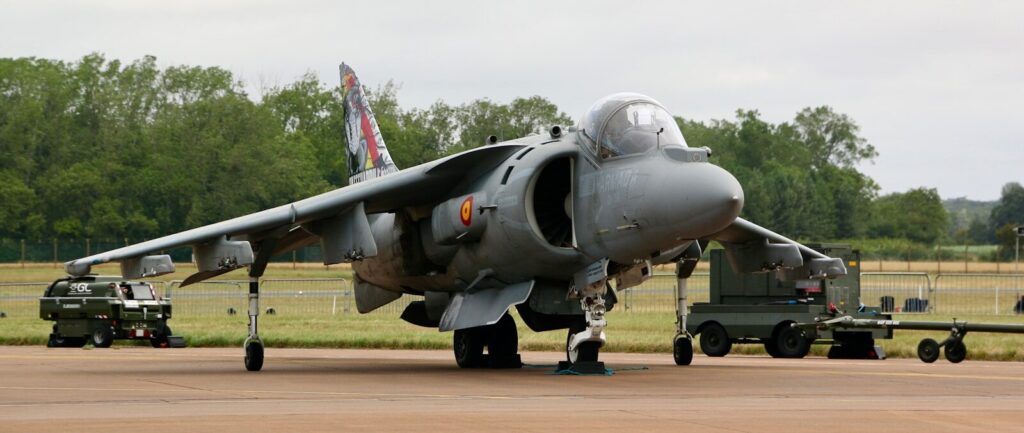
2. British Aerospace P.1214-3
One of British aviation’s finest successes, the Harrier also had one major disadvantage imposed by its highly peculiar Pegasus engine. Unlike ordinary turbofan aircraft it was unable to have a traditional afterburner, its particular airflow characteristics and short exhaust pipe length precluding its addition, and that, in turn meant, it could neither sustain supersonic. Design teams soon realised what needed to be done to get the best of both worlds for the ‘Jump Jet.’
Advanced Propulsion And Aerodynamic Concepts:
- Innovative plenum chamber burning system
- Enhanced vertical take-off capability
- Radical twin-boom tail design
- Forward-swept X-wing configuration
- Improved thrust generation concept
British Aerospace replied in its P.1214 design studies by developing a novel propulsion method: plenum chamber burning (PCB). Instead of working like an afterburner in a conventional turbo-fan, however, PCB injected fuel in to the cold bypass air flow of the engine, producing added thrust without heating the air frame so extensively, engineers reasoned PCB’s need for such a radical tail a twin boom designed to keep part of the air frame clear of the hottest exhaust made one designer exclaim about the willingness to abandon a tradition design for some extra capability!
P.1214 The British also pursued this high-wing design path notably with such striking forward swept X wings which were fashionable at the beginning of the 1980s. It is likely they were found not to give much actual combat capability it shows how forward thinking the design teams went at the time and never made it to drawing board it’s a shame it looks like such a good idea.
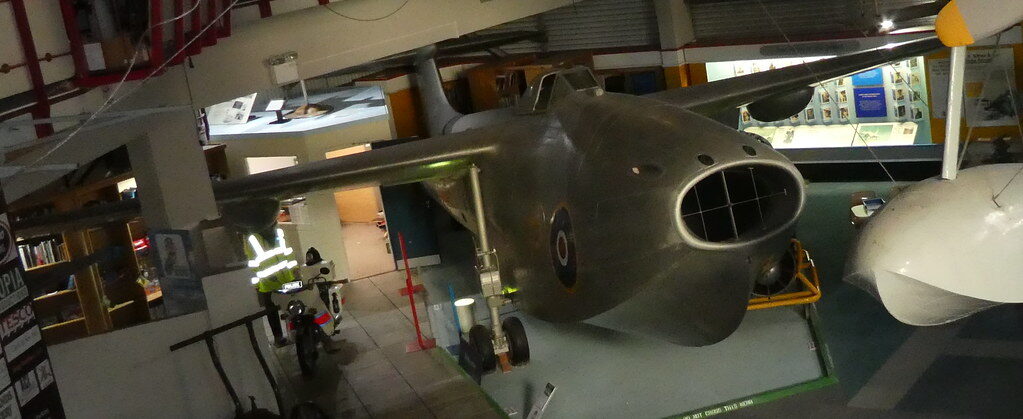
3. Saunders-Roe SR.A/1
The SR.A/1 was born during the War of 1939-1945 as a response to the operational demand that Britain field a fighter that mixed jet speed and the operational freedom of a flying-boat. It was felt that such a type of aircraft could base itself from coastal waters as well as from normal airfields, making it perfectly well suited for island operations in the Pacific where flat strips of land for airfields were either scarce or liable to attack.
Unique Design And Historical Importance:
- First jet-powered flying boat fighter
- Designed for coastal operations
- Combined speed with water capability
- Delayed by engine development issues
- Lost relevance after wartime changes
Although Saunders-Roe had hit on an excellent idea development had, however been frustratingly slow; they had a large number of other important programs to work on, most noticeably the enormous Princess flying boat and problems had arisen with development of the turbojet engines. The prototype (SR.A/1) did not get off the ground until July 16 1947, by which time the context of military aviation had been utterly transformed by victory in the war. The carrier already had much more capable aircraft than could be launched in a practical manner, and conventionally air-filed jet fighters made much more sense.
Whilst it performed adequately in flight trials the aircraft had actually lost its original purpose prior to it reaching tests. Increased use of airfields had lessen need for the jet powered flying boats while two prototypes ended up being grounded through crashes. It was cancelled when no usage ended up being identified so production was never ever initiated regardless the A.R./ 1 would not end up being omitted of aviation background for ever being the world’s first jet power flying boat fighter aircraft the initial aircraft was extremely regarded as amongst Britain’s strangest try to be established as a combat aircraft in the UK.
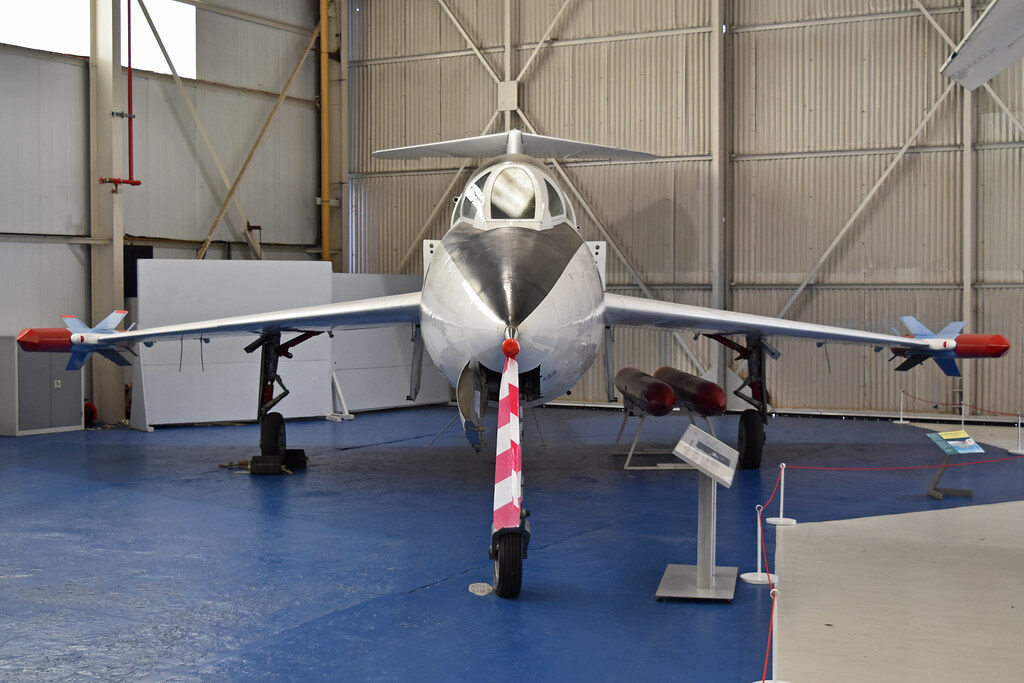
4. Saunders-Roe SR.53
Developed at the height of the Cold War air arms race, Saunders-Roe produced the SR.53 because the Air Ministry was apprehensive about Soviet bombers loaded with nuclear warheads being able to get all the way to home territory. What was needed, to get rid of them was an interceptor able to fly at enormous height with breathtaking speed and a rate of climb, to intercept the threat two-and-a-half-miles up every two minutes or there about. Saunders-Roe answer was that this very small delta-winged interceptor, used a ‘ mixed’ configuration, to reach the required climb rate, namely rockets and jet propulsion.
Advanced Interceptor Design And Features:
- High-altitude rapid climb capability
- Rocket and jet propulsion system
- Compact delta-wing aircraft design
- Firestreak missile armament capability
- Cold War interception aircraft concept
The SR.53 utilized a conventional Rolls-Royce Viper turbojet for low speeds and a high power de Havilland Spectre rocket engine, used for high-speed intercept capability of approaching enemy bombers. Once the bombers were destroyed, or no longer a threat, the aircraft would revert to it’s normal, slower jet power setting for the journey home to base. Equipped with, Firestreak missiles, the fighter was intended for operations combined with a system of radar guiding from the ground. Despite the unconventional proportions, the aircraft was praised by the test pilot to be surprisingly good in the air.
Yet, Aviation tech had moved on faster than the SR.53 could have kept up with, and further developed jet engines obviated the need for rocket assisted fighters, while enhanced radars provided detection for far greater distances, and as ground-to-air missiles were improved and long range air-to-ground standoff weapon systems were developed this rendered any need for a low speed point defence fighter unnecessary anyway and rendering the whole raison d’etre for its’ designed mission meaningless the project was canceled in 1960. Although just two prototypes would be flown this represents an exceptional example of the desire of this nation to try the unusual during the initial years of the missile age.
5. Martin-Baker MB3
One of Britain’s best hopeful fighter projects of WWII, the Martin-Baker MB3 was born as a robust heavily armed replacement to the type such as the Hawker Typhoon. Designed with the “throw your weight around” attitude that was characteristic of WWII fighters, with a rugged airframe and the punch of six 20mm cannon it hid efficiency, reliability and simplicity on a platform that would serve well. Martin-Baker added a number of panels and features, intended to make maintenance straightforward by comparison to similar aircraft designs.
Design Features And Historical Significance:
- Heavy six-cannon fighter armament
- Practical maintenance-focused aircraft design
- Strong airframe with reliable handling
- Promising wartime fighter performance
- Inspired future ejection seat development
The first round of flight tests indicates that the MB3 had sublime handling characteristics with exceptional speed and agility to go with it and certainly has potential to turn into a fantastic combat aircraft with the added advantage of heavy armament over what will most likely be a strengthened air frame structure but hopes for this fine fighter soon came to an end as a Napier Sabre powered prototype was destroyed in an engine disaster less than two weeks after her maiden flight, Killing Test pilot, Valentine Baker.
The demise of the MB3 had enormous consequences for Martin-Baker and where the project would go next. While Designer James Martin turned his attentions to the problem of the survival of pilots, he would ultimately develop groundbreaking technologies in the ejector seat. Although it never got built, there would be more than one consequence from this failed fighter: and it is one that is directly responsible for the advancement of the modern military aircraft into becoming the safely operated death machine it is today.
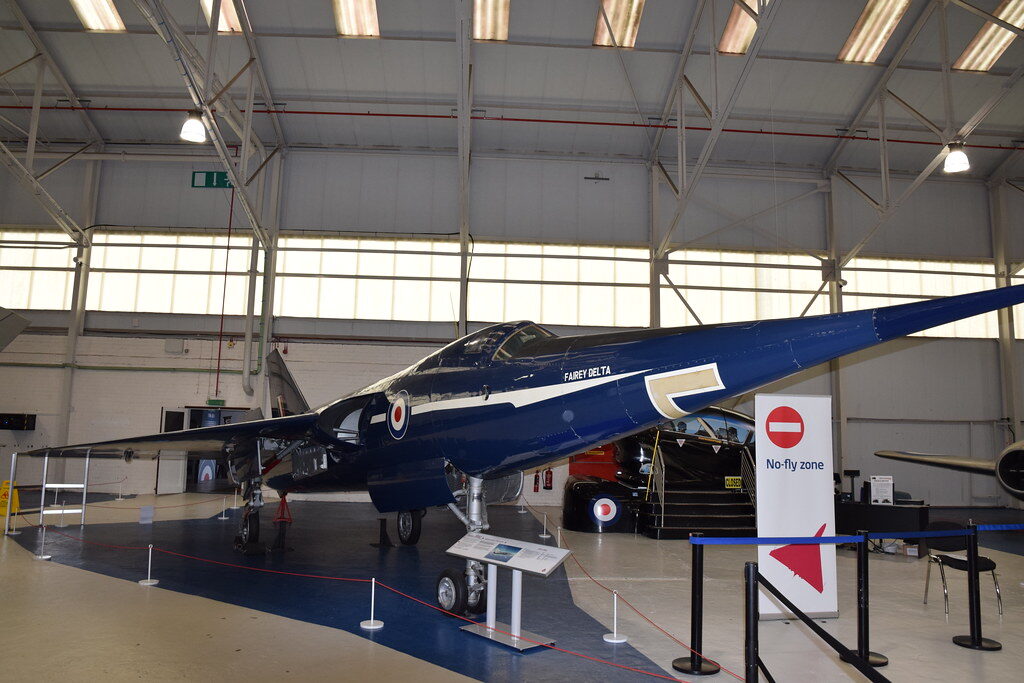
6. Fairey Delta 3
Drawing on lessons learned from the stunning success of the Fairey Delta 2, which showed to what lengths Britain could go in this arena. Britain’s ‘supersonic pioneer’ achieved world air speed records of more than 1100 mph including 1132 mph in 1956 and the first airplane able to achieve level flight faster than the 1,000mph mark. But as a follow-up Fairey developed a rather grand interceptor idea. Designed specifically to knock enemy high speed bombers out of the sky Fairey’s new machine would do this at extreme heights another Air Ministry demand.
Advanced Interceptor Design And Features:
- Supersonic high-altitude interceptor concept
- Combined jet and rocket propulsion
- Mach 2 performance capability
- Red Dean missile armament system
- Next-generation fighter design vision
This design, the Delta 3, would have been a far departure for the project from the concept and performance goals. The intention was to make a large interceptor that would be capable of being launched by a combined rocket/jet boost and, in minutes, attain a altitude of 60,000 ft carrying out flight at Mach 2 at that altitude. The intended rate of climb were extremely high, nearly as great as many today have. The armament would be as innovative as this as it would carry two active guided radar Red Dean missiles.
However good her credentials were the Delta 3 still only appeared in a time when British aerospace priorities were already undergoing a complete re-ordering at the Ministry of Defence away from big, high-performance fighters towards missiles, and increasingly agile aircraft of various types. The concept that guided weapon should eventually usurp the fighter already claimed at least one British aircraft development programme from around this time. The project was abandoned in 1957 when still merely an idea and never even flew but serves as a potent symbol of the ambitious intentions that characterized Britain’s efforts to forge the first of the Supersonicighters.
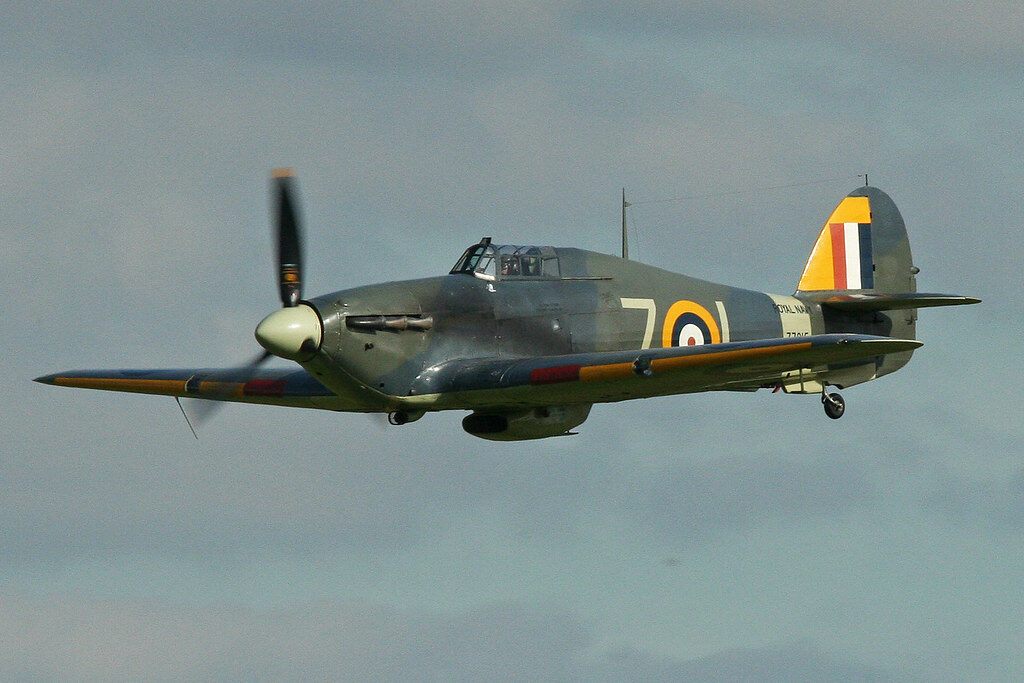
7. Hawker P.1103/P.1121
Hawkers’ had already found success with Hunter, a well respected and performing and reliable aircraft operating at transonic speeds and as technology evolved towards the supersonic arena, there was a great opportunity to create a more high-tech variant to the design. This idea was formed in 1956 with the P.1103 interceptor, a very experimental concept in fighter design to counter those of the high speeds and required speeds associated with fighter planes throughout the 50’s.
Advanced Fighter Development And Features:
- Supersonic interceptor design concept
- Advanced radar-equipped fighter system
- Dedicated radar operator cockpit
- Powerful Gyron engine capability
- Multi-role combat aircraft vision
The P.1080 possessed a revised fuselage, a new wing shape, bigger radar system, in addition to two cockpits including one reserved for a pilot trained especially to operate the aircraft radar and with his own equipment in a specialized chin nacelle built under the fuselage. Even although this version included new designs; the proposal was discarded by the Government.
Powered by the de Havilland Gyron engine, the P.1121 was tipped for impressive speed with a projected top speed of Mach 1.35 at sea-level and aimed at becoming a multi-role fighter that could fulfill any role assigned to it. However the shifting stance and priorities of the defence policies of the government led to further developments to be shelved when by 1958 emphasis was shifting away towards missiles for defence at the expense of manned fighter aircraft so the P.1121 project was cancelled leaving a design that never flew.
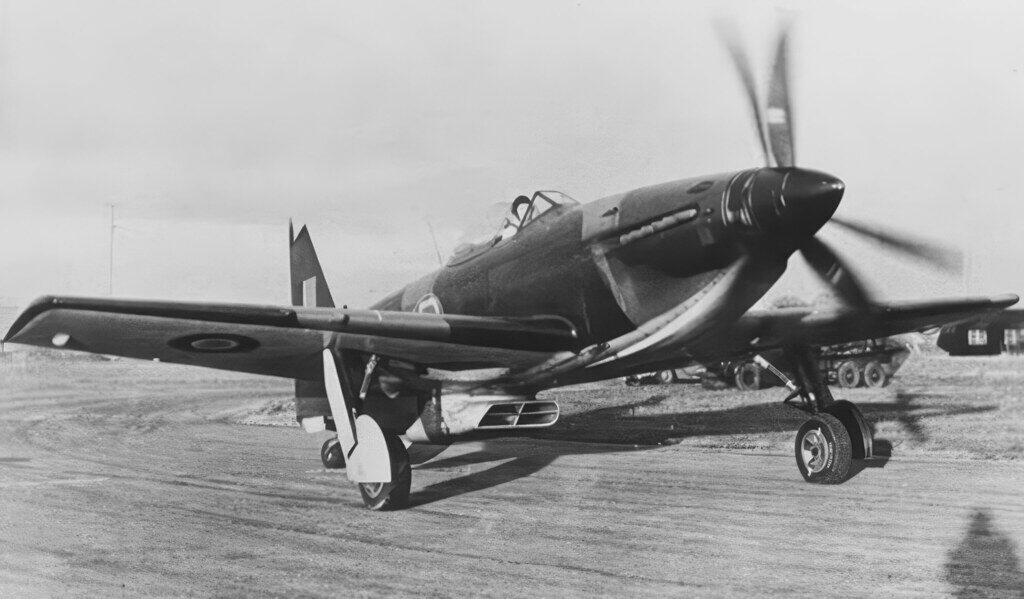
8. Martin-Baker MB5
While the heartbreaking destruction of the MB3 prototype would not deter the company from attempting to build as outstanding an aircraft as possible, the firmn evertheless kept working on optimising designs. After considering Rolls-Royce Griffon powered variant of the MB3,the Air Ministry had persuaded the firm for a significantly deeper redevelopment that bore fruit as the Martin Baker MB5 subsequently hailed by historians of many nationalities as potentially the most important piston engined fighter designed and produced by Britain, at least on wartime conditions.
Advanced Fighter Design And Features:
- Powerful Rolls-Royce Griffon engine
- Exceptional speed and handling performance
- Four 20-mm cannon armament system
- Advanced cockpit visibility arrangement
- Practical maintenance-focused fighter design
The MB5 was an aircraft which offered significant performance with a philosophy for operation which centred on operational efficiency as speed, and this went to make maintenance very easy. As such a high speed fighter it gave the pilot some 460 mph from its Rolls-Royce Griffon, and it demonstrated very useful rates of acceleration. The test pilots found the aircraft exceptionally easy to fly and it had to be confessed that it was quite well mannered even at high speed.
In addition to its armament was four 20-mm cannon making this very capable as part of World War II combat operations with its innovative cockpit making it a great platform with very good visibility which influenced the design of subsequent fighters of that era. This particular bird came out after already current fighters proved effective for the invasion of France with jet developments so far underway many just didn’t seem interested in buying another piston fighter so with a demonstrator engine burning to the point of nearly total failure this project just died on the vine.
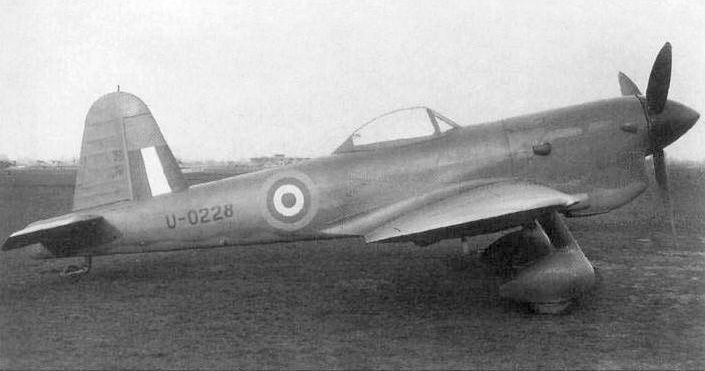
9. Miles M.20
Developed at a key junction in the country’s history-at a time of immense uncertainty surrounding British operations in the Second World War-the M.20 project was a response by the design company and various government ministries to the fear that productive capacity and civilian workforce would be crippled by air raids, affecting vital front line production like Spitfire or Hurricane engines. Created for rapid production and using readily available, simplified design and assembly technologies, the aircraft highlights British engineering during a national crisis, flying just 65 days from concept to reality.
Emergency Fighter Design And Features:
- Rapid wartime aircraft development approach
- Simple wooden structure construction method
- Reduced aluminium material requirements
- Large internal fuel capacity design
- Twelve machine gun armament system
The M.20’s basic simplicity helped ensure that it could be quickly constructed by the factory. Miles Aircraft had steered away from elaborate construction techniques by adopting a stressed-wood airframe that limited aluminium requirements and fixed landing gear in place of more complex hydraulic devices. They have also taken advantage of the readily established Merlin engine installation to employ existing parts and production processes for their practical fighter capable of fighting from the emergency airbase.
While it did not feature many of the cutting edge amenities and qualities of the Spitfire, the M.20 still had much to recommend it. Having been stripped of weight at design it also had a considerably higher internal fuel capacity than Britain’s front line fighters, having almost twice their range. It also carried no less than 12 machine-guns, with a higher ammunition capacity than either the Spitfire or the Hurricane. With the British fighters proving successful through ongoing raids however, demand dried up and the M.20 became merely an early product of high production in times of emergency.
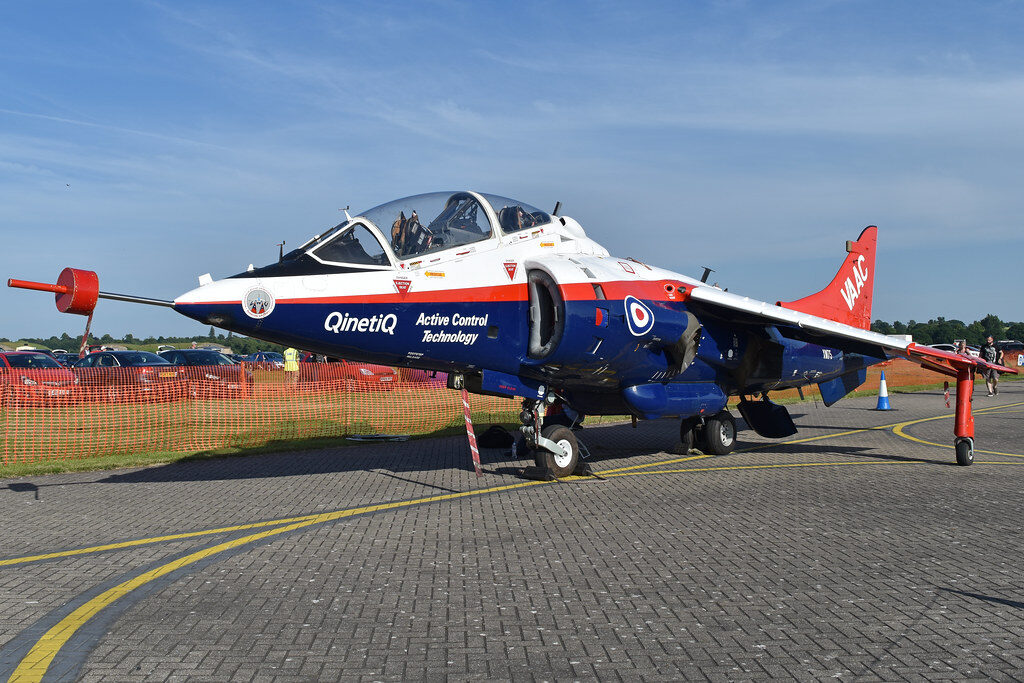
10. Hawker Siddeley P.1154
Under the cold war regime military strategists acknowledged that air fields, would be obvious targets on the battlefield and if conventional bases are destroyed, what then? Aircraft operating from short, hard, improvised surfaces were what was desperately needed, but that was hardly the stuff of conventional speed, let alone going supersonic. The Hawker Siddeley P.1154 project however was intended as just such an aircraft, the supersonic successor to the Harrier concept. It was a breakthrough for vertical landing and takeoff capability.
Advanced V/STOL Aircraft Design And Features:
- Supersonic vertical take-off capability
- Short runway operational flexibility
- NATO fighter requirement selection
- Naval aviation adaptation potential
- Harrier-inspired technological development path
Perhaps the most advanced 1960s British aircraft design, the P.1154 was intended as a supersonic vertical/short take-off and landing (V/STOL) aircraft. Incredibly sophisticated for the day, it generated much excitement and interest both from the military and abroad. Pitted against its competitors it had already won a NATO requirement to become their supersonic V/STOL fighter in a program demonstrating the superiority of the aircraft. The aircraft had also been picked as a promising replacement for carrier based aircraft.
Although technical potential was undeniable, in the event P.1154 was victims to military diverging and growing expenditures. It made demands not quite coinciding with interests of RAF to interceptive fighter with two pilots and of Royal Navy to single fighter capable to execute functions of bomber there had had complicated problems of building-up and augmentation expenditures to come out not being able to satisfy both. Programme was terminated in 1965, though separate P.1154 solutions found development in following generations Harrier supersonic and so called “skip jet”.