




Pontiac’s Forgotten Supercar: The Firebird with a Ferrari V12 Heart
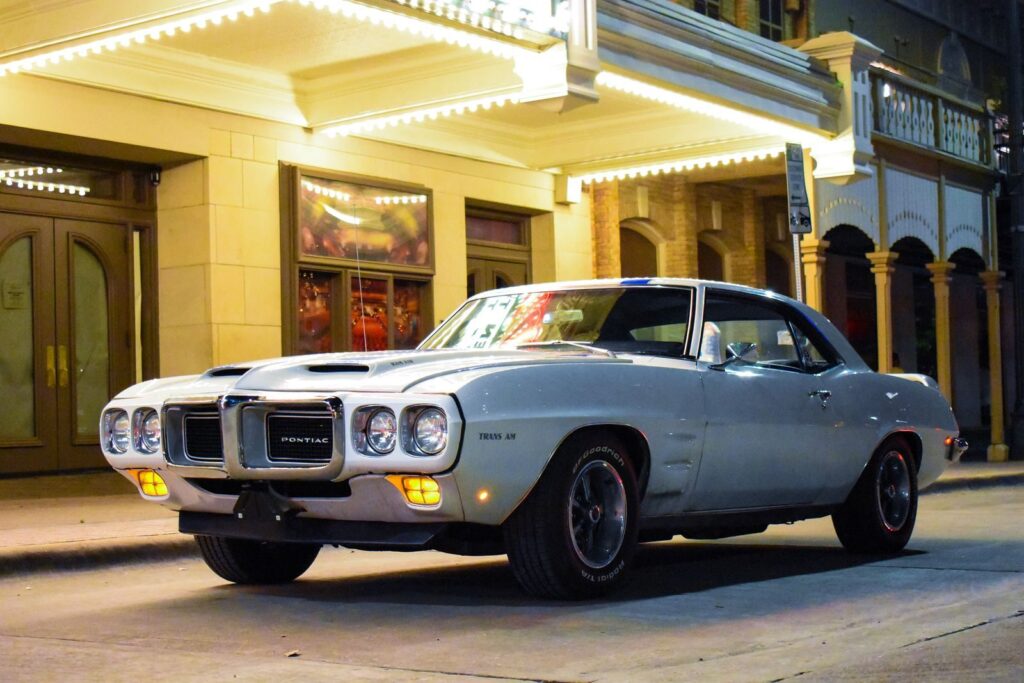
While Pontiacs were known for the ubiquitous big, American V8’s, the menacing designs, and of course such classic performance models as the GTO, the Firebird, and Trans Am, the musclecar era also produced at least one of these GM vehicles that flew in the face of established convention. Forsaking the customary domestic V8 the lone, custom 1970 Firebird utilized the chassis of the “bird”, but tucked it into and powered it by something altogether, and frankly astonishingly different. The power plant?A veritable Enzo Ferrari-derived V12 engine.
The car was dubbed The Pontiac Pegasus. It combined American scale and Italian underpinnings, a machine that defies simple categorisation; its enormous bonnet, reshelled bodywork, Borrani wire wheels and Ferrari-like styling elements gave the car the aesthetic of a European GT, albeit conceived in Detroit. But tucked under that distinctive styling was a 4.4-litre Colombo V12, lifted from the heart of a Ferrari 365 GTB/4 Daytona.
The Pegasus wasn’t really planned for mass-production though. It was Bill Mitchell’s (GM Vice President of design, 1958-77) personal expression and used his considerable executive power to do things that almost certainly would never get through GM’s usual authorization process. It remained one of his own private rides-a test bed and a styling development car-a classic example of an individual idea temporarily getting the better of corporate realists.
1. Pontiac’s Unexpected Italian Experiment
The idea of a Ferrari-powered Pontiac appears contradictory because the two brands represented very different performance traditions. Pontiac built accessible American muscle cars around large-displacement engines, strong low-speed torque, and dramatic styling. Ferrari developed lighter European machines with high-revving engines, precise responses, and exotic construction. Combining them produced neither a conventional Firebird nor a traditional Ferrari. The Pegasus became a hybrid of two automotive cultures that normally competed from opposite sides of the Atlantic.
Two Performance Traditions Combined:
- Pontiac provided muscular American proportions
- Ferrari contributed high-revving mechanical character
- Firebird body preserved domestic identity
- Italian influence introduced greater sophistication
- Concept ignored traditional category boundaries
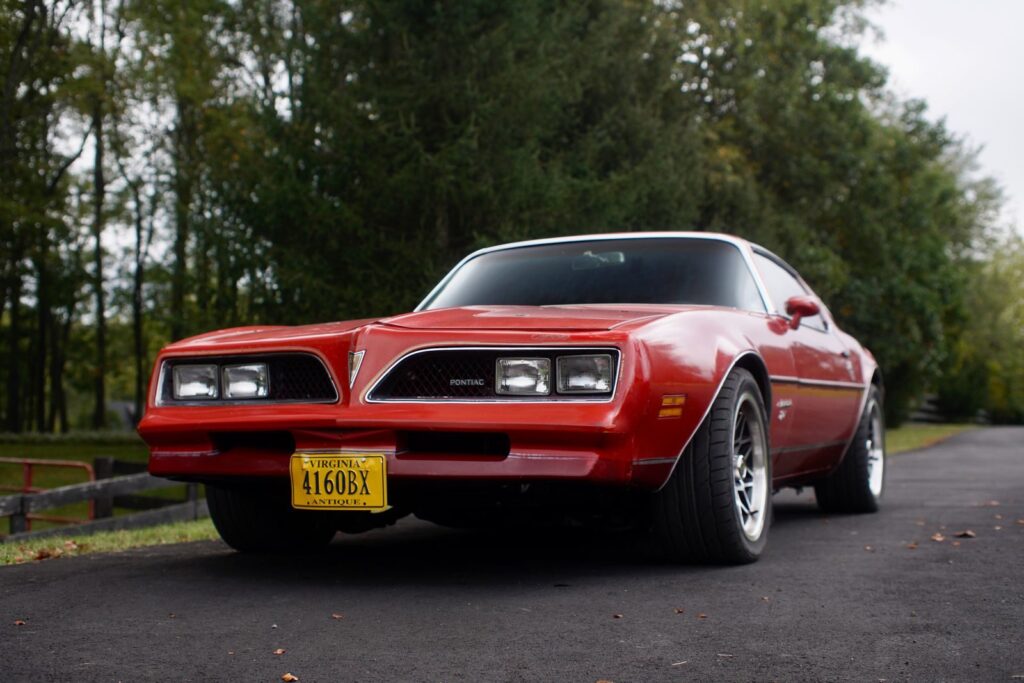
Its foundation was a 1970 Pontiac Firebird, a new-generation model already known for its low roofline, long hood, and muscular proportions. The design team retained the recognizable shape while revising important exterior areas to suggest Italian influence. The Firebird body provided enough visual strength to accept unusual styling without losing its identity. This balance mattered because the completed vehicle needed to appear intentional rather than like an American coupe carrying unrelated imported components.
The project has been described as an early-1970s automotive casserole because it combined parts and ideas never expected to share one vehicle. Yet the mixture worked because the Firebird and Ferrari traditions possessed different strengths. American scale created physical presence, while Italian mechanical character added sophistication. The Pegasus showed that a concept did not need to predict a production model directly. It could exist simply to test what happened when designers ignored established automotive categories.
2. Bill Mitchell’s Vision
Bill Mitchell led General Motors design during one of the company’s most influential periods. His work shaped vehicles such as the 1963 Corvette Stingray and helped establish a confident visual identity across multiple GM divisions. Mitchell appreciated dramatic American styling, but he also maintained a strong interest in European sports and grand-touring cars. That combination made him particularly receptive to creating a domestic coupe with a more exotic, responsive, and sophisticated mechanical personality.
Ideas Guiding Mitchell’s Experimental Vision:
- American styling remained visually dramatic
- European cars inspired mechanical sophistication
- Corporate authority enabled unusual experimentation
- Commercial practicality became temporarily secondary
- High revolutions replaced traditional muscle torque
Within GM’s enormous corporate structure, most development budgets focused on vehicles capable of generating substantial sales. Experimental projects required either a clear production purpose or an influential sponsor. Mitchell possessed enough authority to pursue ideas outside the normal commercial process. The Pegasus emerged from this unusual freedom. It was not created through a formally approved program seeking thousands of customers but by a powerful designer determined to explore his personal interpretation of performance.
Mitchell reportedly wanted a “high-revving, low-torque Trans Am,” a description challenging the traditional muscle-car formula. American V8 performance usually emphasized effortless torque and strong acceleration without requiring extremely high engine speeds. Mitchell imagined a Firebird delivering excitement differently through revolutions, sound, and mechanical precision. That goal could not be achieved through bodywork alone. The vehicle required an engine capable of changing its entire personality from the moment the driver pressed the accelerator.
3. Jerry Palmer’s Original Sketch
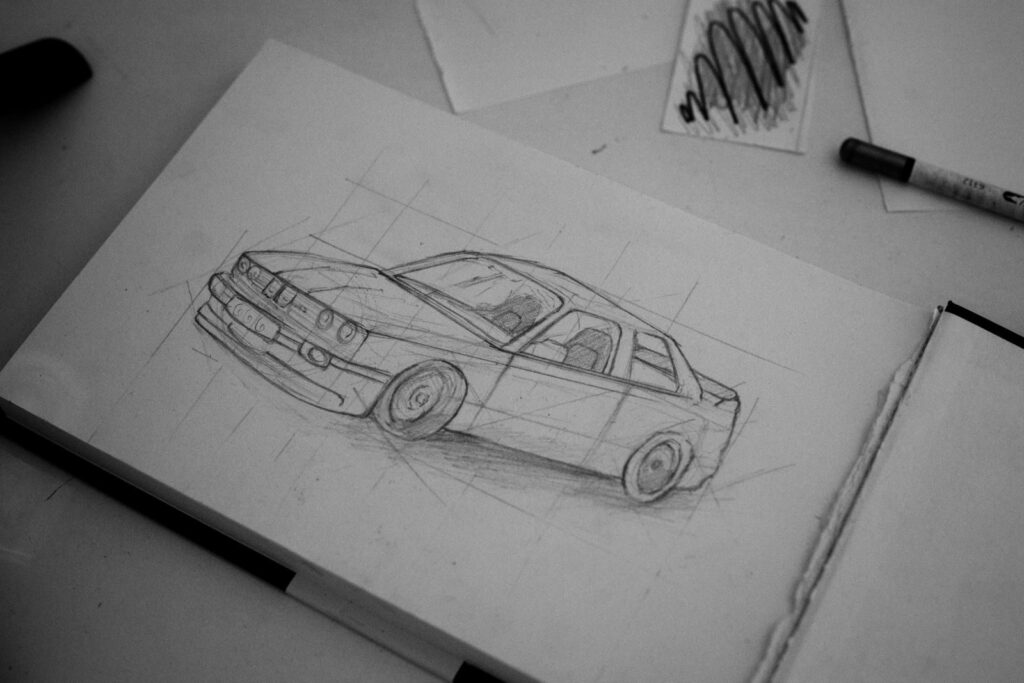
The first spark came from Jerry Palmer, a young Chevrolet stylist who sketched a concept combining elements of a Camaro with the visual spirit of a Ferrari 250 Testa Rossa. The drawing explored how an American pony car might appear if interpreted through Italian racing and grand-touring influences. Palmer’s concept reached Mitchell, who immediately recognized its potential. The idea offered the kind of cross-cultural styling experiment that matched his enthusiasm for European automobiles.
Development From Sketch to Pontiac:
- Palmer created the original concept
- Camaro proportions inspired early drawings
- Ferrari racing design influenced styling
- Mitchell recognized its creative potential
- Pontiac received the redirected project
Although the sketch originated within Chevrolet, Mitchell redirected the concept toward Pontiac. Contemporary accounts describe the move as a competitive power play, with Mitchell taking the idea to another GM division before Chevrolet could develop it further. Internal rivalry was common across General Motors, where Pontiac, Chevrolet, Oldsmobile, Buick, and Cadillac maintained distinct personalities despite shared ownership. Redirecting the project allowed Pontiac to create something far removed from its established performance image.
Using the Firebird instead of the Camaro also gave the finished concept a different visual character. Pontiac’s second-generation Firebird already featured a flowing nose, sculpted sides, and proportions capable of supporting a European interpretation. The production car did not need complete disguise. Designers could use its basic shape as a foundation while introducing Ferrari-influenced details. The result preserved a recognizable Pontiac silhouette even as nearly every important mechanical and visual assumption changed.
4. Transforming the Firebird’s Exterior
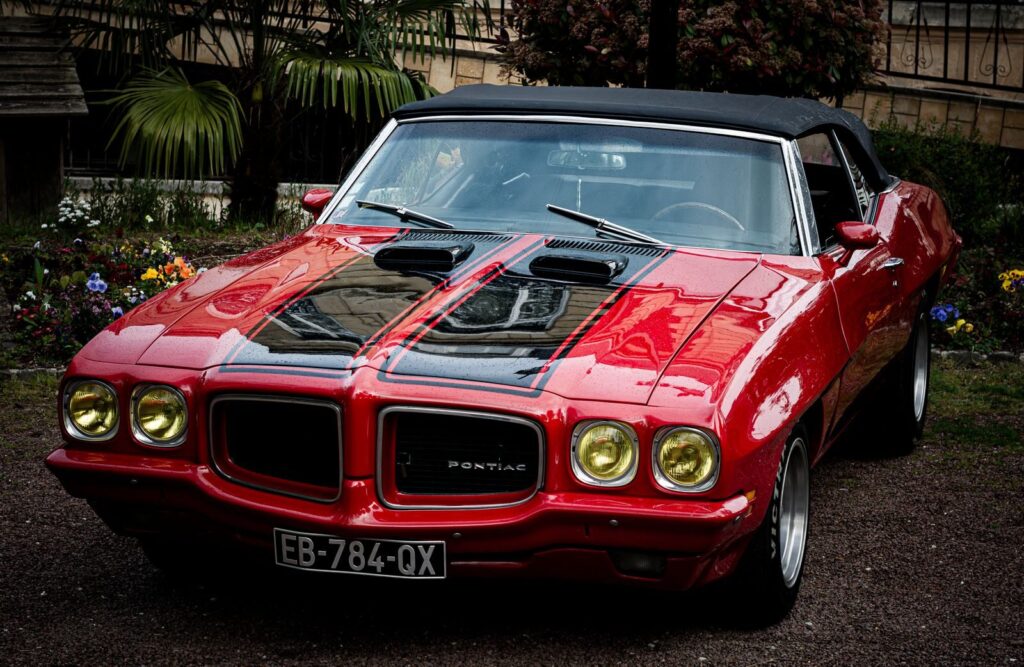
The design team performed extensive bodywork to transform the production Firebird into the Pegasus. The front was reshaped around a Ferrari-influenced grille treatment, replacing the standard Pontiac appearance with something lower and more exotic. Fender vents introduced another European performance cue while providing visual relief along the long body. These changes altered the car’s identity without erasing the strong proportions that made the original Firebird an effective foundation for the project.
Exterior Changes Creating Italian Character:
- Ferrari-inspired grille reshaped front appearance
- Fender vents added performance detailing
- Custom rear lighting modernized styling
- Wraparound glass improved rearward visibility
- Borrani wheels completed European stance
The rear received equally important revisions. Designers created custom lighting and installed a dramatic wraparound rear window that improved visibility while giving the roof and tail a smoother relationship. This treatment resembled ideas seen on Ferrari grand tourers such as the 365 GTC. More importantly, the concept anticipated a similar wraparound rear-window design that appeared on the production Firebird for 1975, demonstrating how experimental vehicles could influence later models without entering production themselves.
Genuine Borrani wire wheels completed the Pegasus’s European-inspired stance. These wheels were strongly associated with Italian performance and luxury vehicles, making them more than a decorative alteration. Their delicate spokes contrasted with the Firebird’s broad American body, reinforcing its mixed identity. Finished as a complete design rather than a casual engine swap, the Pegasus appeared like a coherent grand tourer. Its styling communicated the intended cultural fusion before anyone heard the Ferrari engine running.
5. Receiving a Ferrari Daytona V12
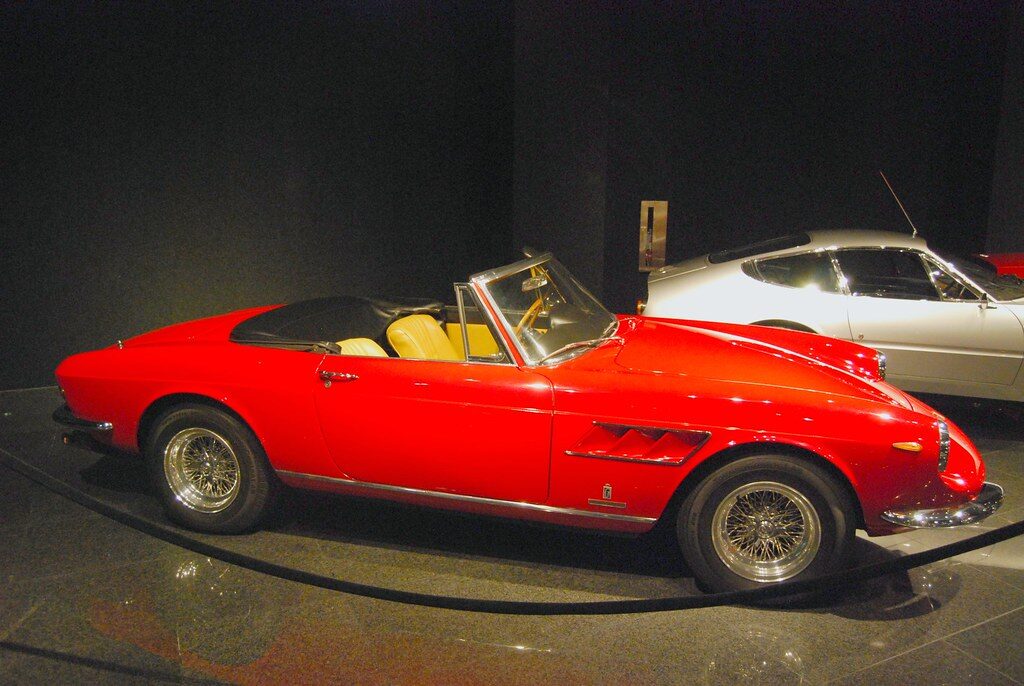
Mitchell believed no ordinary domestic engine could provide the responsive, high-revving character he wanted. The project required an authentic Italian powerplant rather than an American V8 modified to imitate one. Remarkably, Enzo Ferrari supplied a 4.4-litre Colombo V12 from the Ferrari 365 GTB/4 Daytona. This engine gave the Pegasus a direct mechanical connection to one of the most celebrated Italian grand tourers produced during its era.
Important Ferrari V12 Specifications:
- Displacement measured approximately 4.4 litres
- Twelve cylinders delivered smooth performance
- Six Weber carburetors supplied fuel
- Maximum output reached around 352 horsepower
- Redline extended toward 7,700 rpm
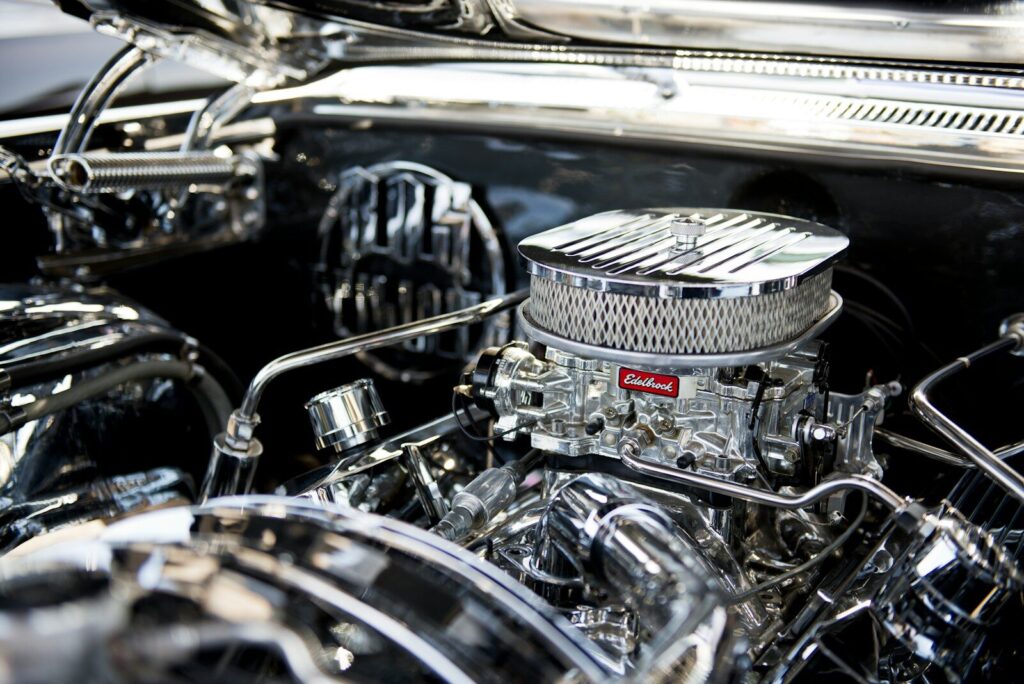
The V12 produced approximately 352 horsepower and used six Weber carburetors. Its most important quality was not simply maximum output but how it delivered performance. The engine revved freely toward a 7,700-rpm redline, producing sound and response unlike a typical Pontiac V8. Installing it completely changed the Firebird’s emotional character. The Pegasus still looked substantial and American, but its engine encouraged drivers to find power through revolutions instead of relying primarily on low-end torque.
Ferrari’s reason for supporting the project remains open to speculation. Some accounts suggest Enzo Ferrari was still angry with Ford after failed acquisition discussions and welcomed an opportunity to help another American manufacturer create something unusual. Whatever the motive, providing a Daytona engine for a General Motors concept was extraordinary. The arrangement transformed the Pegasus from a European-inspired styling exercise into an authentic combination of American design ambition and genuine Ferrari mechanical engineering.
6. Fitting the V12 Into the Pontiac
Installing the Ferrari engine required considerably more than fabricating new mounts. The Daytona V12 was long, and the Firebird’s existing engine compartment was not designed around its dimensions or supporting systems. GM engineers moved the firewall backward by approximately nine inches to create the necessary space. This major structural alteration affected the cabin, transmission position, controls, and surrounding bodywork rather than remaining a simple modification hidden beneath the vehicle’s hood.
Engineering Changes Required for Installation:
- Firewall moved backward nine inches
- Cabin packaging needed extensive revision
- Transmission position required complete reworking
- Custom components supported imported powertrain
- Exterior proportions remained visually balanced
Moving the firewall could easily have damaged the Firebird’s proportions by shifting the passenger compartment or forcing obvious exterior changes. The engineering and design teams completed the work carefully enough to preserve the vehicle’s balanced appearance. From outside, the Pegasus retained the long hood and compact cabin that suited American pony cars and European grand tourers. The extensive packaging modifications remained mostly invisible, allowing the car to appear as though its V12 had always belonged there.
The modification demonstrated how concept development differs from production engineering. A mass-market vehicle must satisfy manufacturing costs, assembly speed, serviceability, crash standards, and parts compatibility. The Pegasus needed only to become one functioning automobile. Engineers could move structural boundaries, fabricate unique parts, and solve problems manually. That freedom made the project possible, but it also ensured that reproducing the car through normal production methods would have been prohibitively complicated and expensive.
7. The Original Automatic Transmission
Despite receiving a Ferrari V12, the Pegasus was initially equipped with a three-speed Turbo-Hydramatic 400 automatic transmission. The TH400 was strong and widely used in powerful American vehicles, making it a practical choice from a durability perspective. Its smooth, low-effort character suited large domestic cruisers, but it did not complement an engine designed to deliver excitement through high revolutions, rapid responses, and close driver involvement throughout the driving experience.
Why the Automatic Gearbox Felt Wrong:
- Three speeds created wide gearing
- Relaxed shifts reduced engine responsiveness
- Transmission prioritized effortless domestic cruising
- V12 struggled to remain high-revving
- Driver involvement remained noticeably limited
The automatic reportedly dulled the V12’s natural responsiveness. Wide gear spacing and relaxed shifts prevented the engine from remaining near the upper section of its rev range, where its sound and performance became most engaging. The transmission could handle the available power, but mechanical compatibility was not the same as emotional compatibility. A drivetrain combining a Ferrari engine with an American automatic preserved speed while losing much of the distinctive personality Mitchell wanted the concept to express.
This mismatch revealed that an engine transplant alone could not give the Pegasus Ferrari-like character. The entire drivetrain needed to support the engine’s operating style. A high-revving V12 requires drivers to select gears deliberately and keep the engine within its strongest range. The TH400 encouraged effortless cruising instead. Although it allowed the car to function, the automatic made the Pegasus feel like a Pontiac containing a Ferrari engine rather than a genuine fusion of American and Italian performance.
8. Converting to a Ferrari Manual Gearbox
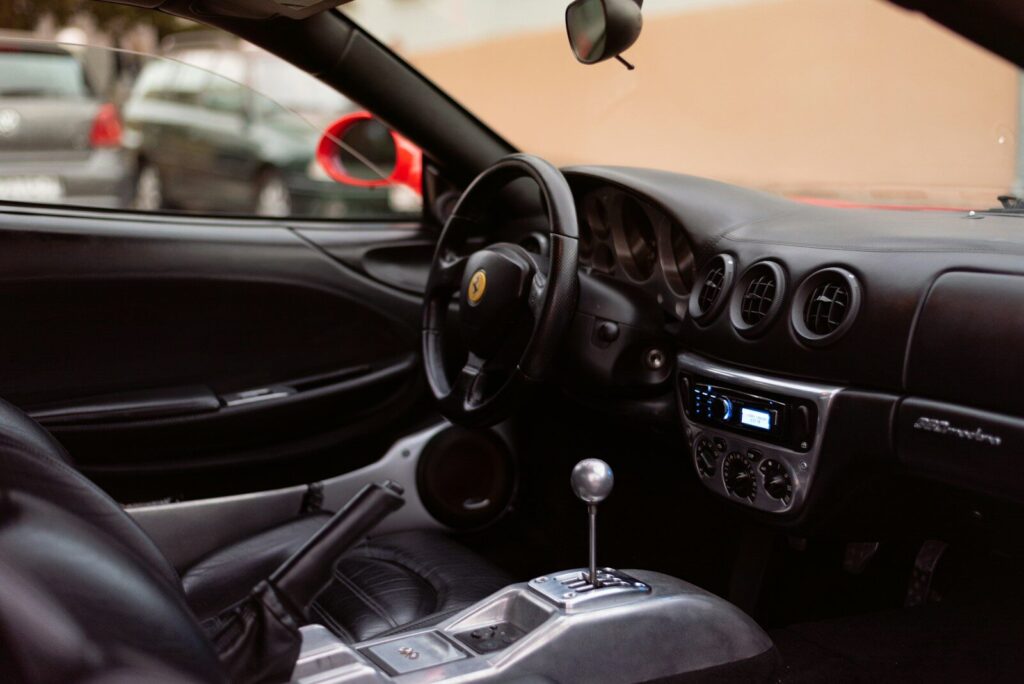
Engineers eventually replaced the automatic with a proper five-speed manual transmission from Ferrari. The conversion required substantial additional work because the Firebird’s transmission tunnel, controls, mounts, and drivetrain had not been prepared for the imported gearbox. The team modified the tunnel and reconfigured surrounding mechanical systems to integrate the manual successfully. This second major engineering operation allowed drivers to control the V12 in the manner its designers had originally intended.
Improvements Delivered by Manual Conversion:
- Five speeds improved engine flexibility
- Manual selection increased driver involvement
- Revised tunnel accommodated Ferrari gearbox
- Higher revolutions became easily accessible
- Drivetrain gained authentic Italian character
With the five-speed installed, the engine could finally rev freely and deliver the sound, response, and engagement Mitchell had imagined. Manual gear selection allowed drivers to keep the V12 near its strongest operating range and experience its progression toward the 7,700-rpm redline. The change did not make the Pegasus identical to a Ferrari Daytona, but it removed the greatest barrier between the driver and the engine’s distinctive character. Its Italian heart was no longer constrained by American cruising priorities.
The completed drivetrain transformed the Pegasus into a more convincing cultural hybrid. Its power delivery, sound, and manual operation came from Ferrari, while its scale, controls, chassis behavior, and physical presence remained unmistakably American. Instead of hiding those contradictions, the vehicle made them central to its personality. The Pegasus was fascinating because it allowed two very different automotive traditions to remain clearly visible within one fully functioning machine.
9. The Driving Experience and Mitchell’s Ownership
Driving the Pegasus revealed an intriguing mixture of refinement and roughness. Its steering retained the extremely light assistance typical of Detroit vehicles from the period, while the live rear axle contributed a less sophisticated ride than a Ferrari grand tourer. Weighing approximately 3,834 pounds, the Pontiac was also heavier than the Daytona. These characteristics prevented it from matching the sharpness or precision of the Italian vehicle that provided its engine and transmission.
Characteristics Defining the Driving Experience:
- Light steering retained American character
- Live rear axle reduced refinement
- Heavy body affected overall agility
- V12 produced an unmistakable soundtrack
- Corvette brakes improved stopping performance
The V12 nevertheless gave the car an unmistakably Ferrari soundtrack and enough performance to loosen the rear tires even in third gear. Corvette disc brakes improved stopping ability, helping the vehicle manage its unusual combination of weight and power. The Pegasus was not a perfectly balanced sports car, but balance may never have been its purpose. It delivered charisma through contrast: delicate wire wheels, an Italian engine, American steering, substantial bodywork, and a soundtrack completely unexpected from a Pontiac.
Mitchell became deeply attached to the completed vehicle and used it as his personal car. When he retired from General Motors in 1977, he was allowed to take the one-off concept with him, an unusual privilege within a large corporation. He continued driving it rather than preserving it as a static display. One famous account describes Mitchell crashing the Pegasus at Road America near the appropriately named Bill Mitchell Bridge, adding another memorable chapter to its active life.
10. Production Influence and Preservation
Although the Pegasus never entered production, several of its styling ideas influenced later General Motors vehicles. Its semi-recessed headlight treatment appeared in related form on the 1974 Camaro and Firebird. The dramatic wraparound rear window became an important feature of the 1975 Firebird, improving outward visibility and modernizing the vehicle’s appearance. These connections show how experimental concepts can provide valuable design solutions even when their complete mechanical packages remain too expensive or impractical for customers.
Pegasus Ideas That Influenced Production:
- Headlight treatment inspired later models
- Wraparound glass reached production Firebirds
- Full-scale testing improved design evaluation
- Drivetrain conversion expanded creative possibilities
- Heritage preservation protects unique engineering
The Pegasus functioned as a rolling design laboratory. Its body modifications allowed stylists to evaluate ideas at full scale and observe how they worked on the road rather than only under controlled studio lighting. Its mechanical conversion also demonstrated how completely a different engine and transmission could alter a familiar American platform. The concept’s greatest contribution was not proving that GM should produce a Ferrari-powered Pontiac but expanding the possibilities its designers considered for future vehicles.
After Mitchell died in 1988, the Pegasus returned to General Motors. It is now preserved within the GM Heritage Collection in Michigan, where it survives as the only example of its kind. The vehicle represents a period when an influential designer could pursue an improbable idea and mobilize enough engineering talent to make it real. Its lasting appeal comes from that freedom: a 1970 Firebird transformed by Ferrari machinery and one man’s refusal to accept ordinary boundaries.