








How the Underappreciated Ford Torino Quietly Outsold the Mustang in the Early 1970s
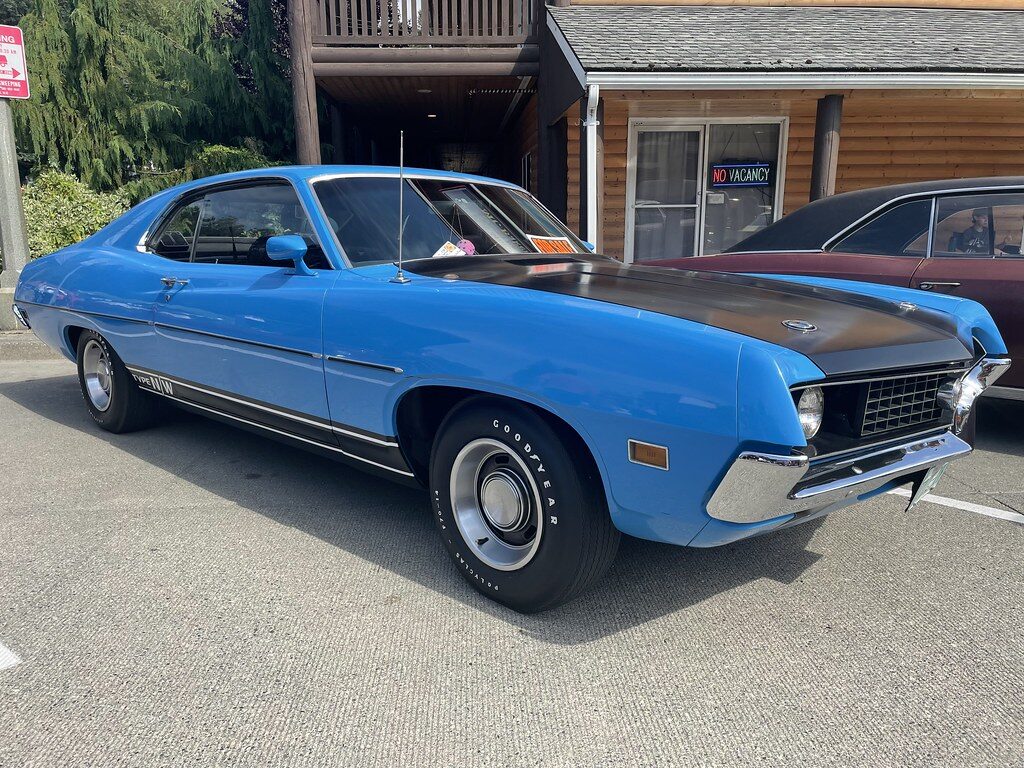
While it doesn’t garner the same notoriety as some of the American muscle cars of the era the second-generation Dodge Charger or Chevrolet Chevelle SS, to name a couple the Ford Torino story is one of the most fascinating chapters in Ford’s performance history. The car was never quite acknowledged as the musclecar it deserved to be, yet it had the mechanical firepower that eventually got it there. In the beginning, however, the beginning was pretty weak. The 1968 Torino wasn’t even its own model at launch, but instead was the better trim-level package of the Ford Fairlane and was initially intended to be Ford’s version of the 1969 Plymouth Roadrunner.
It was a very different story in 1970, when the Torino itself become a separate model and the Fairlane was reduced to a budget subseries. Ford applied the stunning Coke bottle design of the redesigned Torino, and an attractive Sports Roof fastback, and the sportier V-8s were more potent than ever. Not only did the 429 Super Cobra Jet make the new Torino stand out on the performance front, but its sales would soon bring yet another surprise. Between 1970 and 1973, the Torino outsold the Mustang every single year even though the Mustang remains a one of America’s most iconic hot ponies which is a remarkable achievement given that the Torino was a full-sized mid market platform.
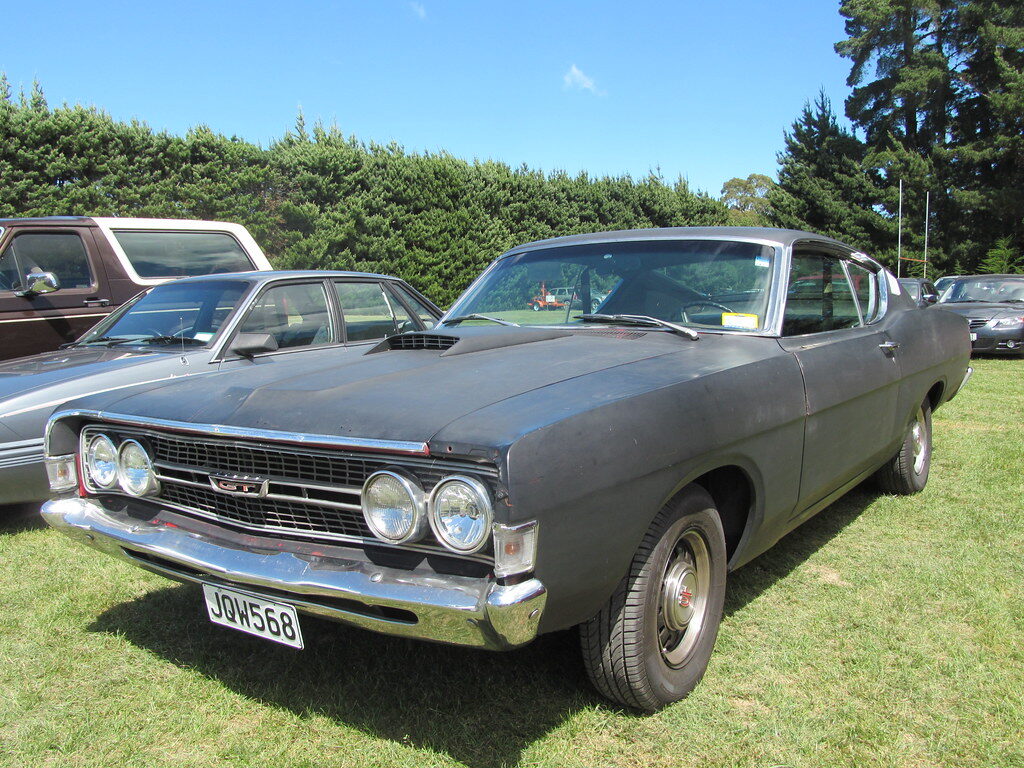
1. The Ford Torino Had a Confusing Start
The Fords Torino is one of those fairly under appreciated cars of the golden age of American muscle, even with the significant powertrain we could insert in it. The model suffered from a kind of poor branding choice at launch, as for the 1968 model year the Torino was nothing but a premium trim package for the Ford Fairlane, and that no-frills competition of the Plymouth Roadrunner was definitely the plan for the Torino. The 68-69 rollout didn’t go well against those competitors, and it wasn’t until 1970 that the model finished rolling out its hierarchy, with the Torino itself now an independent model, and the Fairlane the entry-level sub-series.
From Fairlane Trim to Standalone Muscle:
- Torino began as upscale Fairlane trim
- Independent model arrived in 1970
- Fairlane became entry-level subseries
- Ford targeted Plymouth Roadrunner buyers
- Early competition proved difficult
It was its early identity issues that made the Torino’s ultimate role even more important. Ford had thrown the Torino up against the Plymouth Roadrunner, but in its first incarnation the Torino was not quite price/performance enough to claim the segment. It was a muscle-car entrant without the instant acceptance of some of its competitors. That all changed with a major re-working of the model line for 1970. The Torino established an infinitely more solid identity, styling refinements, and a far more serious range of engine options. Where the Torino had begun life as an upscale Fairlane version, it was now firmly established as a Ford model in its own right, one capable of taking on the best the old muscle world had to offer. And it was not just a matter of appearance. Changes also eliminated the performance issues that had plagued the earlier Torino.
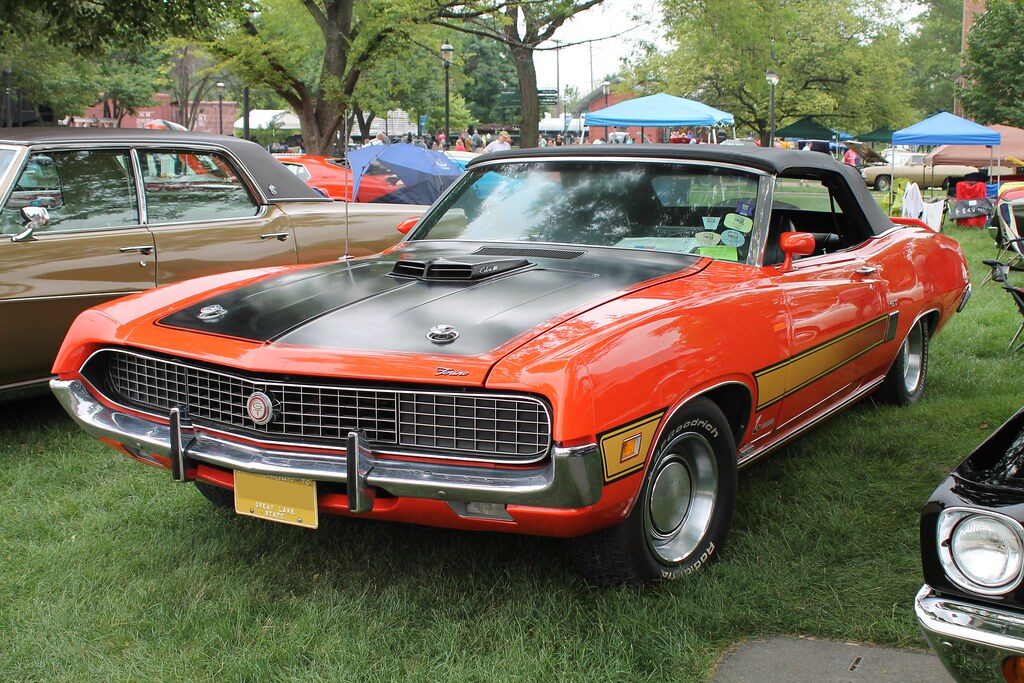
2. The 1969 Torino Cobra Struggled Against the Roadrunner
Here’s What’s So Special About The 1969 Torino Cobra That’s why Ford had to go back to the drawing board with the model. For a base price of just $3,183, the Torino Cobra was available with a 335-horsepower 428-cubic-inch V-8 and on paper had just a slight edge over the Plymouth’s entry-level 383 engine. But that was before you factor in one formidable adversary-the cheaper Plymouth Roadrunner-which started at just $2,896 and could be optioned with either a 440 or 426 Hemi V-8 that produced up to 425 horsepower. That power and price equation proved to be a lot more appealing to customers, and it showed on the drag strip as the Hemi-powered Roadrunner could run the quarter-mile in a quarter-behind time of just 13 seconds, compared to the 14.8-second run by the 1969 Torino Cobra.
Why the Cobra Fell Behind:
- Base price reached $3,183
- Standard engine produced 335 horsepower
- Roadrunner started at $2,896
- Hemi output reached 425 horsepower
- Torino ran 14.8-second quarter-mile
The performance gap was especially important because the Torino Cobra had lagged behind the performance standard of its time. Yes, the 428-cid V-8 had plenty of horsepower, but the Roadrunner presented buyers with a lower sticker price and more potent engine offerings. The 426 Hemi could muster as much as 425 horsepower, while the Torino’s base engine delivered 335 horsepower. And the Hemi Roadrunner ran the quarter in 13 seconds. With that as a benchmark, 14.8 seconds for the Torino Cobra didn’t quite scream “muscle car.” That was one reason Ford had reasons to redesign the Torino for the following year. The automaker simply had to offer more than a snappy moniker or a decent amount of power – it had to combine eye-catching styling with an engine that made the Torino a bonafide muscle car.
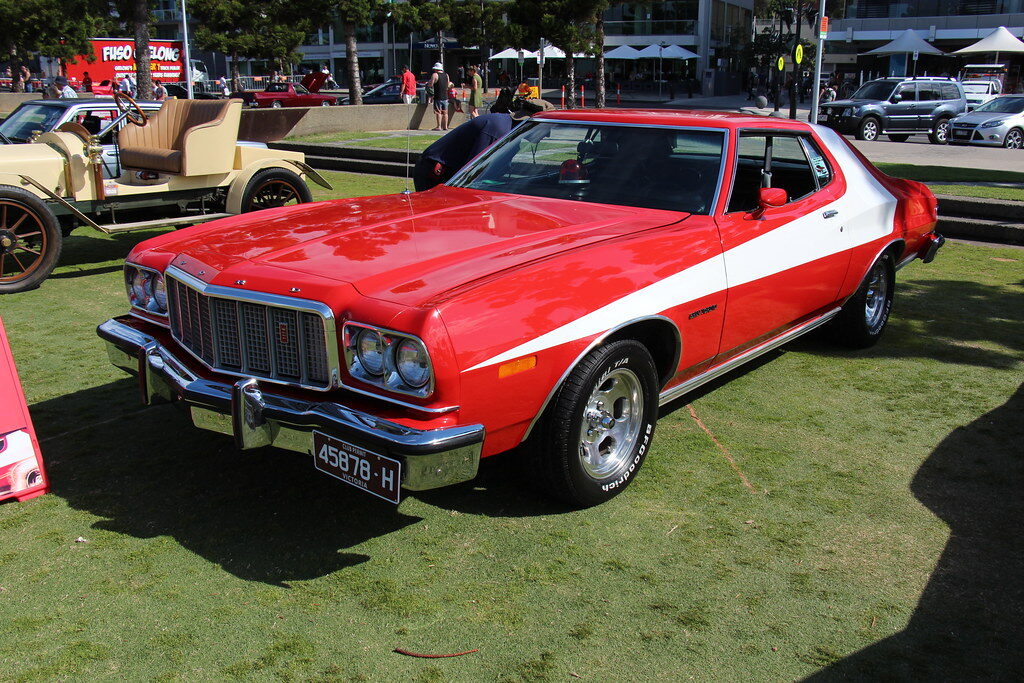
3. The 1970 Redesign Completely Changed the Torino
The all-new Ford Torino built by Ford was the worst thing to ever happen to the model until it was finally redesigned in 1970. Ford gave the new full-size Ford Torino a very simple Coke bottle body that gave it a much greater visual bulk. The new Ford Torino’s two-door Sports Roof fastback look was just as mean and aggressive as the Dodge Charger or the Chevrolet Chevelle. It was the new Ford Torino that finally established the model’s own identity in the marketplace, and Ford also upgraded the V-8 engine choices for the Torino so it was able to compete on the strength of performance as well as styling.
A Dramatic 1970 Transformation:
- Coke bottle body changed everything
- SportsRoof fastback added visual appeal
- Styling rivaled famous muscle cars
- Ford introduced stronger V-8 options
- Torino gained independent identity
The 1970 redesign marked the moment at which Ford’s concept of what the Torino was really supposed to be came together. The fastback Sports Roof brought the kind of visual punch the new muscle machines of the day needed, while the upgraded V-8 engine lineup finally corrected the mistake made in 1969 with the Torino Cobra. Ford’s changes are critical because with the 1970 model, not only did the Torino have the mechanical grunt to match its new visual flair, but the new Torino established a well-defined musclecar persona. More importantly, the Toledo remained a very distinct model rather than being an upscale trim for the Fairlane. This was a good thing, as Ford’s rework of the Torino was finally able to propel the now better-visualized, and now muscular Torino into the 13-second era–thanks to the arrival of the 429-cubic-inch V-8 and the 13-second ETs it brought to the table.
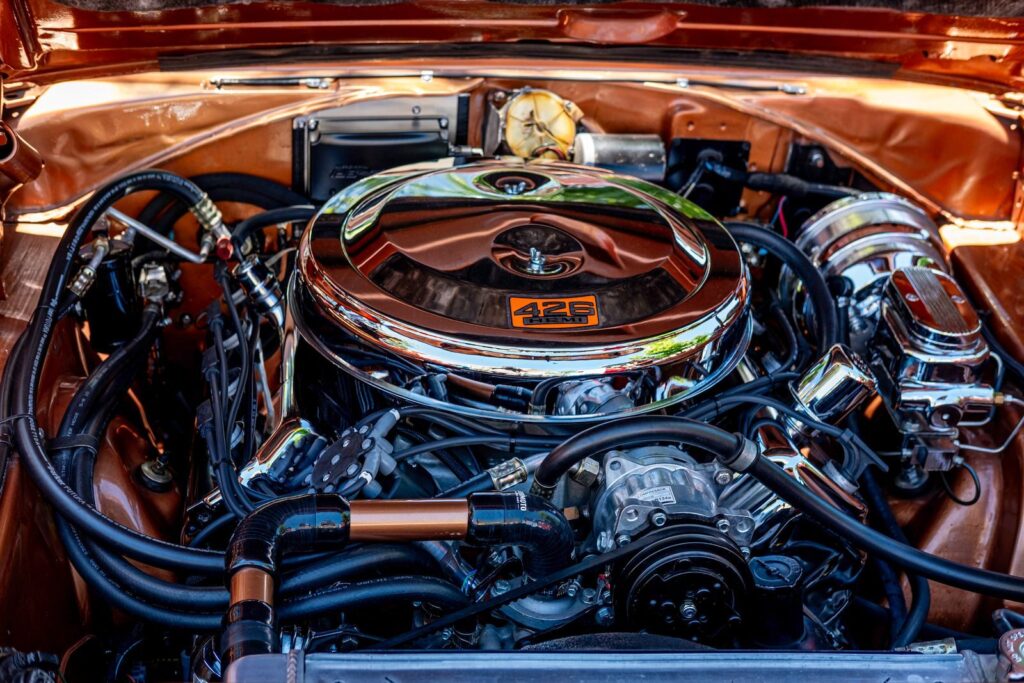
4. The 429 Super Cobra Jet Made the Torino a True Muscle Car
The crown jewel of the redesigned Torino lineup was Ford’s 429-cubic-inch V-8. Standard 429 Super Cobra Jet specs called for 370 horsepower and 450 lb-ft of torque. With the Drag Pack, horsepower rose to 375. This would be combined with a four-speed manual transmission, giving the Torino the hardware to go up against the big muscle cars. The figures were very different from those of the previous-generation Torino Cobra. The 1970 Torino could go from 0-60 mph in 5.8 seconds, run the quarter-mile in 13.99 seconds and top out at 136 mph. And for the first time, the Torino was running a legitimate 13-second quarter mile. This performance helped cement its status as a true muscle car instead of just a big, fast Ford.
The Torino’s New Performance Credentials:
- 429 cubic inches of displacement
- Standard output reached 370 horsepower
- Torque measured 450 lb-ft
- Drag Pack raised output 375
- Quarter-mile time reached 13.99 seconds
The 429 Super Cobra Jet was a game changer for the Torino. With 370 horsepower and 450 lb-ft of torque, it was a hell of a piece of machinery, and with the Drag Pack it was up to 375 horsepower. The Torino would finally be able to bring that four-speed manual to bear, and with a 5.8-second 0-to-60 mph and 13.99 seconds in the quarter-mile, Ford finally gave it the engine and performance shortcomings it had suffered from in 1969. With a 136-mph top speed, it could finally live up to its muscle car potential, and most importantly, it was the first Torino to hit the 13s and be a true muscle car. No longer was it just trying to be a performance car, it was a serious contender.
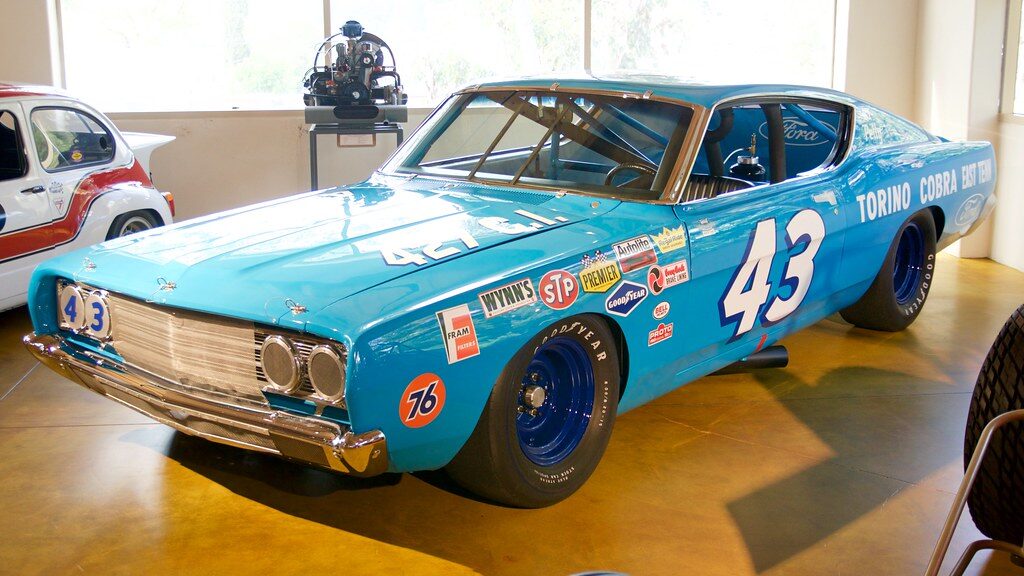
5. The Torino Talladega Added NASCAR Performance Engineering
The Torino’s beauty of the Chryslers of the early sixties was not related to street performance, as the prototype was made for Ford’s NASCAR racing team by the name of the special Torino Talladega. His design was equipped with a 5 inch tapered front-end extension to excel in aerodynamics, which was a hit in the racing track and became another link in the chain of Ford building up performance targeted at racing from the very beginning of Torino’s story. In the end, Dodge had to make another courageous move with the wild nose-coned 1969 Charger Daytona and thus made another chapter in the history of the aerodynamic play. In order to homologate the Talladega for racing, Ford built 743 street-legal production pieces, which, although not fetching multi-million-dollar auction prices, are still significant in the story of the Torino, with the highest sale now at around $132,000.
Talladega’s Racing-Bred Identity:
- Built specifically for NASCAR
- Front extension measured five inches
- Aerodynamics improved track performance
- Ford produced 743 street-legal units
- Top sales reached about $132,000
The Torino Talladega still ranks as a defining chapter in the musclesports car. Its aerodynamic modifications proved that the Torino could be engineered for more than just helping you get through traffic faster, and the racing-derived five-inch tapered front-end extension was a solid racing modification. The Talladega’s success on the track lent a certain character and mystique to the model, and Ford required 743 street-legal cars to register to run in NASCAR races and thus maintain the model’s racing homologation. This created a handful of Talladegas directly linked to the world of wheel-to-wheel NASCAR racing, and while these editions don’t achieve the record-breaking prices commanded by the Charger Daytona models at auction, their contribution to the engineering and marketing development of the Torino is far more important.
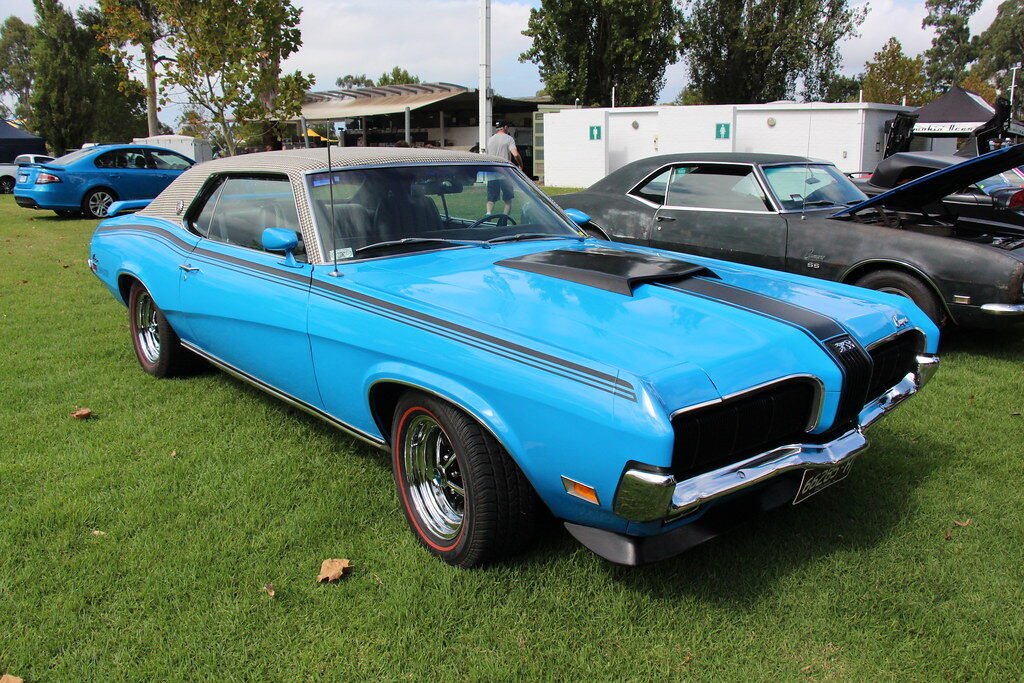
6. The Mustang’s Huge Success Eventually Created an Opening
Mustang’s Overreach As the Mustangs of the middle and late 1960s arrived and built upon their colossal numbers, the Torino was already a Thing of the Past and a more constant presence than ever before. Nearly a decade after Ford had launched the Mustang, the show-stopping flops of the mid-1970s had yet to arrive and Ford had bettered its sales number from the previous decade: in the extended first 1965 production year, the Dearborn automaker sold 680,989 Pony cars; in 1966 the company sold an additional 607,568; and in 1969 the Mustang was already growing strong at nearly 500,000 a year (2.4 million in total), substantially outstripping the Torino’s modest allure. It was a marvelous car, but the Mustang’s long-term popularity was no guarantee that its sales would be pandemic, and around 1970 sales suddenly began to develop a more downward trend, providing an opening for the Torino.
The Mustang’s Early Sales Power:
- 680,989 sold in first model year
- 607,568 sold during 1966
- 2.4 million sold by decade-end
- Nearly half-million sporty cars yearly
- Sales slowed around 1970
That difference was essential to what occurred next: The Mustang had demonstrated that Ford could generate sales of its own sporty cars in the huge numbers, that launch year in the middle of 1964 generated a revolution in culture, and the following sales tallies cemented the pony car in the public consciousness as a major hit. However, by roughly 1970 the Mustang sales momentum had been exhausted. That timing was crucial for the Torino, since Ford’s midsize offering was also entering its most viable era. The more aggressive styling and significantly stronger performance of the reimagined Torino and its larger-model line-up capitalized on the previous success of the Mustang, but the earlier dominance did not vanish; the sales slump was sufficient for the Torino to rise up and grab an unlikely sales lead within Ford’s stable from 1970-1973.
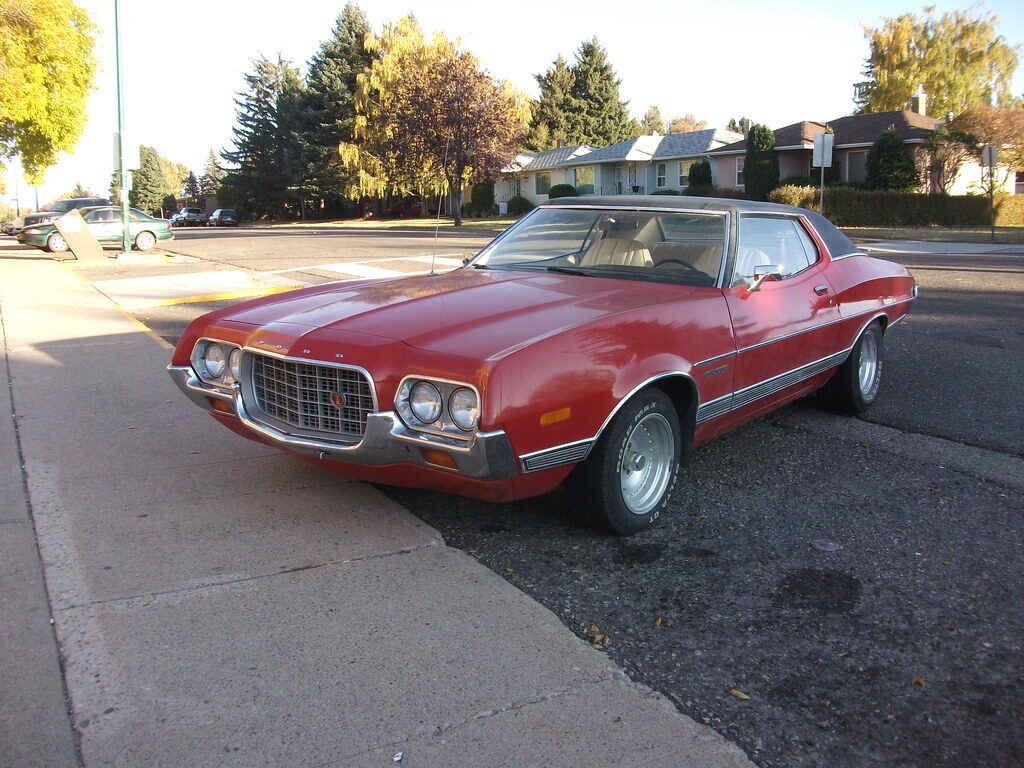
7. The Torino Outsold the Mustang for Four Straight Years
The numbers from 1970-1973 show how incredible the Torino sales numbers got. In 1970, Ford sold 407,493 Torinos versus 191,239 Mustangs with the Torino beating the Mustang by more than 2-1. The Mustang lineup consisted of the fastback Mach 1 and the high-performance Boss 429, so the Torino had a huge edge overall, yet in 1971 the Torino surpassed that by having 326,463 to 151,484. 1972 showed a huge margin, as the Torino finished with 496,645 units sold versus 125,813 Mustangs, then in 1973, the Torino was close to the 500,000 mark with 496,581 Torino units, while the Mustang brought in only 134,817. That created a four-year win streak for Torino.
Four Years of Torino Dominance:
- 1970: 407,493 versus 191,239
- 1971: 326,463 versus 151,484
- 1972: 496,645 versus 125,813
- 1973: 496,581 versus 134,817
- Torino won four straight years
The Torino’s sales explosion took an even more mind-boggling twist when, during 1972-73, detuned engines arrived; now the offered breakdown describes the sales as the “Dead Horsepower Age.” But the Torino still boomed to almost a half-million per year despite the paltry power. This year’s 1972 496,645 was nearly four times higher than the Mustang at 125,813; the next year’s 496,581 Torino figure was equally strong against 134,817 for the Mustang. This isn’t some once-in-a-lifetime bump but a steady four-year dominance of the Mustang, and that’s the core reason why the often-overlooked Torino earns a stronger place in the early ’70s Ford power-car story.
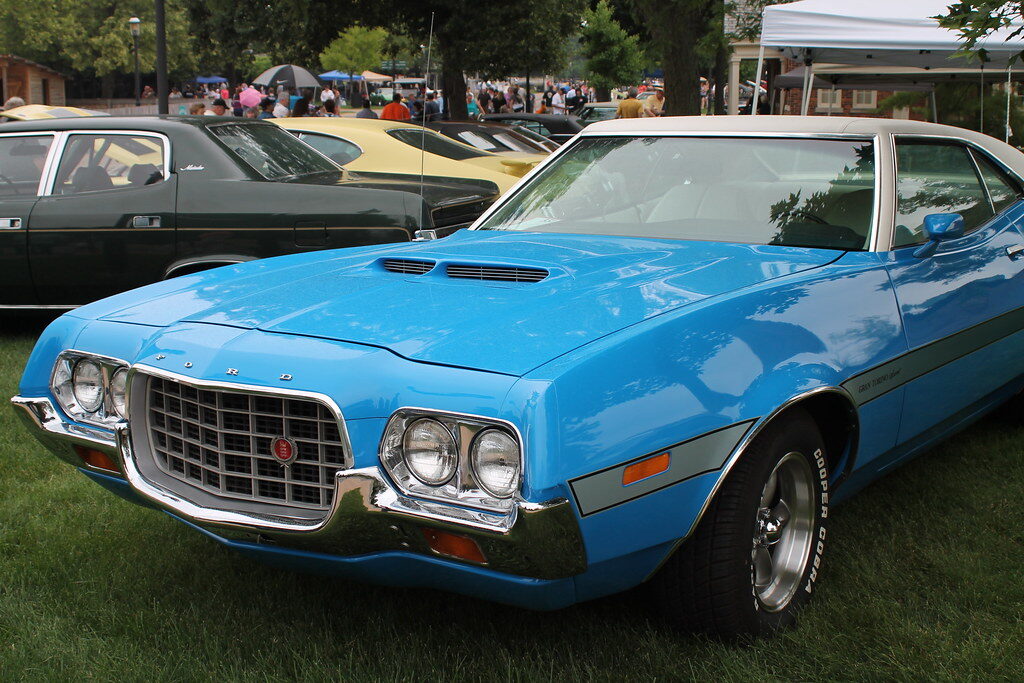
8. Styling Helped the Torino Keep Its Cool Factor
Another aspect that was central to the collaboration between the Torino and Mustang was styling. For 1971, the Mustang was given a new styling package that gave the pony car an absurdly long nose and in the process, also introduced what would become the car’s most distinctive identifier, the infamous “big beak.” An evolution from the more aggressive lines of first-generation Mustangs, the design was widely regarded as one of the weirdest first-gen pony cars but the styling, which also wore the ’69-70 Sports Roof, also gained camp cred when it was used for the classic Eleanor car in the movie Gone in 60 Seconds. The Torino boasted its own cool factor, with edgy looks and a lot of firepower, like the 429 Cobra V-8.
Why the Torino Stayed Cool:
- Mustang gained an extra-long nose
- “Big beak” changed Mustang styling
- SportsRoof remained highly regarded
- Torino retained aggressive visual appeal
- 429 Cobra V-8 added firepower
The styling was still very much Torino even though horsepower was down. With minor styling touches in 1972 and more down on the horsepower end of the spectrum, the Torino still managed to be ‘kick-ass’ enough to be Clint Eastwood’s ride in the film Gran Torino. While this enhanced the street-machine image, the comparison to the Mustang seemed especially interesting because the Mustang’s styling had become somewhat controversial during this period while the Torino continued on with the visual attitude of a powerful mid-size musclecar. The Torino didn’t need the same cultural heavy-lifting to earn credibility that the Mustang had, simply the Coke bottle body, Sports Roof fastback, and serious V-8 options…even down on power with a decent bit of attitude.
9. The Sales Numbers Come With an Important Asterisk
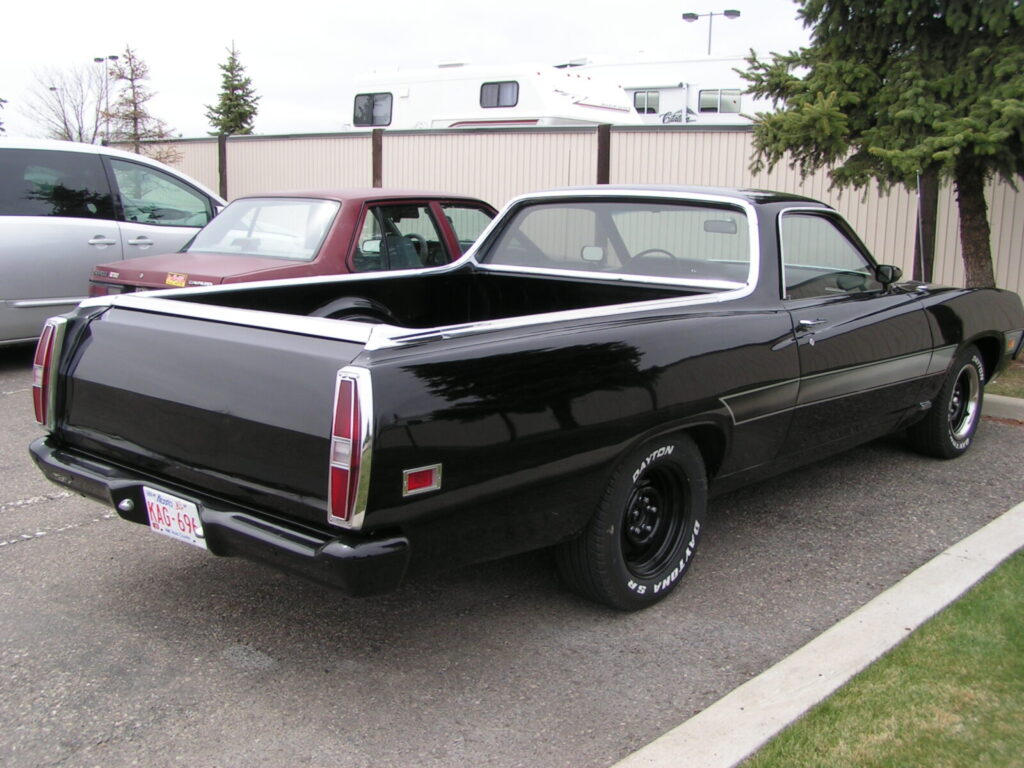
The claim that the Torino outsold the Mustang does require a caveat since the two cars aren’t quite apples to apples. While the Mustang was dedicated pony car hardtop, fastback, and convertible the Torino was a broad-based MID-size platform, the production numbers of which included four-doors sedans, station wagons, and the Ranchero car-truck utility. So the totals are a little skewed when adding the entire inventory of the Torino to compare to the Mustang. The actual 1970 Torino pony vehicles (excluding a GT in a hardtop or fastback) were much more modest at: 56,819 for the GT fastback, 3,939 for the GT convertible, 7,675 for the Torino Cobra, and only 90 for the Twister Special for a total of 68,918, considerably below the overall 1970 Mustang market at 191,239.
The 1970 Muscle Torino Breakdown:
- Torino GT fastback: 56,819
- Torino GT convertible: 3,939
- Torino Cobra: 7,675
- Twister Special: 90
- Dedicated muscle total: 68,918
These totals provide the necessary perspective for those four-years of the Torino’s market-share victory. Total overall production volumes for the Torino included body styles and trim levels not always direct comparables to the Mustang’s exclusive pony-car family. 4-door sedans, station wagons and the Ranchero car-truck utility were all models on the Torino’s extensive mid-size platform. So those 1970 totals of 407,493 Torinos versus the Mustang’s 125,432 shouldn’t be taken as direct competition on the road. The direct muscle-car Torino total of 68,918 spells things out more clearly; also, the Torino’s broad model base was a factor in that sales success. The Torino was a model that could tempt buyers from the performance-car sector and allow for serious muscle-model variants.
10. The Two-Door Torino Still Stole the Mustang’s Thunder
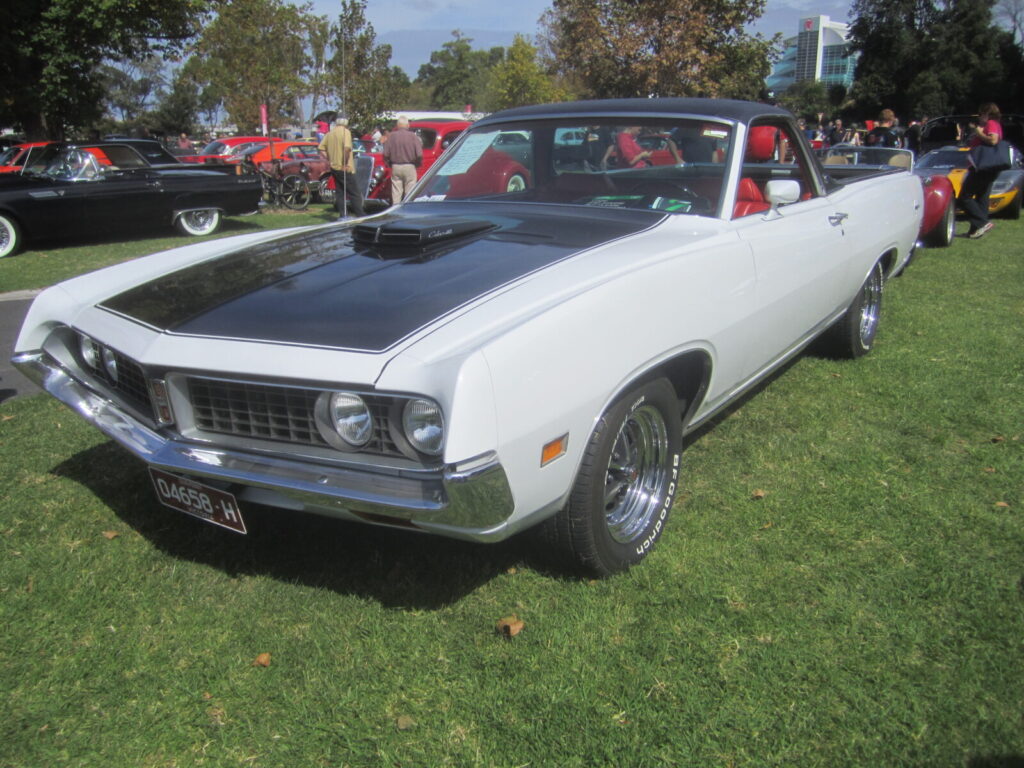
Another important counterpoint to the sales asterisk is something that crosses the entire 1970 line-up. When all of the two-door Torinos are lumped together, 218,781 cars were sold – easily surpassing the Mustang total by nearly 30,000. The sales difference is even more striking when counting only authentic, true-muscle-car Mustangs: The 1970 Mustang “wimpy” 302 cars or six-cylinder models account for most of the Mustang line-up, the true muscle-car mix only 40,970 Mach 1s, 7,013 Boss 302s and 499 Boss 429s, combined total: 48,482 – surpassing the dedicated-muscle Torinos of 68,918 by more than 20,000 cars. Even if the Torino is reduced to a second-class classic when compared to the Charger or Chevelle, its sales dominance in early 1970s is still historic.
The Torino’s Final Sales Victory:
- 218,781 total two-door Torinos
- Nearly 30,000 ahead of two-door Mustangs
- 48,482 genuine Mustang muscle cars
- Torino muscle sales topped 68,918
- Four-year Torino sales streak
The Torino’s posterity ultimately has nothing to do with million-dollar auction prices. It has everything to do with what happened on the road, on the street, for four straight years. The car outperformed even its little-known corporate brother, the 1970 Mercury Cyclone GT, and created a mythology of power and street dominance. The Torino may have to settle in a second-tier grouping of classic American muscle alongside the Dodge Charger and Chevrolet Chevelle, but that doesn’t change what it accomplished. Between 1970 and 1973, it sold more than the Mustang time and again. Its two-door models also outsold the Mustang, and it-specific muscle versions outsold the combined total of listed authentic Mustang musclecars. The unsung Ford Torino doesn’t need a million-dollar auction outcome to prove its worth. It simply outpitched the Mustang for four straight years.


